The sirens that pierced the night across Dubai and Abu Dhabi on March 1, 2026, were not a drill, nor were they merely a "precautionary measure." They represented the definitive collapse of the long-held regional assumption that the United Arab Emirates could remain an untouchable sanctuary of commerce while the rest of the Middle East burned.
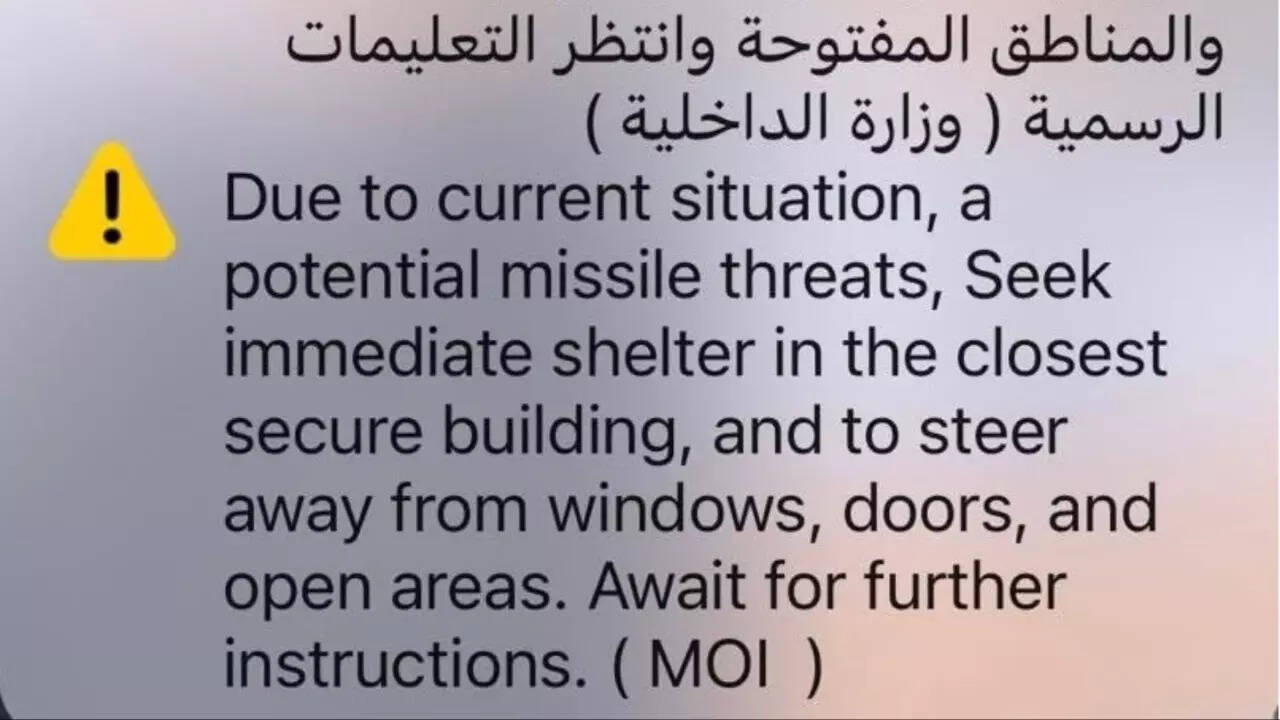
At 11:32 PM, millions of residents received an emergency alert from the Ministry of Interior in both Arabic and English. The command was jarringly direct: seek immediate shelter, stay away from windows, and await further instructions. This was the digital manifestation of a kinetic reality unfolding in the skies. Over the course of 48 hours, the UAE Ministry of Defence confirmed the detection of 165 ballistic missiles and 541 drones launched from Iranian territory. While the UAE’s multi-layered air defense systems—a sophisticated network of US-made Patriots and high-altitude interceptors—successfully neutralized the vast majority of these threats, the sheer volume of the "saturation attack" proved that no shield is absolute.
Debris from intercepted targets rained down on residential areas, resulting in three confirmed fatalities—citizens of Pakistan, Nepal, and Bangladesh—and 58 injuries. These were not "military casualties"; they were the collateral of a regional firestorm that the UAE did not ignite but can no longer ignore.
The Myth of the Safe Haven
For two decades, the UAE built an economic empire on the foundation of "zero problems with neighbors." It positioned itself as the Switzerland of the Middle East—a place where Russian oligarchs, Western tech CEOs, and Chinese state enterprises could coexist in a climate-controlled vacuum. That vacuum has now been breached.
The catalyst for this escalation was "Operation Epic Fury," a joint US-Israeli strike launched on February 28, 2026, aimed at decapitating the Iranian leadership and dismantling its nuclear infrastructure. Tehran’s response was not restricted to the combatants. By targeting US facilities and logistical hubs within the UAE, Qatar, and Bahrain, Iran has effectively declared that any nation hosting American "hostile infrastructure" is a legitimate target.
This is the "why" behind the emergency alerts. It isn't just about a few rogue missiles; it is about a fundamental shift in the rules of engagement. The UAE finds itself in the crosshairs because its geography and its alliances are now inseparable.
Defensive Saturation and the Limits of Technology
The technical scale of the defense was unprecedented. On the second morning of the assault alone, Emirati forces destroyed 20 ballistic missiles and 311 drones.
Statistical Breakdown of the Interception Campaign:
| Threat Type | Detected | Intercepted/Destroyed | Failed/Impacted |
|---|---|---|---|
| Ballistic Missiles | 165 | 152 | 13 (Fell in sea/Inland) |
| Cruise Missiles | 2 | 2 | 0 |
| Drones (UAVs) | 541 | 506 | 35 (Impacted/Debris) |
While a 92% success rate against ballistic missiles is statistically remarkable, the "leakers"—the 8% that get through or the debris that falls on a city—are what keep security analysts awake. In a dense urban environment like Dubai, a single drone impact on a secondary power station or a residential tower creates a disproportionate amount of panic and economic disruption.
The Ministry of Human Resources and Emiratisation (MOHRE) has already moved to mitigate this by mandating remote work for the private sector through March 3. This isn't just about physical safety; it is about maintaining the illusion of "business as usual" while the skies are literally contested. Schools have shifted to online learning, and the Dubai International Financial Centre (DIFC) has shuttered its physical doors.
The Economic Toll of a "Minor" Conflict
The cost of this conflict isn't just measured in lives or burnt-out cars in the suburbs of Abu Dhabi. It is measured in the sudden, sharp withdrawal of confidence.
- Aviation Paralysis: Etihad and Emirates have faced rolling suspensions. Air India and other international carriers are offering full refunds through March 5. For a nation that functions as the world's transit hub, every hour the airspace is closed costs millions in lost revenue and logistical chaos.
- Capital Flight: Early reports indicate that hedge funds and major banks are activating "continuity of operations" (COOP) plans, with many rethinking their long-term presence in a region where an emergency alert can end a board meeting at midnight.
- Market Shock: The closure of the Abu Dhabi and Dubai stock markets through Tuesday is a defensive crouch, intended to prevent a panicked sell-off that would reflect the true anxiety of the investor class.
The UAE government’s rhetoric has remained steadfast, emphasizing "readiness" and "preparedness." But there is a silent acknowledgment in the closure of Global Village and Jebel Jais: the "lifestyle" value proposition of the UAE is currently on life support.
The Intelligence Gap
One factor being overlooked in the mainstream coverage is the source of the "missile threats." While the alerts cited "escalating conflict," they did not explicitly detail the mix of state-launched assets versus those launched by regional proxies. Evidence suggests that while the bulk of the ballistic threats came from Iran proper, a significant number of the low-cost drones were launched from mobile platforms closer to home, complicating the UAE’s "look-out" radar profiles.
The UAE is now forced to choose between its role as an economic neutral and its reality as a strategic partner to the West. You cannot host the assets of one side and expect the other side to respect your neutrality when the "big one" finally starts.
The sirens may have stopped for the moment, but the silence that follows is far more heavy. The UAE has entered a new era where the glitz of the skyline is no longer a shield, but a target. Residents are no longer just expatriates living in a luxury bubble; they are participants in a high-stakes geopolitical endgame.
Would you like me to analyze the specific impact of these airspace closures on global logistics and supply chain delays?