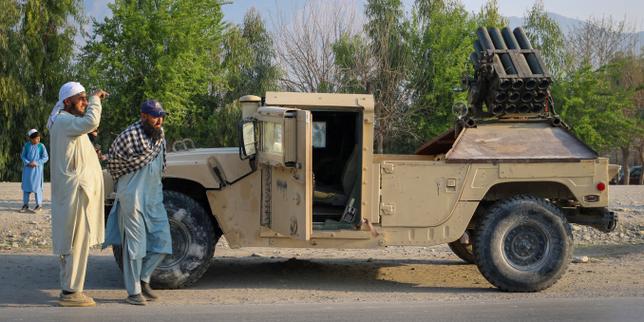
The standard media narrative on the recent explosions in Kabul and the skirmishes along the Durand Line is lazy. It paints a picture of two volatile neighbors spiraling toward an accidental war. It suggests that the Taliban and the Pakistani military are "clashing" because of a breakdown in communication or a failure of diplomacy.
That is a fiction.
What we are witnessing isn't a breakdown. It is a highly functional, symbiotic performance. The violence between Kabul and Islamabad is the most effective political tool both regimes currently possess to distract from internal rot. If you think these two entities want a resolution to their border dispute, you are fundamentally misreading the mechanics of power in Central Asia.
The Myth of the "Accidental" Conflict
Most analysts treat the shelling at the Torkham and Chaman crossings as a tragedy of errors. They point to the Tehrik-i-Taliban Pakistan (TTP) as a "third party" causing friction. This misses the point. For the Taliban in Kabul, the TTP isn't a burden; it is their only significant piece of foreign policy leverage. For the Pakistani military establishment, the "Afghan threat" is the only remaining justification for their bloated share of the national budget during a crushing economic crisis.
I have watched regional actors play this game for decades. Conflict is rarely about the land being fought over. It is about the domestic audience watching the news.
- The Taliban's Gamble: By standing up to Pakistan, the Taliban administration finally gets to wrap itself in the flag of Afghan nationalism. They are no longer just "religious students" or "proxies"; they are the defenders of the soil against a "punjabi" military.
- Pakistan's Diversion: With inflation over 20% and political instability reaching a fever pitch, the Pakistani military needs a visible, external enemy to justify its grip on the state. An occasional exchange of artillery fire is a small price to pay for institutional survival.
The Durand Line is a Feature, Not a Bug
The international community keeps asking how to "settle" the Durand Line. That is the wrong question. The 2,640-kilometer border was never meant to be settled. Drawn by Sir Mortimer Durand in 1893, it was designed to be a buffer of ambiguity.
Today, that ambiguity is a billion-dollar industry.
The "disputed" nature of the border allows for a massive shadow economy of smuggling—electronics, flour, fuel, and narcotics—that sustains the local economies on both sides. If you formalized the border, you would have to tax it. If you taxed it, the local tribal structures would revolt. Neither Kabul nor Islamabad wants the administrative headache of a "real" border. They want a porous one they can occasionally close to punish the other side or extort concessions.
The TTP Fallacy: Why Islamabad Can't Quit the Chaos
The "People Also Ask" section of your average search engine will tell you that Pakistan wants the Taliban to "reign in" the TTP. This is a half-truth.
Islamabad wants the TTP neutralized, but they don't want the threat of the TTP to vanish. Without a militant threat on the western border, the Pakistani military loses its primary argument for being the "essential" partner for Western intelligence agencies. Since the 1980s, the Pakistani security apparatus has operated on a "fireman-arsonist" model: they help put out the fires they helped light, and they expect to be paid for the service.
The explosions heard in Kabul are the byproduct of this failed experiment. The Taliban, realizing they are no longer the junior partner, are allowing the TTP to operate just enough to keep Islamabad nervous. It is a cold, calculated game of chicken where the only losers are the civilians caught in the crossfire.
Stop Calling it a "Border Dispute"
Labeling this a border dispute suggests there is a map out there that would satisfy both parties. There isn't. This is a sovereignty theater.
- Taliban Legitimacy: The Taliban lack international recognition. By engaging in state-level military skirmishes, they force the world to treat them as a sovereign military power rather than a sanctioned insurgent group.
- Resource Competition: This is about water and transit. Kabul’s plans for dams on the Kabul River terrify Pakistan’s agricultural sector. Small-scale border wars are the preferred way to signal that any move on water rights will be met with kinetic force.
- The Pashtun Question: Both sides are terrified of a unified Pashtun political identity. By keeping the border a zone of perpetual conflict, they ensure that the Pashtun tribes remain divided, displaced, and dependent on military "protection."
The Brutal Reality of Regional "Stability"
We are told that a stable Afghanistan is in Pakistan’s best interest. This is the biggest lie in the "landscape" of regional geopolitics.
A truly stable, prosperous, and independent Afghanistan is Pakistan’s greatest nightmare. A weak Afghanistan is a backyard; a strong Afghanistan is a competitor with historical claims on Pakistani territory. Conversely, a stable Pakistan that doesn't need to meddle in Afghan affairs would deprive the Taliban of their primary external "bogeyman" used to radicalize and recruit.
The "explosions in Kabul" aren't signs of a system breaking down. They are the sound of the system working exactly as intended.
The Cost of the Status Quo
There is a downside to this contrarian view: the human toll is immense. But we must stop pretending that better fencing or more "high-level talks" will fix this. You cannot fix a problem that both participants find profitable.
If you want to understand why the fighting continues, stop looking at the maps and start looking at the ledgers. Look at the military budgets in Rawalpindi. Look at the smuggling revenues in Nangarhar. Look at the political capital gained by every "brave" commander who orders a mortar strike across the line.
The Durand Line isn't a wound that won't heal. It’s a wound that both sides keep picking at because the blood is worth more than the scar.
Stop asking when the border will be peaceful. Start asking who profits from the noise. As long as the "threat" of the other side keeps the domestic populations in line and the foreign aid or military funding flowing, the explosions will continue.
The border isn't the problem. The border is the solution for two regimes that have nothing else to offer their people.
The next time you hear about a "clash" at the border, don't look for a peace treaty. Look for the next budget cycle.