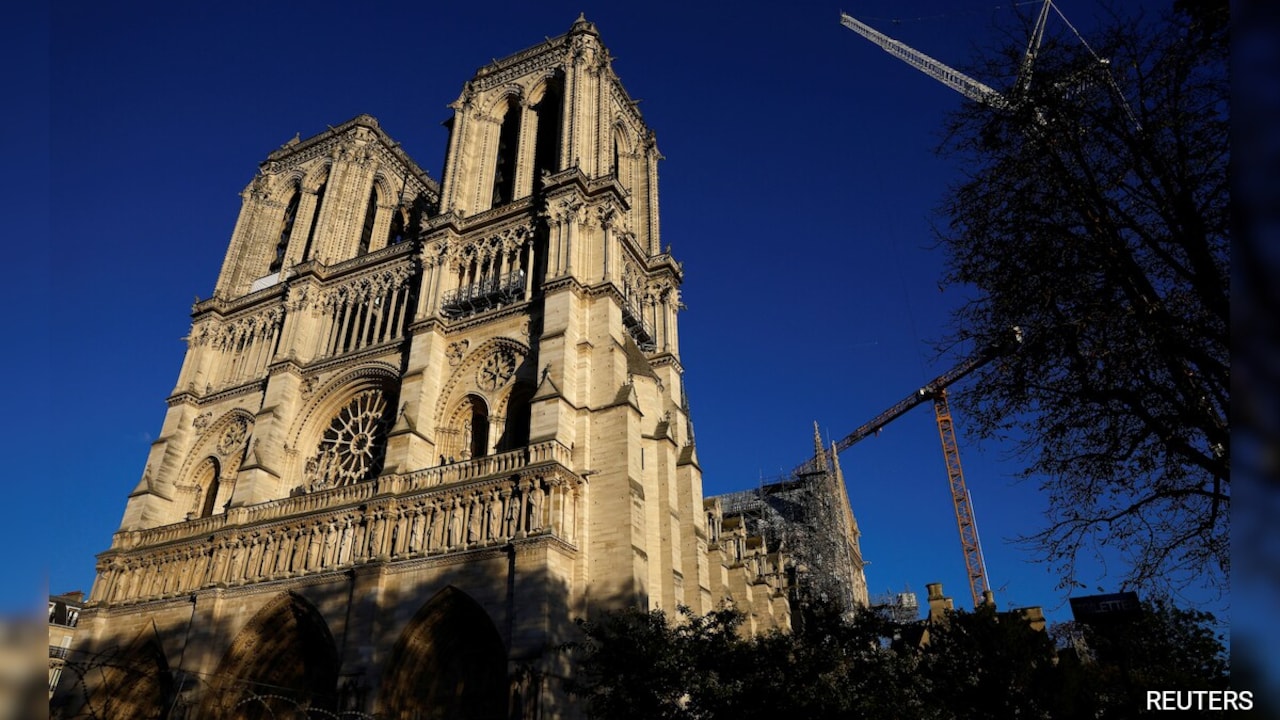
The air inside Notre-Dame de Paris always smelled of stone, beeswax, and centuries of trapped prayers. But on April 15, 2019, that scent vanished, replaced by the acrid, choking stench of burning lead and ancient oak. As the world watched the spire collapse into the roaring orange belly of the nave, it felt like time itself was burning down. We thought we were losing history.
We were actually about to unearth it.
Catastrophe has a strange way of clearing a path. When the ashes cooled and the monumental task of rebuilding began, scientists and archaeologists from France’s National Institute of Preventive Archaeological Research (Inrap) were called in. Before the heavy machinery could roll across the transept, before the massive scaffolding could be anchored into the earth, they had to look down.
Beneath the floorboards lay a world untouched since the Middle Ages. What they found was not just a collection of artifacts. They found the discarded, forgotten debris of human lives.
The Floor Beneath the Floor
To understand the scale of what lay hidden, you have to understand how a cathedral breathes. It is not a static monument. It is a living organism that has been altered, patched, and remodeled by successive generations, each erasing the footprints of the last.
When the team dug into the earth beneath the cathedral’s central transept, they were looking for stability. They needed to ensure the ground could support the immense weight of the new spire. Instead, just inches below the level where millions of tourists had walked, the trowels struck stone.
It was a cemetery. But more than that, it was a time capsule.
The excavations revealed an extraordinary stratigraphic layer cake. Among the dirt and structural foundations, archaeologists uncovered a hoard of silver coins, the fragments of a 13th-century rood screen, and several tombs.
Consider the sheer luck of this discovery. Had the fire not devastated the roof, this ground would never have been disturbed. The French state protects its heritage fiercely; you do not simply dig up the floor of Notre-Dame on a whim. The disaster created a paradox: a tragedy that unlocked a treasury.
A Pocketful of Medieval Change
Among the most immediate, visceral finds was a small hiding place containing dozens of bronze and silver coins.
Money is the ultimate human artifact. It passes from warm hands to cold pockets, buys bread, pays taxes, and gets lost in the dark. Looking at these tarnished discs, it is impossible not to imagine the day they slipped from a tunic.
Hypothetically, let us imagine a stonecutter named Jean, working on the construction of the nave in the early 1200s. He is paid in small silver deniers. The cathedral is a chaotic, noisy labyrinth of scaffolding, dust, and shouting men. Jean reaches for his pouch, a coin slips through the gaps in the temporary wooden floorboards, and falls into the dark earth below. He curses, perhaps, but the work moves on. The floor is sealed with stone. Jean's bad luck becomes our historical jackpot eight centuries later.
These coins offer more than just a romantic story. They provide hard, chronological anchors. By analyzing the mint marks and the composition of the metal, historians can map the economic health of Paris during the reign of King Philip Augustus. They tell us who was trading, where the silver was coming from, and how the economy flowed through the very heart of the Île de la Cité.
The Shattered Masterpiece
If the coins represent the mundane reality of medieval life, the painted sculptures represent its highest spiritual aspirations.
As the archaeologists dug deeper, they began to pull out exquisitely carved, polychrome stone fragments. These were the remains of Notre-Dame’s original rood screen—an ornate architectural barrier built around 1230 that once separated the chancel, where the clergy sat, from the nave, where the common people gathered.
During the high Middle Ages, these screens were visual storytelling devices for a largely illiterate public. They were covered in vibrant blues, striking reds, and gleaming gold leaf, depicting scenes of the Gospels with dramatic, theatrical flair.
But tastes change. By the early 18th century, during the reign of Louis XIV, the rood screen was deemed archaic, a bulky obstruction that blocked the view of the altar. It was systematically torn down.
We often think of historical vandalism as something done by invaders or revolutionaries. Often, it is just done by people who think they have better taste than their grandfathers.
The builders of the 18th century didn't haul the broken pieces of the screen away. They did what construction workers have done since the dawn of time: they used the debris as backfill. They buried the stunning, lifelike faces of saints and angels directly into the foundations of the new choir floor.
Pulling those pieces from the dirt felt like rescuing survivors from a collapse. The paint is still there. The blues made from ground lapis lazuli, the deep reds of cinnabar—they still catch the light. You can see the chisel marks of the sculptors, the precision of their hands, frozen in time because they were protected from the air and the sun for three hundred years.
The Quiet Inhabitants
Then come the lead coffins.
The team discovered several human-shaped sarcophagi made of lead, a material reserved for the elite of medieval society. Lead seals out moisture and air, sometimes preserving organic matter with startling clarity.
Using endoscopic cameras snaked through small cracks in the metal, scientists peered inside one of the coffins. They saw the remnants of plants, a crown of flowers, and textiles. This wasn't a nameless peasant. This was someone loved, someone of immense status—perhaps a high-ranking canon of the cathedral who died in the 14th century.
There is an unsettling intimacy to this kind of work. It forces a confrontation with our own transience. The individual in the lead coffin likely believed their resting place was eternal, anchored beneath the heaviest stone structure in Paris. They could never have anticipated the French Revolution, which stripped the cathedral of its statues, or the 19th-century restoration by Viollet-le-Duc, or the spark that ignited the attic on a quiet spring evening in 2019.
Yet, here they are, blinking back into the light of a new millennium.
The Connection
We tend to look at history as a series of clean dates in a textbook. 1163: Construction begins. 1250: Completion. 2019: The fire.
But history is messy. It is made of backfill, dropped coins, changing artistic trends, and buried secrets. The archaeology of Notre-Dame reminds us that the cathedral is not just a monument to God or to French architecture; it is a monument to the continuity of human effort.
The hands that carved the beautiful, newly discovered rood screen fragments are cousins to the hands currently carving the new oak beams to replace the destroyed roof. The modern artisans use the same tools—the adze, the chisel, the plumb line—as their medieval predecessors. They are breathing the same stone dust.
When Notre-Dame fully reopens its doors to the public, visitors will walk across a floor that looks solid, permanent, and timeless. They will look up at the soaring vaults and the clean, white stone washed free of centuries of soot.
But the real magic of the place will remain just out of sight, beneath the soles of their shoes. It is the knowledge that the grandest human achievements are always built upon the layers of those who came before, resting quietly in the dark, waiting for a crack in the floor to tell their stories.