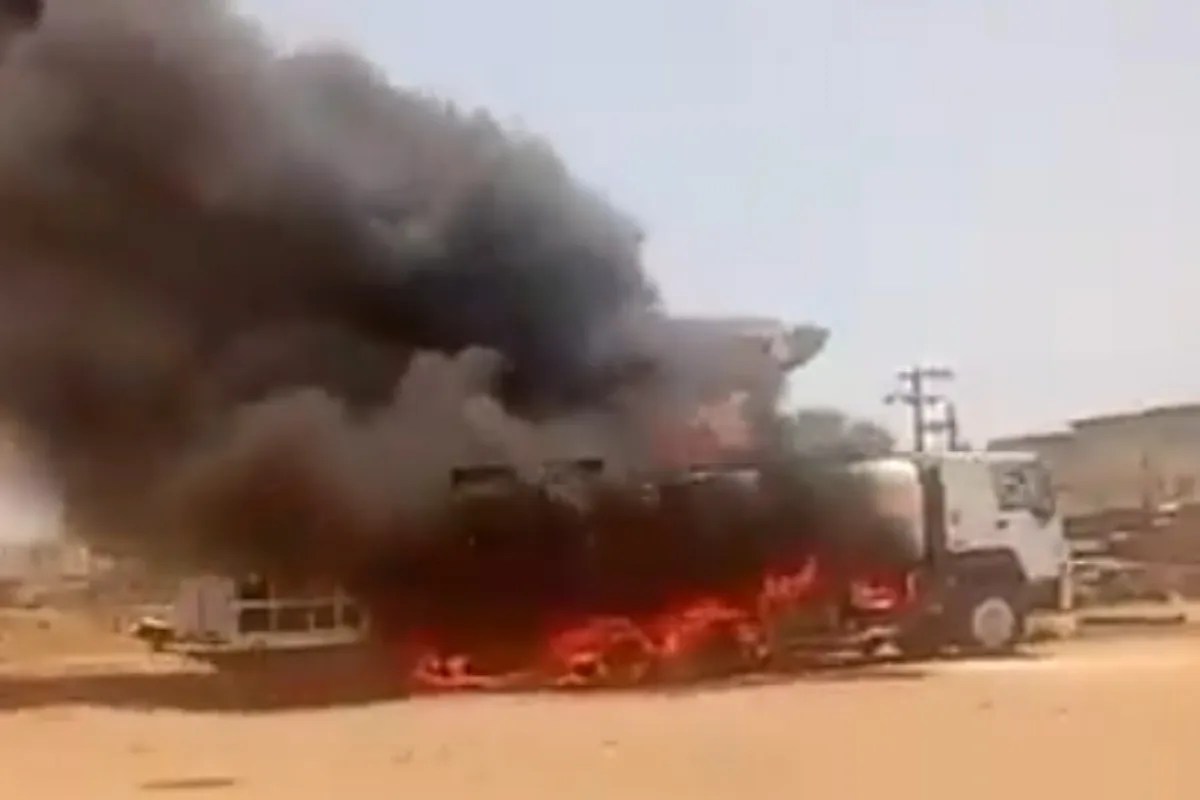
The wind in Sudan doesn’t just carry sand. It carries the metallic scent of old brass and the heavy, suffocating silence of streets that used to be loud with the haggling of merchants and the laughter of children. In the Darfur region, silence is rarely a sign of peace. It is a warning. It is the sound of a city holding its breath, waiting for the next crack of a rifle to shatter the afternoon.
Sudan is bleeding, but it is not a sudden wound. It is a slow, rhythmic draining of life that the world has largely tuned out. We see the headlines—the acronyms like RSF and SAF clashing over territory—and we treat them like scores in a distant, incomprehensible game. But territory is just dirt. The real loss is measured in the breakfast plates left full and the tea cooling on a table while a family huddles in the dark. If you found value in this piece, you might want to read: this related article.
Recently, in the heat of El Fasher, five more chairs went empty. Five people, labeled "innocent civilians" in the dry reports of international monitors, were executed. They weren't soldiers. They didn't have a stake in who sits in the palace in Khartoum. They were just people who happened to be standing where a war wanted to walk.
The Anatomy of a Massacre
To understand how five lives vanish in a heartbeat, you have to understand the Rapid Support Forces (RSF). They aren't a traditional army. They are a ghost of the Janjaweed, born from the scorched-earth policies of decades past, now evolved into a paramilitary force that moves with a terrifying, unpredictable fluidity. When they enter a neighborhood, they don't bring order. They bring an end to the world as the residents know it. For another angle on this event, see the latest update from BBC News.
The latest reports from North Darfur tell a story of cold efficiency. The RSF fighters moved through the area, and by the time they left, five bodies remained. There was no trial. There was no explanation. In the eyes of a paramilitary force fueled by ethnic tension and the desperate scramble for gold and power, a civilian is not a person. They are a variable. A witness. A nuisance.
Consider a man like Omar—a hypothetical name for a very real kind of victim. Omar might have spent his morning worrying about the price of flour or whether the well in his district was still pumping clean water. He might have been walking to his neighbor’s house to return a borrowed tool. When the RSF trucks roll in, draped in the dust of the desert, Omar’s entire history—his childhood in the mountains, his wedding day, the way he taught his son to track goats—evaporates. He becomes a statistic. One of five.
Why the World Looks Away
It is easier to process a number than a face. If we look at the faces, we have to acknowledge the failure of the global "never again" promise. The conflict in Sudan has been characterized by a brutal cycle of displacement and targeted killings that mirror the dark days of 2003. Yet, the international community often treats Darfur like a tragic, unfixable weather pattern rather than a man-made catastrophe.
The RSF’s strategy relies on this apathy. They know that as long as the internet stays spotty and the borders remain closed to journalists, their "operations" remain whispers. They rely on the fact that most people in London, New York, or Delhi couldn't find El Fasher on a map. This geographical distance creates a moral distance. We hear "five dead" and we think it is a tragedy, but we don't feel it as a robbery.
But it is a robbery. It is the theft of futures. Those five individuals in North Darfur represented a combined century or more of memory and potential. One might have been a grandmother who held the oral history of her tribe in her head. Another could have been a teenager who dreamt of seeing the sea. When the RSF pulls a trigger, they aren't just killing a body; they are burning a library.
The Invisible Stakes of a Forgotten War
The war in Sudan is often framed as a power struggle between two generals, Abdel Fattah al-Burhan and Mohamed Hamdan "Hemedti" Dagalo. If you look at it through that lens, it feels like a political dispute. But for the people on the ground, politics is a luxury they lost long ago. This is about survival.
The RSF has been accused by multiple human rights organizations of systematic "cleansing." This isn't just about winning a battle; it’s about changing the map. By killing civilians and forcing others to flee, they create a vacuum. They turn ancestral lands into tactical zones. The five people killed in this latest incursion are part of a larger message being sent to everyone else: Leave, or stay and die.
The pressure is mounting. Supplies are running low. Hospitals in El Fasher are operating on the brink of collapse, often under direct fire. When five people are killed, it sends a shockwave through the surviving population. It tells the doctor that his scrubs won't protect him. It tells the mother that her walls are made of paper. The psychological toll is a weapon just as effective as a machine gun.
The Weight of the Dust
We often speak about "bringing people to justice," but in the heart of Darfur, justice feels like a fairy tale told to children to help them sleep. The RSF operates with a sense of total impunity. They move through the villages with the confidence of men who know that no gavel will ever fall for them.
The tragedy of the five lives lost this week isn't just that they died. It is that they died in a world that has become comfortable with their death. We have developed a callus. We see the photos of the dust-covered trucks and the smoke rising over the horizon, and we swipe to the next story.
But the dust doesn't settle. It stays in the lungs of the survivors. It settles on the belongings of the dead, left behind in houses that will eventually be looted or burned. Every time we ignore a report of "five people killed," we give permission for the next five.
The story of Sudan isn't found in the dry press releases of the UN. It is found in the dirt of El Fasher, in the blood that soaks into the earth and disappears before the sun sets. It is found in the eyes of the people who watched those five neighbors fall and realized that, in the eyes of the world, they are already ghosts.
The sun sets over Darfur, casting long, jagged shadows across the sand. Somewhere, a family is counting their members and finding one missing. They don't need a news report to tell them what happened. They know the rhythm of the trucks. They know the sound of the silence that follows. The world might have forgotten the value of a single life in the desert, but the desert never forgets. It holds every drop of blood, every whispered prayer, and every broken promise, waiting for a day when the wind finally stops blowing and someone is forced to look at what remains.