The sun over the West Bank does not just shine; it weighs. It sits heavy on the shoulders of men who have spent generations coaxing life out of a soil that is increasingly becoming a graveyard for their ambitions. To read a headline about a Palestinian man killed by settlers is to see a flicker of a candle in a hurricane. It is a brief flash of light, a momentary acknowledgment of a life extinguished, before the darkness of the "standard cycle of violence" swallows the memory whole.
But facts are cold things. They don't tell you about the smell of woodsmoke in the morning or the way a father’s hands, calloused by the rough bark of olive trees, feel when they ruffle his son’s hair. When we strip away the sterile language of "clashes" and "incidents," we are left with the raw, vibrating nerves of a human tragedy that is repeating itself with a sickening, rhythmic frequency.
The Sound of Breaking Silence
Imagine a village where the silence is not a sign of peace, but a held breath. This is the reality for communities nestled in the hills of the West Bank. In this hypothetical yet deeply representative space, let’s call a man Omar. Omar is not a political figure. He is a man who measures his wealth in liters of pressed oil and the height of his children.
One afternoon, the sound of an engine breaks the stillness. It isn't the familiar, sputtering cough of a neighbor's tractor. It is a faster, more aggressive hum. In the West Bank, sound is a survival tool. You learn to distinguish the approach of a friend from the arrival of a threat. When the settlers arrive, they don’t come to talk about property lines or grazing rights. They come with the weight of an ideology that views the very presence of Omar as an asterisk on a map they are trying to redraw.
The encounter is rarely a debate. It is an ambush of the spirit. Stones fly first. Then comes the glint of metal—sometimes a baton, sometimes a rifle. In the latest reports coming out of the region, the outcome is often the same: a Palestinian life ended, a family shattered, and a report filed in a cabinet that is already overflowing with similar folders.
The Invisible Stakes of a Vanishing Map
Why does this keep happening? To understand the "why," you have to look past the immediate violence and see the structural erosion of a people's sense of safety. The West Bank is often described as a "disputed territory," a phrase so bleached of emotion it barely registers. In reality, it is a jigsaw puzzle where the pieces are being forcibly reshaped.
Each new settlement outpost is a jagged edge. When a Palestinian man is killed, it isn't just a loss of life; it is a message sent to everyone else in the valley. The message is simple: Your presence is temporary. Your safety is a luxury we no longer provide. Statistics tell us that settler violence has surged to record highs over the last year. But numbers are a defense mechanism. They allow us to categorize pain without feeling it. We look at a graph and see a line going up, but we don't see the widowed mother who now has to figure out how to harvest the olives alone, or the children who stop playing in the fields because the hills have eyes that hate them.
The tension is a living thing. It breathes. It grows. It feeds on the lack of accountability. When a crime is committed and the perpetrators walk back to their hilltop caravans without so much as a summons, the law becomes a ghost. It haunts the victim and protects the aggressor. This isn't just about a single death; it is about the death of the idea that justice is blind. In the West Bank, justice has a very specific vision, and it rarely looks toward the Palestinian villages.
The Weight of the Olive Branch
There is a specific kind of grief that comes from losing someone to a cause they never signed up for. Most of the men killed in these encounters aren't soldiers. They are farmers. They are teachers. They are people who went out to check on their livestock or to ensure their water tanks hadn't been punctured.
Consider the irony of the olive tree. It is a universal symbol of peace, yet in this land, it is a lightning rod for violence. Settlers burn them. Palestinians defend them. The trees take decades to reach their prime, standing as silent witnesses to the changing of regimes and the spilling of blood. When a man is killed defending his land, he is often dying for a tree that saw his grandfather’s birth and was intended to shade his grandson’s wedding.
The loss of a breadwinner in these rural communities is a slow-motion catastrophe. The economic impact is immediate, but the psychological toll is a permanent scar. A village that loses a member to settler violence becomes a place of whispers and looking over shoulders. The trauma isn't localized; it ripples outward, radicalizing the peaceful and despairing the hopeful.
The Language of De-escalation and the Reality of Fire
We hear the word "de-escalation" tossed around in diplomatic circles like a holy relic. It is a word used by people in air-conditioned offices in Washington or Brussels. But how do you de-escalate a situation where one side is backed by the state's military and the other is armed with nothing but a deed to a land that no one recognizes?
The reality is that "clashes" is a dishonest word. A clash implies two equal forces meeting. What we see in the West Bank is often an extraction. It is the removal of a human obstacle.
The political landscape—a word I use reluctantly because it suggests a level of order that doesn't exist—is currently tilted toward the extreme. Ministers in the current government have openly encouraged the expansion of these outposts, effectively giving a green light to the more radical elements of the settler movement. When the people at the top stop calling for restraint, the people on the ground start pulling triggers.
A Legacy Written in Stone
The man who died yesterday had a name. He had a favorite meal. He probably had a debt he was worried about or a joke he was planning to tell his wife when he got home. Now, he is a headline.
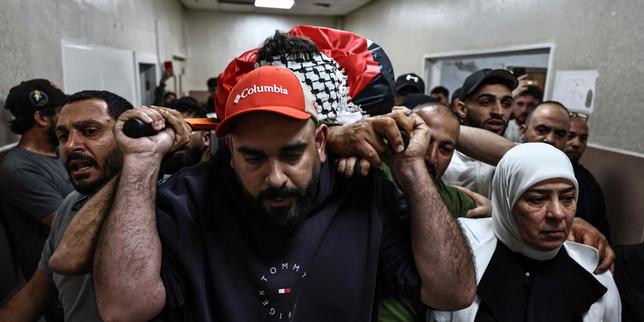
In the coming days, there will be a funeral. There will be chanting. There will be more soldiers, more stones, and more tears. The world will watch for a moment, offer a "deeply concerned" statement, and then look away when the next news cycle begins.
But the dust in the olive groves doesn't just blow away. It settles. It coats the leaves and the lungs of those who remain. It becomes a part of the soil, a gritty reminder that for some, the simple act of existing on their own land is a capital offense.
The tragedy isn't just that he died. The tragedy is that we have become so accustomed to his death that we no longer find it tragic. We have traded our empathy for "context" and our outrage for "complexity." Meanwhile, the hills continue to burn, and the silence in the villages grows heavier, waiting for the next engine to break the peace.
He was standing in the dirt he loved, under a sky that had seen too much, and now he is part of the landscape he was trying to save.


