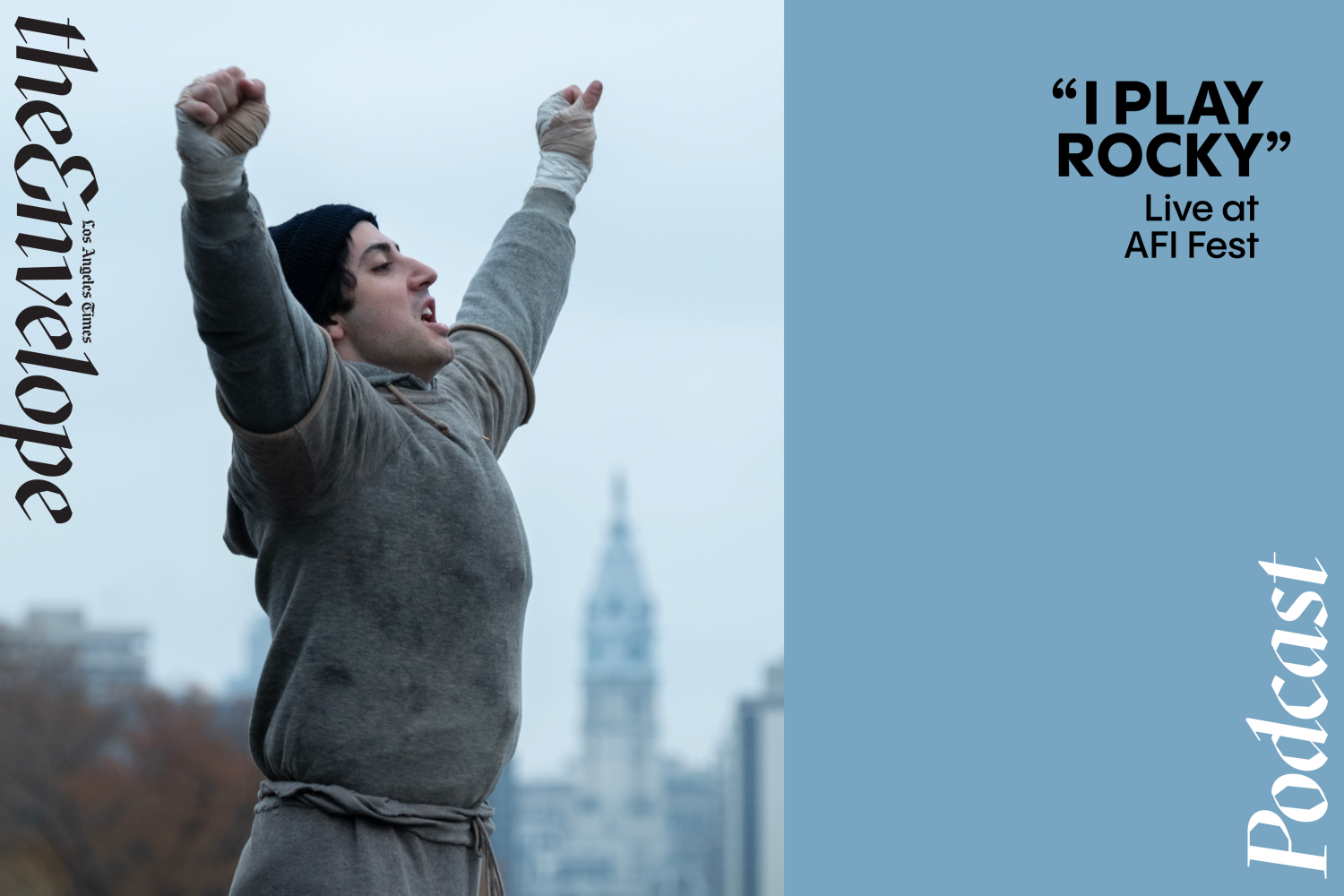
"Anti-money cinema" is not a rejection of profit; it is an asymmetric capital allocation strategy designed to maximize artistic leverage by minimizing financial overhead. When Peter Farrelly characterizes his biographical drama I Play Rocky—chronicling Sylvester Stallone’s struggle to get the original 1976 film produced—as an "anti-money movie," he is describing a specific structural arbitrage in film production. In the modern studio system, bloated budgets create defensive, risk-averse storytelling because high capital exposure demands predictable intellectual property returns. By stripping away inflated above-the-line costs and rejecting studio-mandated creative compromises, an anti-money production shifts risk from balance-sheet debt to sweat equity, replicating the exact operational mechanics that allowed the original Rocky to turn a roughly $1 million investment into a $225 million global box office phenomenon.
To understand why this model works—and why major studios consistently fail to replicate it—requires deconstructing the mechanics of film financing, principal-agent conflicts, and the operational realities of constrained production. You might also find this related article insightful: Why Blue Lights Nails Belfast Sectarian Tensions Better Than Any Police Drama.
The Structural Anatomy of an Anti-Money Production
In standard Hollywood accounting, capital serves as an insurance policy against uncertainty. Studios spend $150 million to $250 million on tentpole releases to buy recognizable intellectual property, A-list talent, and massive marketing footprints. This capital intensity creates an immediate structural bottleneck: the Commodification Trap. When a studio exposes $200 million of capital, every creative decision must pass through a risk-mitigation filter. Narrative ambiguity is eliminated, pacing is standardized to match audience test-screening algorithms, and the director functions less as an author and more as a project manager overseeing a committee.
An anti-money movie inverts this equation through three operational pillars: As highlighted in recent coverage by E! News, the implications are worth noting.
- Capital Starvation as a Creative Filter: By deliberately capping the production budget at a fraction of standard studio rates, the production eliminates the financial cushion that enables lazy filmmaking. Without the funds to fix narrative flaws in post-production through expensive reshoots or heavy visual effects, the script and performances must carry the entire structural load of the film.
- Equity Over Upfront Fees: In traditional studio deals, talent extracts maximum value upfront through guaranteed salaries, draining the production budget before a single frame is shot. In an anti-money framework, key personnel—writers, directors, and lead actors—defer upfront compensation in exchange for backend profit participation and creative autonomy.
- Asymmetric Risk Distribution: When a film costs under $15 million to produce, its break-even threshold is drastically lower. This low capital floor allows the filmmakers to target specific, emotionally resonant niches rather than diluting the product to appeal to a homogenized four-quadrant global demographic.
The original 1976 Rocky remains the definitive case study of this architecture. Producers Irwin Winkler and Robert Chartoff initially offered Sylvester Stallone hundreds of thousands of dollars for his screenplay, intending to cast an established star like Burt Reynolds or James Caan. Stallone, living in near-poverty, refused to sell the script unless he played the lead. To protect their downside against an unproven actor, United Artists slashed the budget to approximately $1 million, and Winkler and Chartoff had to mortgage their own homes to cover potential overages. That financial constraint dictated the film's aesthetic: handheld Steadicam shots, available-light street photography in Philadelphia, non-union extras, and a compressed 28-day shooting schedule. The scarcity of capital did not hinder the movie; it engineered its authenticity.
The Principal-Agent Conflict in Modern Studio Filmmaking
The friction between creative vision and financial return is a classic principal-agent problem. In a major studio ecosystem, the studio executives (the agents) are managing capital on behalf of corporate shareholders or parent conglomerates (the principals). Because executive compensation and job security are tied to quarterly earnings and predictable slate performance, executives are heavily incentivized to avoid catastrophic failure rather than pursue asymmetric upside.
When a director pitches a project like I Play Rocky—a period piece about the making of a film, featuring an actor (Anthony Ippolito) who is not a traditional box-office draw—a risk-averse studio executive views it as an unhedged liability. The standard studio solution to this perceived risk is to inject more capital to buy certainty: replace the unknown lead with an established star, rewrite the script to hit familiar biographical beats, and inflate the marketing budget to force audience awareness.
Farrelly’s framing of I Play Rocky as an anti-money movie identifies the fatal flaw in that studio logic. Injecting capital into a character-driven underdog story destroys the very mechanism that generates audience investment. Audiences possess an acute sensitivity to manufactured stakes. When a film costs $100 million, the visual polish, pristine lighting, and recognizable stars create an implicit cognitive dissonance when the narrative asks the viewer to believe the protagonist is desperate and marginalized.
By keeping the production lean and casting based on physical and emotional fidelity rather than Q-scores (celebrity familiarity and appeal metrics), the filmmakers align the production reality with the narrative theme. The actors and crew are operating under the same resource constraints as the characters they are depicting. This alignment eliminates the principal-agent friction because the creators are directly invested in the artistic outcome rather than protecting a massive corporate outlay.
Deconstructing the Cost Function of Authenticity
Film budgets are divided into above-the-line costs (creative talent: writer, director, producers, principal cast) and below-the-line costs (physical production: crew, equipment, locations, post-production). In contemporary cinema, above-the-line expenses routinely consume 30% to 50% of a mid-to-high budget film before production begins.
When a production adopts an anti-money posture, it systematically restructures both sides of this ledger:
- Eliminating Star-Vehicle Premiums: A-list actors command $10 million to $20 million upfront, alongside rigid contractual perks (private travel, entourage expenses, script approval). Casting a relative newcomer like Anthony Ippolito as a young Stallone frees millions of dollars that can either be reallocated to physical production or removed from the budget entirely to lower the financial break-even point.
- Compression of Shooting Schedules: Time is the primary driver of below-the-line burn rates. Every day on set incurs fixed costs for equipment rentals, location permits, catering, and crew wages. Anti-money productions rely on rigorous pre-production rehearsal so that scenes can be captured in minimal takes, compressing a 60-day studio shoot into 30 to 35 days.
- Reduction of Post-Production Bloat: Modern studio films often shoot without a locked script, relying on massive visual effects teams and multiple editorial cycles to "find the movie" in post-production. A constrained budget forces narrative discipline on the page. Every scene must justify its existence before cameras roll because there is no financial safety net for structural reshoots.
This operational discipline creates a direct cause-and-effect chain: lower capital exposure reduces the number of corporate stakeholders required to greenlight the project, which reduces creative interference, which preserves the singular voice of the director and screenwriter.
The Meta-Narrative Paradox of I Play Rocky
Analyzing I Play Rocky requires separating its operational philosophy from its commercial reality. While Farrelly positions the film as an anti-money endeavor, it operates within a fundamentally different market ecosystem than the 1976 original.
First, I Play Rocky benefits from inherited intellectual property equity. The original Rocky was a completely unknown entity; audiences had zero preexisting emotional attachment to Rocky Balboa in November 1976. Conversely, a film about the making of Rocky inherently trades on nearly five decades of cultural saturation, nine franchise installments, and billions of dollars in cumulative brand awareness. Even without direct franchise financing, the project enjoys massive earned media value simply because the subject matter is embedded in global pop culture.
Second, the distribution mechanics of the mid-2020s differ entirely from the theatrical landscape of the 1970s. In 1976, a sleeper hit could build word-of-mouth momentum over six to nine months in theaters, expanding gradually from a few screens to thousands. Today, theatrical windows are compressed, and mid-budget dramas face severe headwinds against streaming algorithms and tentpole theater monopolies. An anti-money budget is no longer just an artistic choice; it is a mathematical necessity for theatrical survival. If a biographical drama costs $60 million to produce and another $40 million to market, it must gross roughly $200 million globally just to break even after theater owners take their share of ticket sales. In the current theatrical market, very few adult-oriented dramas reach that threshold. By keeping production costs strictly contained, I Play Rocky can achieve profitability through a modest theatrical run combined with downstream streaming and licensing revenue.
Operational Limitations of the Anti-Money Model
While rejecting bloated budgets solves the problem of corporate creative interference, the anti-money approach introduces severe operational vulnerabilities that filmmakers must manage:
- Zero Margin for Execution Error: Without a financial buffer, a single major production disruption—inclement weather during exterior shoots, a key cast member falling ill, or a location permit revocation—can halt filming permanently. Studios absorb these shocks with contingency funds (typically 10% of the budget); lean productions must absorb them by cutting scenes from the script on the fly.
- Marketing Asymmetry: Saving money on production does not solve the distribution bottleneck. Studios spend massive sums on print and advertising (P&A) because consumer attention is fragmented. An anti-money movie still requires a mechanism to cut through the noise. Without a $50 million marketing blitz, the film relies entirely on festival acclaim, aggressive publicity tours, and organic social media amplification—variables that are notoriously difficult to engineer.
- Labor Sustainability: Repeatedly asking crews and mid-level talent to work at reduced rates in exchange for "passion" or backend points creates long-term industry burnout. While top-tier directors like Farrelly and producers like Toby Emmerich possess the financial security to defer upfront fees, below-the-line technicians rely on standard union scale wages to survive. True anti-money efficiency must come from cutting executive bloat and star salaries, not squeezing technical labor.
Strategic Execution for Mid-Budget Filmmaking
For independent producers, financiers, and studio divisions looking to replicate the success of Rocky or execute a project in the mold of I Play Rocky, the data points toward a specific operational blueprint. Attempting to outspend major conglomerates on spectacle is a losing strategy; competing on capital efficiency and narrative specificity is the only viable path to asymmetric returns.
To execute this model effectively, decision-makers must enforce three non-negotiable rules:
- Cap Above-the-Line Allocation at 20%: Restructure all principal talent and director deals to heavily weight backend net-profit corridors rather than upfront cash guarantees. If an actor or director refuses to tie their compensation to the commercial performance of the film, they are misaligned with the risk profile of the project and must be replaced.
- Lock the Script Before Capital Deployment: Prohibit greenlighting any mid-budget drama until the screenplay requires zero structural changes. Every dollar spent on six months of intensive table reads and script doctoring saves ten dollars in physical production and post-production rework.
- Design Marketing Into the Production Phase: Because P&A budgets will be constrained, capture behind-the-scenes narrative assets, cast chemistry, and physical transformation milestones during principal photography. In an anti-money campaign, the story of how the film was made—and the authentic struggle behind it—must serve as the primary promotional engine long before the trailer is cut.