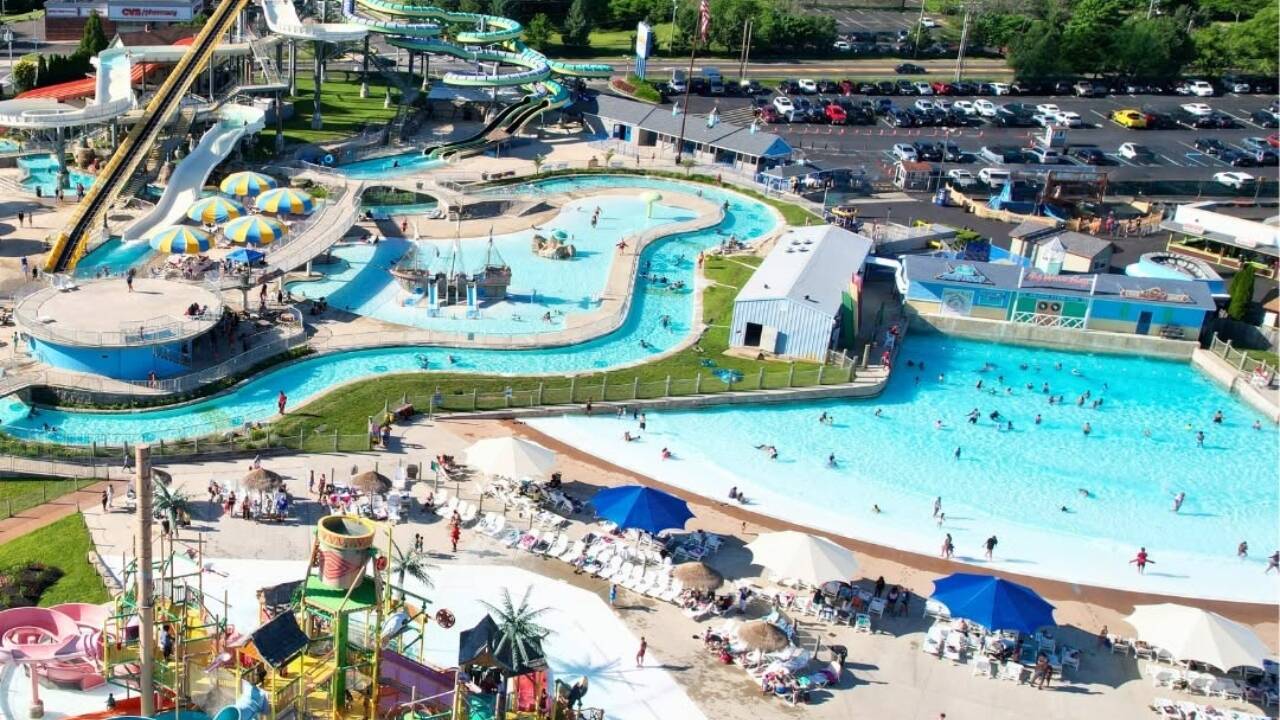
The permanent cessation of operations at Clementon Park and Splash World marks another terminal point for the regional amusement sector. Operating continuously for 119 years across shifts in ownership, bankruptcies, and shifting consumer habits, the 52-acre Camden County property has once again hit the auction block. This outcome is not an isolated anomaly driven by localized mismanagement. Rather, it represents the predictable endgame of a structural mismatch between fixed asset depreciation, high capital expenditure requirements, and compressed operational windows in the regional leisure economy.
Deconstructing the failure of legacy seasonal parks requires examining the underlying business model through three distinct economic pressures: the capital expenditure trap, land-value option pricing, and the seasonal labor cost function.
The Capital Expenditure Trap and Yield Compression
Amusement assets are intensely capital-intensive. Unlike digital platforms or asset-light service models, regional parks require continuous, heavy investments in structural safety, insurance compliance, and attraction renewal. Every operating season demands upfront outlays for maintenance, ride inspection, and insurance underwriting long before the first ticket is sold.
The revenue model relies on a heavily compressed operating calendar. Historically tied to Memorial Day through Labor Day, a park in the Northeast corridor operates at peak capacity for roughly one hundred days. Inclement weather on a single weekend can permanently wipe out the net margin for an entire month, as fixed overhead costs—property taxes, debt service, and core maintenance—remain inelastic relative to weather-driven attendance drops.
When IB Parks & Entertainment acquired the property out of foreclosure for approximately $2.37 million in 2021, the acquisition cost was low, but the deferred maintenance liability was immense. Operating a park of this scale requires maintaining a delicate ratio between per capita spending (in-park yield on food, beverage, and merchandise) and gate attendance. When regional alternatives—mega-parks, destination water parks, and modern home entertainment options—capture discretionary leisure dollars, local parks face margin compression. They lack the scale to absorb rising vendor costs or invest in marquee attractions that command higher admission prices.
The Real Estate Option Value
As operating margins narrow, the highest and best use of the underlying land diverges sharply from its current operational purpose. A 52-acre parcel featuring significant waterfrontage along Clementon Lake possesses substantial real estate optionality.
From a corporate finance perspective, holding an underperforming amusement park is equivalent to holding an underwater asset where the continuation value is lower than the liquidation value. When operating cash flows approach zero or turn negative, the land value dictates the terminal decision. The listing of the site for redevelopment—targeting potential uses such as multifamily residential complexes, senior housing, or mixed-use retail—illustrates this economic reality.
[Declining Visitor Yield] + [Inelastic Fixed Costs]
       ↓
[Compressed Operating Margins]
       ↓
[Deferred Maintenance Accumulation]
       ↓
[Asset Liquidation & Land Redevelopment Realignment]
The liquidation sequence follows a predictable path:
- Capital expenditure starvation leads to declining guest satisfaction and safety perceptions.
- Attendance dips, forcing management to rely on deep discounting, which erodes brand equity.
- Debt obligations or property tax burdens outpace liquid cash reserves, triggering default or voluntary closure.
- The property is offered to the market with a dual-track prospectus: operational continuation or site redevelopment.
Labor Dynamics and Regulatory Friction
Operating a seasonal park introduces acute labor friction. The shift toward higher minimum wages and increased competition for hourly workers has altered the cost structure of amusement operations. Amusement parks are heavy consumers of entry-level, seasonal labor. Because these roles cannot be easily automated, wage inflation flows directly through to the operating expense line without a corresponding increase in productivity.
Simultaneously, regulatory oversight regarding ride safety, environmental compliance, and municipal water management creates persistent administrative friction. Compliance costs scale independently of revenue, meaning a park experiencing a flat or declining top line feels an increasingly heavy regulatory burden.
Strategic Play for Distressed Leisure Assets
Investors evaluating distressed regional leisure assets must abandon the thesis of operational turnaround through nostalgia. Brand legacy holds zero balance-sheet value when the underlying infrastructure requires multi-million-dollar capital infusions to meet modern safety and guest expectation thresholds.
The immediate playbook for any entity acquiring such acreage must bypass attempting to run a legacy amusement park under traditional parameters. Instead, the asset must be viewed strictly through a real estate conversion lens, where the park infrastructure is written down to zero, operations are immediately shuttered to stem cash bleed, and municipal zoning is aggressively pursued for higher-density residential or commercial master-planning.