The Structural Bottleneck of Interim Storage
The management of post-accident remediation waste from the Tokyo Electric Power Company Fukushima Daiichi Nuclear Power Station operates under a severe spatial and temporal constraint. Approximately fourteen million cubic meters of contaminated soil reside inside a sixteen-hundred-hectare interim storage facility spanning Okuma and Futaba. National legislation mandates the absolute removal and final disposal of this material outside Fukushima Prefecture by March 2045.
This legal obligation creates a massive logistical challenge. Moving fourteen million cubic meters of earth without an explicit reuse strategy requires an unprecedented volume of permanent repository space elsewhere in Japan—space that municipal governments and regional populations routinely reject. You might also find this related story useful: Why The Strait Of Hormuz Panic Is Pure Theater.
To circumvent this political deadlock, the Ministry of the Environment formulated a classification framework. Approximately three-quarters of the stored aggregate exhibits low radioactivity concentrations, measuring below eight thousand becquerels per kilogram. Under strict regulatory controls, this material qualifies as reconstruction recycled soil suitable for civil engineering applications, embankments, and public landscaping.
The Mechanics of Public-Sector Signaling
Prior attempts to introduce recycled soil outside controlled demonstration zones encountered sharp public resistance. Citizens outside the immediate disaster zone exhibited acute risk aversion, driven by information asymmetries and an absence of institutional accountability. To alter this behavioral dynamic, the Japanese government initiated a deliberate signaling strategy. As discussed in recent coverage by Associated Press, the results are notable.
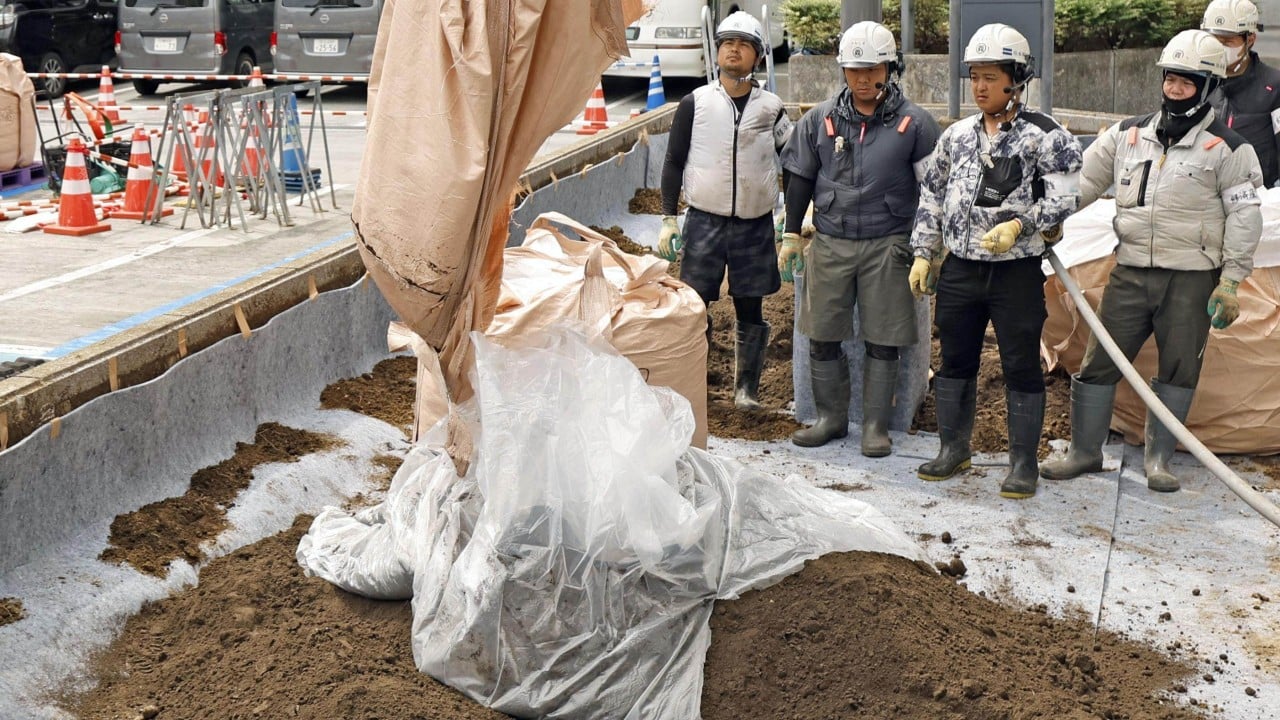
By deploying small volumes of recycled soil into high-visibility public spaces within the capital—including flowerbeds at the Prime Minister Office, the Supreme Court, and central ministry buildings—authorities attempted to establish safety through proximity. Over twelve locations in Tokyo absorbed approximately seventy-three cubic meters of this material under continuous monitoring.
The recent cabinet decision to expand this deployment to joint government office buildings in Sendai and Saitama marks a structural shift from centralized demonstration to regional decentralization. Sendai in Miyagi Prefecture represents a return to the broader Tohoku region affected by the 2011 earthquake and tsunami, while Saitama serves as a major metropolitan transit and administrative hub north of Tokyo. Utilizing roughly two cubic meters of material across these regional facilities establishes a decentralized baseline for public acceptance.
Deconstructing the Volume Reduction Equation
Solving the 2045 mandate requires managing a strict mass balance equation. If the final disposal volume remains at fourteen million cubic meters, the project faces structural failure due to a lack of host municipalities. Recycling seventy-five percent of the inventory reduces the final disposal burden to roughly three and a half million cubic meters, transforming an unmanageable geological footprint into a manageable civil engineering input.
| Parameter | Metric | Operational Implication |
|---|---|---|
| Total Stored Volume | ~14 million cubic meters | Requires final relocation from Fukushima by March 2045 |
| Recyclable Fraction | ~75% (<8,000 Bq/kg) | Diverted to public works and infrastructure projects |
| Current Deployment | ~75 cubic meters total | Initial signaling phase across central and regional government sites |
The economic cost function of this strategy depends entirely on velocity. Slow deployment rates imply extended interim storage maintenance costs, whereas rapid regional integration normalizes the material as standard construction aggregate. The physical placement of earth in administrative flowerbeds carries negligible structural weight, but its psychological weight is immense. It converts an abstract hazard into a localized, verifiable non-event.
Operationalizing Regional Acceptance
Overcoming the NIMBY phenomenon requires shifting the analytical framework from risk elimination to risk management transparency. The radioactive decay of Cesium-134 and Cesium-138 over the past decade ensures that the bulk of the stored material sits well below regulatory safety ceilings. When encapsulated beneath clean surface soil or asphalt barriers, the exposure pathway is effectively severed.
Expanding this program to regional branch offices outside the Tokyo metropolitan area forces prefectural and municipal leadership to engage with the data rather than abstract fears. If central government offices in Sendai and Saitama routinely incorporate reconstruction soil into urban landscaping without environmental deviation, the baseline for municipal resistance shifts.
Strategic Execution
The pathway to meeting the 2045 deadline requires scaling the current pilot deployments from cubic meters to thousands of cubic meters annually. Bureaucratic hesitation must be replaced by mandatory procurement quotas for public works projects utilizing certified low-radiation aggregate. The immediate operational priority involves mandating that all regional ministry branches audit their civil landscaping requirements against the available inventory of classified soil, turning state-owned infrastructure into the primary consumer of post-disaster remediation material.