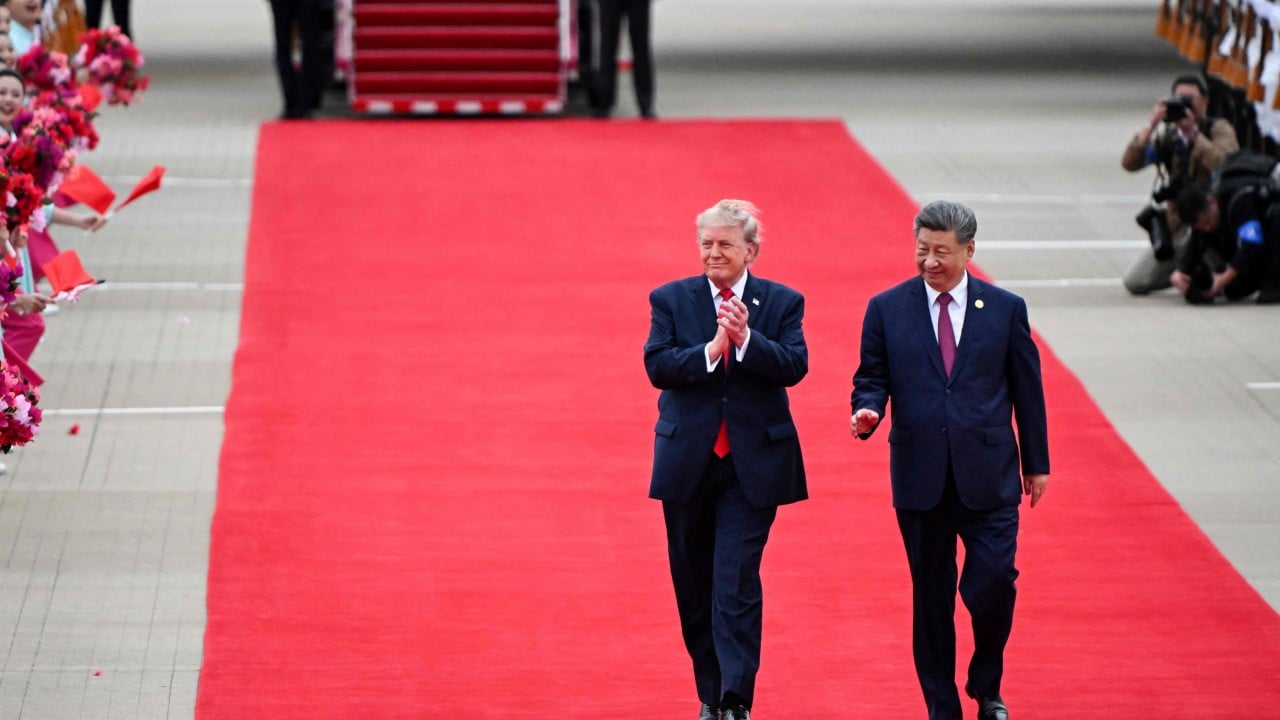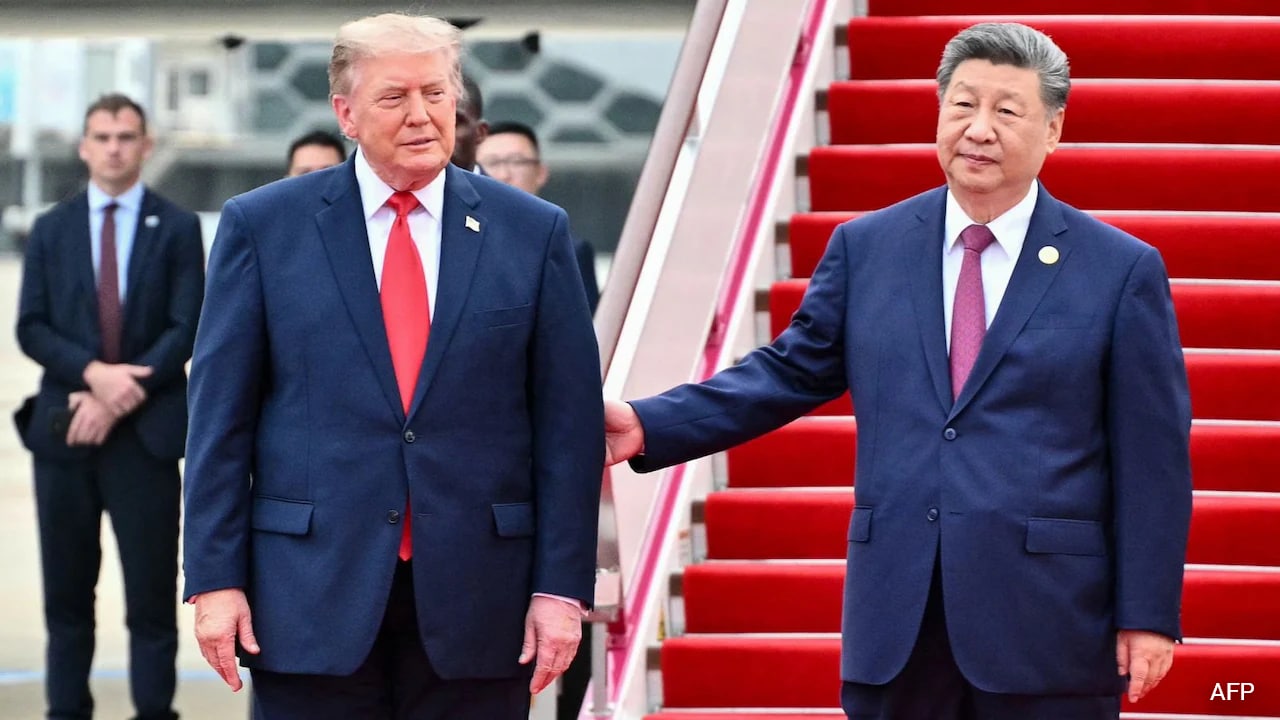
Chinese President Xi Jinping's personal airport greeting for United States President Donald Trump at Shenzhen Bao'an International Airport on November 18, 2026, was not an impulsive display of personal affinity. It was a calculated exercise in bilateral reciprocity designed to buy negotiating room ahead of a scheduled January 10 trade pact expiration and an impending December G20 summit in Miami. By breaking decades of Chinese Communist Party protocol to meet a foreign head of state directly on the tarmac, Beijing deployed low-cost symbolic capital to offset high-cost structural friction in trade, rare earth supply chains, and trilateral nuclear negotiations.
Standard media coverage treats airport greetings, embraces, and honor guards as atmospheric details. In statecraft, particularly between two asymmetric negotiating systems, protocol acts as a leading indicator of risk tolerance. Understanding the November 2026 Shenzhen reception requires stripping away the visual theater and analyzing the underlying mechanics of bilateral signaling, domestic political constraints, and trade deterrence.
The Protocol Ledger and Reciprocal Equilibrium
In Chinese diplomatic practice, the rank of the official dispatched to an airport tarmac serves as an exact index of political priority. For fourteen years in power, Xi Jinping adhered strictly to a hierarchy in which foreign leaders were met at the airport by vice ministers, foreign ministers, or Politburo members, reserving his own appearances for the Great Hall of the People. Breaking that precedent in Shenzhen—complete with a physical embrace, military honor guards, and choreographed civilian performers—served two immediate operational functions.
First, it closed an open diplomatic ledger. During Xi's September 2026 state visit to Washington, D.C., Trump met him personally at Joint Base Andrews, breaking a U.S. presidential precedent untouched since 1962. In Beijing's political framework, failing to match a counterpart's elevation of status creates an asymmetry that complicates domestic messaging. State media immediately framed the Shenzhen tarmac reception as an enactment of lishang wanglai—the principle of reciprocal courtesy. By matching the Joint Base Andrews gesture in Shenzhen, Xi neutralized any domestic perception that China was approaching the Asia-Pacific Economic Cooperation (APEC) summit from a position of deference.
Second, the spectacle targeted an audience of one. Trump's negotiating style places measurable weight on personal status and public deference. Providing high-visibility pageantry on arrival lowers the immediate emotional temperature before closed-door sessions begin. The gesture cost Beijing zero policy concessions on industrial subsidies, technology transfers, or territorial claims, yet it established an immediate baseline of goodwill that raised the political cost for Washington to walk away from the table during the APEC proceedings.
The Deterrence Architecture Behind the Spectacle
Surface-level warmth in Shenzhen masked an escalating cycle of economic coercion that had pushed both economies to the brink of decoupling eighteen months earlier. To evaluate why Beijing invested heavily in diplomatic optics in November 2026, one must examine the structural stalemate established between April 2025 and November 2026.
Following the U.S. administration's April 2025 tariff wave—later invalidated by the U.S. Supreme Court—China was the sole major economy to retaliate dollar-for-dollar, driving bilateral tariff rates briefly into triple digits. More decisively, Beijing demonstrated escalation dominance in critical upstream supply chains by weaponizing export controls on refined rare earth elements, threatening immediate production halts across Western automotive and defense manufacturing sectors.
That confrontation produced three structural realities that dictated the terms of the Shenzhen meeting:
- Mutual Economic Pain Thresholds: Neither Washington nor Beijing can absorb sustained triple-digit tariff walls without triggering domestic inflation spikes or industrial contraction. The May 2026 Beijing summit and the September 2026 Washington summit existed primarily to manage a temporary truce rather than resolve underlying structural imbalances.
- Asymmetric Chokepoints: While the United States controls access to high-end semiconductor design and consumer market scale, China retains near-monopoly control over midstream mineral processing. The Shenzhen welcome occurred under the shadow of both nations holding loaded economic weapons.
- Electoral and Calendar Compression: Trump arrived in Shenzhen three weeks after U.S. midterm elections in which voters penalized Republicans over tariff-driven inflation. Simultaneously, the temporary bilateral trade pact was scheduled to expire on January 10, 2027. Both leaders faced a narrow sixty-day window—spanning APEC in Shenzhen and the December G20 summit in Miami—to prevent an automatic snap-back of punitive duties.
The Shenzhen tarmac choreography functioned as a shock absorber for these pressures. When structural disagreements cannot be bridged quickly, leaders inflate the ceremonial wrapper to signal to financial markets and domestic constituencies that the relationship remains under executive control.
The Tripolar Convening Strategy
A critical failure in isolated analyses of the Shenzhen airport greeting is treating it solely as a bilateral U.S.-China event. Trump landed in Shenzhen not merely for bilateral trade maintenance, but for the first formal trilateral summit among the leaders of China, Russia, and the United States.
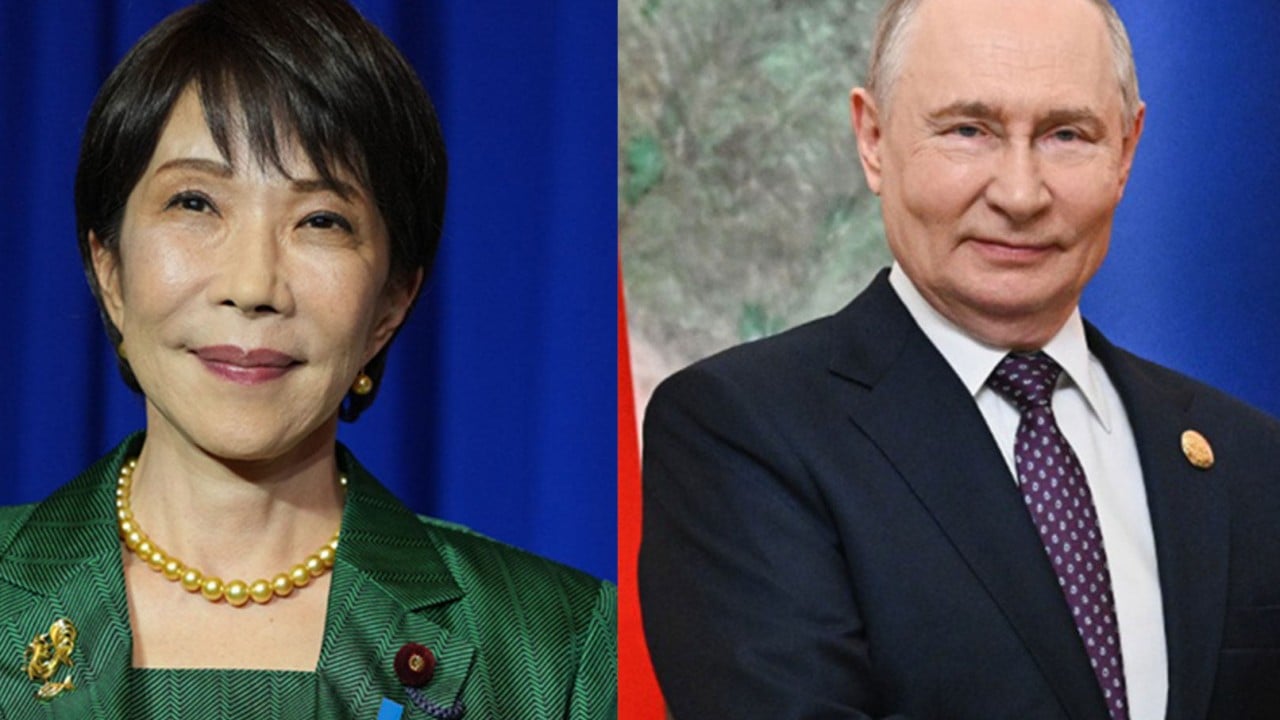
By rolling out an unprecedented welcome for Trump while simultaneously hosting Russian President Vladimir Putin in Shenzhen, Xi positioned Beijing as the indispensable diplomatic clearinghouse of the multipolar order. This tripolar framing offered Beijing distinct strategic advantages across three active negotiation tracks:
- Nuclear Arms Control Deflection: Washington entered the Shenzhen summit pushing for trilateral nuclear arms reductions. With the Pentagon projecting China's nuclear stockpile to exceed 1,000 warheads by 2030—up from a historical baseline near 300—Beijing has consistently refused formal limits until achieving closer parity with U.S. and Russian arsenals. Extending maximal personal hospitality to Trump allowed Xi to entertain discussions on global stability without committing China to binding warhead caps.
- Geopolitical Insulation: Hosting both Washington and Moscow in southern China signaled to Asian regional powers—particularly Japan and the Philippines, with whom Trump had just signed expanded defense and trade agreements prior to landing—that Beijing retains direct high-level access to the White House regardless of regional security alignments.
- The Four Red Lines: Despite the physical embrace on the tarmac, Beijing's core boundary conditions remained rigid. Ahead of the 2026 summit cycle, Chinese diplomatic channels explicitly codified four non-negotiable red lines: Taiwan, democracy and human rights, China's political system, and China's right to economic development. The airport ceremony bought space to negotiate within the margins of trade and global security while keeping those four pillars strictly off the table.
The Limits of Personalist Diplomacy
Relying on leader-to-leader warmth as a stabilizing mechanism carries severe operational limitations. Personalist diplomacy centralizes decision-making at the apex of both governments, bypassing traditional interagency guardrails, but it cannot alter underlying economic incentives.
The vulnerability of the Shenzhen goodwill became apparent within eight days of the airport greeting. On November 26, 2026, the Trump administration announced a fresh wave of tariffs targeting 14 major trading partners, including China, Japan, and the European Union. While carefully calibrated to remain technically inside the boundaries of the existing bilateral trade truce, the move demonstrated that ceremonial warmth in Guangdong does not insulate Chinese exports from Washington's broader industrial policy.
Furthermore, high-visibility pageantry creates a signaling trap. When state media and international observers anchor stability to the personal chemistry between two executives, any subsequent bureaucratic friction—such as export license delays, military intercepts in the South China Sea, or congressional trade restrictions—triggers disproportionate market volatility. Operational security protocols surrounding these 2026 summits underscore the underlying mistrust: U.S. delegations utilized disposable burner phones on Chinese networks and barred Chinese-issued credential badges from returning aboard Air Force One, even as military bands played campaign songs at state banquets.
Tactical Playbook for Navigating the Post-Shenzhen Window
Decision-makers across corporate supply chains, institutional finance, and policy analysis must treat the Shenzhen airport reception as a tactical volatility damper rather than a structural realignment. Between late November 2026 and the January 10, 2027 trade pact deadline, three concrete indicators will determine whether the bilateral truce holds or collapses into renewed economic warfare:
- Monitor Rare Earth Licensing Velocity: Track Chinese Ministry of Commerce export approval timelines for gallium, germanium, and heavy rare earth oxides. A slowdown in processing speeds during December 2026 will indicate that Beijing is preparing retaliatory leverage ahead of the Miami G20 summit, regardless of public rhetoric.
- Separate Bilateral Truce Carve-Outs from Multilateral Tariffs: Expect Washington to continue applying broad-based tariff pressure on third-party transshipment hubs—such as Vietnam, Mexico, and ASEAN manufacturing corridors—to indirectly restrict Chinese industrial capacity without formally violating the direct U.S.-China truce. Supply chain diversification strategies must account for rules-of-origin enforcement rather than relying on bilateral summit optics.
- Price in Binary Risk Around January 10: The fourth scheduled leader-level encounter in Miami in December 2026 represents the final off-ramp before the January 10 pact expiration. Institutional portfolios and procurement contracts exposed to cross-Pacific freight should hedge against a snap-back of section-specific tariffs in mid-January, using any December diplomatic optimism strictly as a window to execute defensive hedging at lower implied volatility.