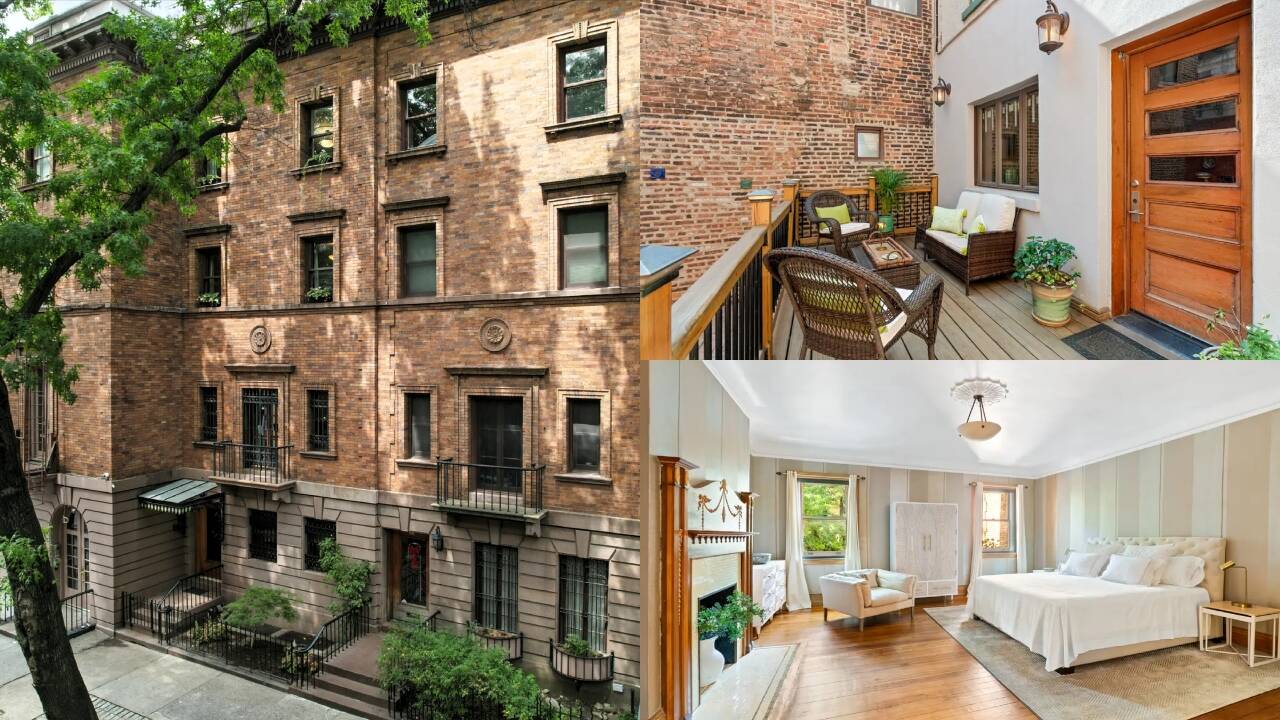
Real estate asset valuation in historic micro-markets operates on a divergence between physical deterioration and cultural premium. When high-profile transactions occur—such as the recent $2.8 million sale of a Harlem townhouse formerly owned by Bob Dylan—market participants frequently misattribute price formation to celebrity provenance. A rigorous financial and structural analysis reveals that celebrity attribution functions merely as a liquidity accelerator, whereas true capital appreciation is governed by spatial amortization, architectural preservation costs, and localized zoning dynamics. Deconstructing the mechanics of historic urban brownstone transactions requires isolating intrinsic asset value from speculative sentiment.
The Capital Expenditure Burden of Historic Preservation
The acquisition cost of a historic urban asset represents only the initial tranche of a multi-decade capital deployment cycle. Brownstones constructed in the late 19th and early 20th centuries present specific structural liabilities that dictate long-term holding costs. Foundation integrity, load-bearing brownstone masonry deterioration, and archaic mechanical systems create an unpredictable expenditure curve.
Total Cost of Ownership = Acquisition Price + Deferred Maintenance + Regulatory Compliance Costs - Yield Optimization
Unlike modern residential construction where capital expenditures follow a predictable depreciation schedule, historic assets experience non-linear cost spikes. Exterior masonry restoration requires specialized preservation techniques and union labor certified in historical facades, inflating per-square-foot renovation costs significantly above standard residential benchmarks. Furthermore, municipal preservation commissions impose strict regulatory constraints on fenestration, roofing materials, and exterior finishes. These mandates eliminate operational efficiencies of scale, transforming routine maintenance into custom engineering projects. Investors who underwrite these assets using standard depreciation models consistently miscalculate long-term operational drag.
Spatial Efficiency Versus Architectural Heritage
Urban townhouses constructed in historical districts enforce severe geometric constraints. The structural footprint is typically narrow and deep, creating significant interior dead zones devoid of natural light. Modern residential demand prioritizes open-plan living, cross-ventilation, and fluid indoor-outdoor integration. Historic floor plates, partitioned by structural load-bearing brick party walls, actively resist reconfiguration.
This spatial rigidity creates a structural ceiling on rental yields and resale velocity. To monetize the asset effectively, owners must choose between two suboptimal paths:
- Preserving historical interior compartmentalization, which restricts the target demographic to purists and suppresses potential rental yield per square foot.
- Executing invasive interior gut-renovations that pierce load-bearing partitions with steel moment frames, which destroys the historic architectural fabric that justified the asset class premium in the first place.
The tension between spatial utility and heritage status generates a liquidity discount. When macro interest rates rise and credit tightens, assets requiring specialized capital allocation suffer disproportionately longer days on market.
The Provenance Premium Multiplier
The market narrative surrounding celebrity-owned real estate relies on the assumption of a lasting brand premium. However, empirical transaction data across urban luxury markets demonstrates that historical association functions with a rapid half-life.
Celebrity provenance acts as a marketing catalyst during initial disposition, compressing absorption time and attracting cash-liquid buyers who bypass traditional underwriting friction. Yet, this premium exhibits immediate diminishing returns upon subsequent resale. The market prices utility, location micro-coordinates, and structural condition; cultural footnotes undergo rapid amortization.
An investor underwriting a property based on past ownership identity commits a fundamental analytical error: confusing a temporary marketing advantage with an enduring economic moat. Once the asset changes hands subsequent to the celebrity exit, the historical tie-in degrades into a trivia point that fails to defend against macroeconomic valuation contractions.
Neighborhood Macroeconomics and Gentrification Vectors
Micro-market resilience depends on adjacent municipal investments and infrastructure trajectories rather than property-specific attributes. Harlem brownstone valuations are inextricably linked to transit expansion, commercial retail density shifts, and municipal tax policy vectors.
The capitalization rate for urban townhouses fluctuates based on the cost of debt and local property tax assessment methodologies. As municipalities aggressively reassess historic districts to capture rising land values, carrying costs escalate independently of net operating income. If local commercial infrastructure fails to keep pace with residential gentrification, appreciation stalls, leaving leveraged investors trapped in high-cost, low-liquidity positions.
Deploy capital into historic urban assets only when the fundamental location yield and structural integrity independently justify the acquisition price. Treat celebrity provenance and historical narratives as transient liquidity catalysts rather than long-term value drivers, and underwrite structural renovation budgets with a mandatory 40 percent contingency reserve to account for preservation mandates.