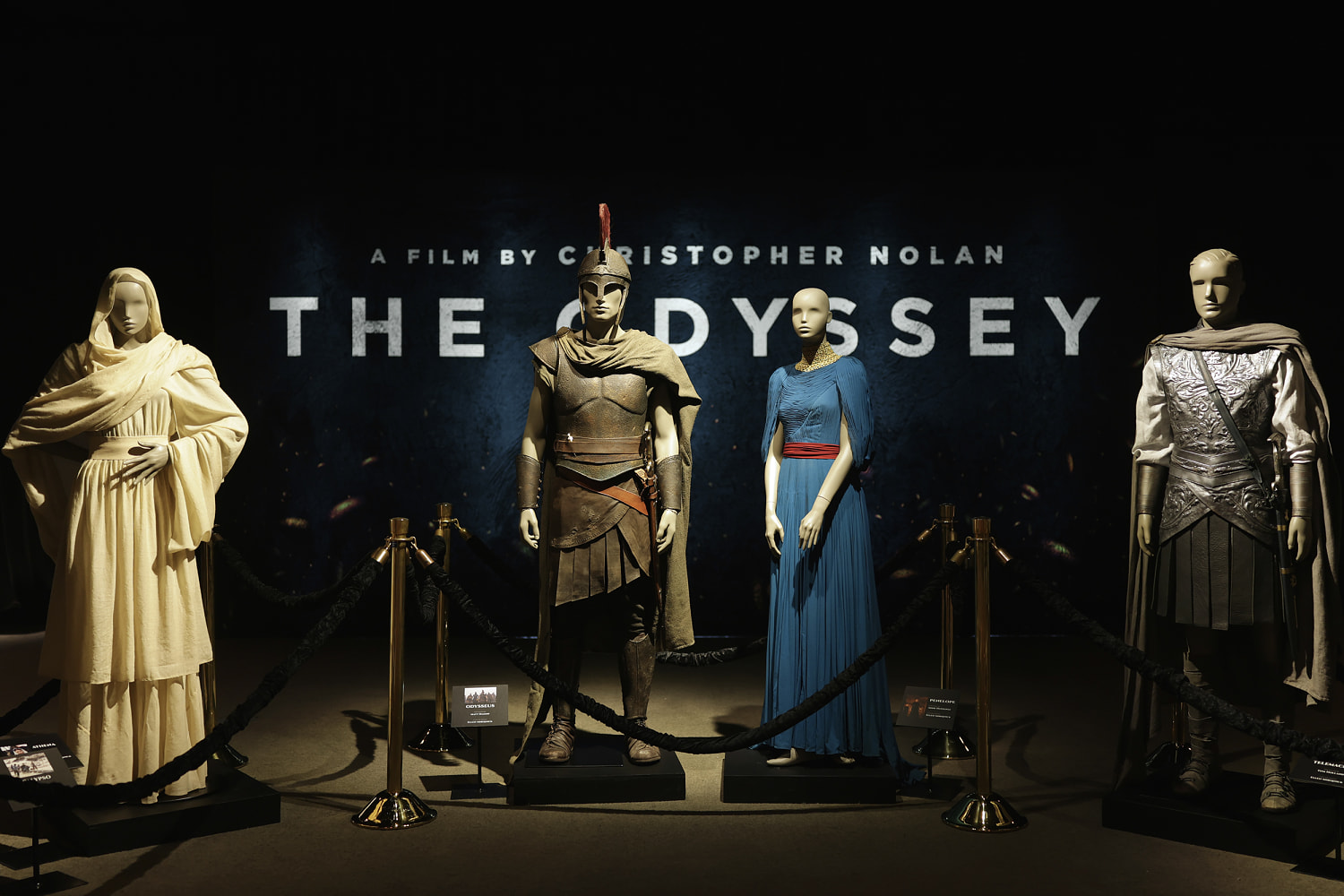
Awards season in Hollywood has transformed from an artistic victory lap into an industrial defense mechanism against synthetic media. When Oscar hopefuls emphasize practical effects, on-location shooting, and unscripted human performance during press tours, they are executing a calculated market-positioning strategy rather than making a romantic plea for nostalgia. This rhetorical shift establishes a verifiable provenance moat—a mechanism designed to differentiate high-margin theatrical prestige from low-margin, algorithmically generated content.
The Provenance Moat and Signaling Theory
In economics, signaling theory explains how one party credibly conveys information about itself to another when information asymmetry exists. Audiences and Academy voters currently face severe information asymmetry regarding how modern cinema is constructed. Digital compositing, de-aging, and generative
To overcome this skepticism, awards campaigns deploy costly signals. In evolutionary biology and economics, a signal is only credible if it is too expensive or difficult to fake. Practical stunt work, built sets, and physical film stock function as high-cost signals because they require verifiable capital expenditure, physical risk, and irreversible scheduling commitments.
- Physical Risk as Verification: When an actor performs a stunt without digital wire removal or body doubles, the resulting footage carries an inherent friction that synthetic media cannot replicate. Marketing campaigns highlight behind-the-scenes injury reports, rigorous training regimens, and weather delays to prove the production incurred real-world costs.
- Material Scarcity: Shooting on 65mm celluloid or constructing massive physical environments creates a finite boundary around the creative process. Unlike a digital prompt that allows infinite post-production revisions, physical production forces irreversible creative decisions on set. Voters interpret this constraint as artistic discipline.
- Temporal Investment: Multi-year production schedules—such as waiting for natural seasonal changes or allowing actors to age naturally—serve as temporal proofs of work. Generative workflows compress time to near zero; prestige cinema weaponizes time to prove value.
This creates a bifurcated market structure. At the bottom of the market, synthetic tools drive the marginal cost of content creation toward zero, flooding streaming platforms with interchangeable media. At the top of the market, prestige cinema inflates its visible production friction to justify theatrical ticket prices and institutional recognition.
The Structural Vulnerability of Below-the-Line Labor
While above-the-line talent—directors, lead actors, and producers—use human craft as a marketing differentiator, the economic reality for below-the-line departments operates under an entirely different set of incentives. The awards narrative champions human touch, yet studio balance sheets aggressively pursue cost compression in the exact departments where synthetic tools are most mature.
- Pre-Visualization and Storyboarding: Concept artists and storyboard illustrators face immediate displacement. Studios increasingly use generative image tools during the greenlight phase to pitch visual tone without commissioning union artists. Because this work occurs before principal photography and rarely receives awards visibility, it escapes the public "human craft" mandate.
- Background Performance and Crowd Replication: Digital crowd multiplication has existed for decades, but generative neural rendering now allows studios to synthesize distinct facial expressions, wardrobe variations, and localized movements for background extras without hiring day players.
- Localization and ADR: Automated Dialogue Replacement and foreign-language dubbing represent high-friction post-production bottlenecks. Voice-cloning models combined with neural lip-syncing alter an actor's mouth movements to match translated audio tracks. This eliminates the need for international voice actors while preserving the original star's vocal timbre.
- Foley and Sound Design: Acoustic libraries are transitioning from physical recording stages to procedural audio synthesis. Instead of recording footsteps on gravel or smashing vegetables to simulate bone breaks, sound editors can generate bespoke acoustic assets directly inside their digital audio workstations.
The contradiction inside Hollywood's awards rhetoric is structural. Campaigns celebrate the visible, tactile elements of filmmaking—the lead actor's tears, the director's camera blocking, the stunt coordinator's practical explosion—while silently absorbing AI efficiencies in the invisible layers of the production pipeline.
The Mechanics of Synthetic Mediocrity and Voter Psychology
To understand why Academy voters respond to anti-AI framing, one must examine the statistical nature of generative models and the psychological biases of peer-judged awards.
Generative AI operates by predicting the most probable continuation of a pattern based on its training data. By definition, a model trained on the entirety of existing cinema regresses toward the statistical mean of cinematic history. It excels at producing competent, recognizable tropes and fails at generating genuine outliers unless heavily steered by human intervention.
Awards voting, conversely, is a search for outliers. Voters do not reward statistical competence; they reward perceived risk, idiosyncrasy, and emotional specificity.
- The Uncanny Valley of Narrative: Beyond visual artifacts, synthetic screenwriting and editing produce a structural predictability. When dialogue or pacing follows high-probability patterns, experienced practitioners detect a lack of intentionality. Human craft often manifests as deliberate imperfection—an awkward pause, a slightly off-center framing, or an unscripted vocal crack that breaks pattern expectations.
- Peer Solidarity Bias: The Academy of Motion Picture Arts and Sciences is a guild-adjacent body composed of working professionals. When a branch—such as Cinematographers, Film Editors, or Costume Designers—votes for a nominee, they are validating the continued economic necessity of their own specific trade. Voting for a film championed for its analog purity is an act of professional self-preservation.
- Authorship Attribution: Awards require a clear chain of custody for creative decisions. If a visual effects shot or a musical score is heavily assisted by generative algorithms, voters struggle to attribute authorship. When authorship becomes ambiguous, the work loses eligibility in the minds of purists who view the Oscar as a reward for individual mastery rather than system administration.
The Cost Function of Hybrid Production Workflows
The industry narrative frames human craft and artificial intelligence as a binary choice. Operational reality demonstrates they are currently locked in a complex cost-function optimization problem. Studios do not want to eliminate human talent entirely, because human celebrity and verifiable authorship remain their primary pricing power mechanisms. Instead, studios seek to isolate the minimum viable human input required to maintain the "human craft" label while automating the surrounding infrastructure.
Consider the standard production budget divided into three functional tiers:
- Tier 1: The Marketing Core. This includes lead performances, directorial vision, and signature practical set pieces. Studios protect and even expand budgets here because every dollar spent generates secondary returns in awards publicity and audience trust.
- Tier 2: The Invisible Infrastructure. This covers rotoscoping, wire removal, sky replacement, color grading, and audio cleanup. Machine learning tools have dominated this tier for years without triggering backlash because they accelerate human artists rather than replace creative authorship.
- Tier 3: The Generative Margin. This involves synthetic background assets, AI-assisted script coverage, temp score generation, and digital crowd extension. This is the active battleground where labor unions and studios negotiate residuals, consent, and minimum staffing requirements.
The limitation of the "pure human craft" campaign strategy lies in verification. As machine learning tools integrate natively into industry-standard software—such as Avid Media Composer, Nuke, and Pro Tools—the line between manual digital manipulation and generative synthesis disappears. A sound editor or colorist may use an AI-powered tool without realizing a neural network executed the underlying pixel or waveform transformation. Consequently, absolute purity claims become technically indefensible upon close inspection.
Auditing Creative Provenance in Modern Cinema
For production executives, awards strategists, and guild negotiators managing this transition, relying on vague promotional statements about "no AI used" creates severe reputational risk. If a whistleblower or VFX vendor reveals that a touted "practical" film utilized generative face replacement or synthetic voice patching, the resulting backlash destroys the campaign's credibility.
A defensible provenance framework requires four operational controls:
- Chain-of-Custody Metadata: Productions must implement cryptographic provenance standards, such as the
Coalition for Content Provenance and Authenticity, an open technical standard for certifying the source and history of media files. specification, directly at the camera sensor and audio recorder level. This creates an immutable audit trail distinguishing captured reality from post-production synthesis. - Vendor Disclosure Mandates: Visual effects, sound, and localization contracts must include strict disclosure clauses requiring subcontractors to log any use of generative models trained on external datasets. Studios cannot defend their awards positioning if third-party vendors secretly use generative tools to meet tight delivery deadlines.
- Granular Credit Categorization: Guilds and awards bodies must abandon binary labels in favor of granular disclosures. Distinguishing between assistive machine learning (used for denoising or rotoscoping) and generative AI (used to synthesize new pixels, voices, or text) allows productions to maintain efficiency without triggering fraud accusations.
- Targeted Practical Allocation: When allocating constrained production budgets, producers should concentrate physical spending on high-visibility, high-emotion sequences that anchor the film's marketing campaign, while openly utilizing assistive digital tools for repetitive, non-authorial cleanup tasks.
The current wave of pro-human awards campaigning is an early market correction. As synthetic media saturates digital distribution channels, verifiable human effort will transition from a standard production method into a luxury good. Studios and filmmakers who establish transparent, auditable boundaries around how they deploy synthetic tools will capture the high-margin prestige market, while those relying on unverified nostalgia will face inevitable exposure as post-production pipelines become fully automated.


