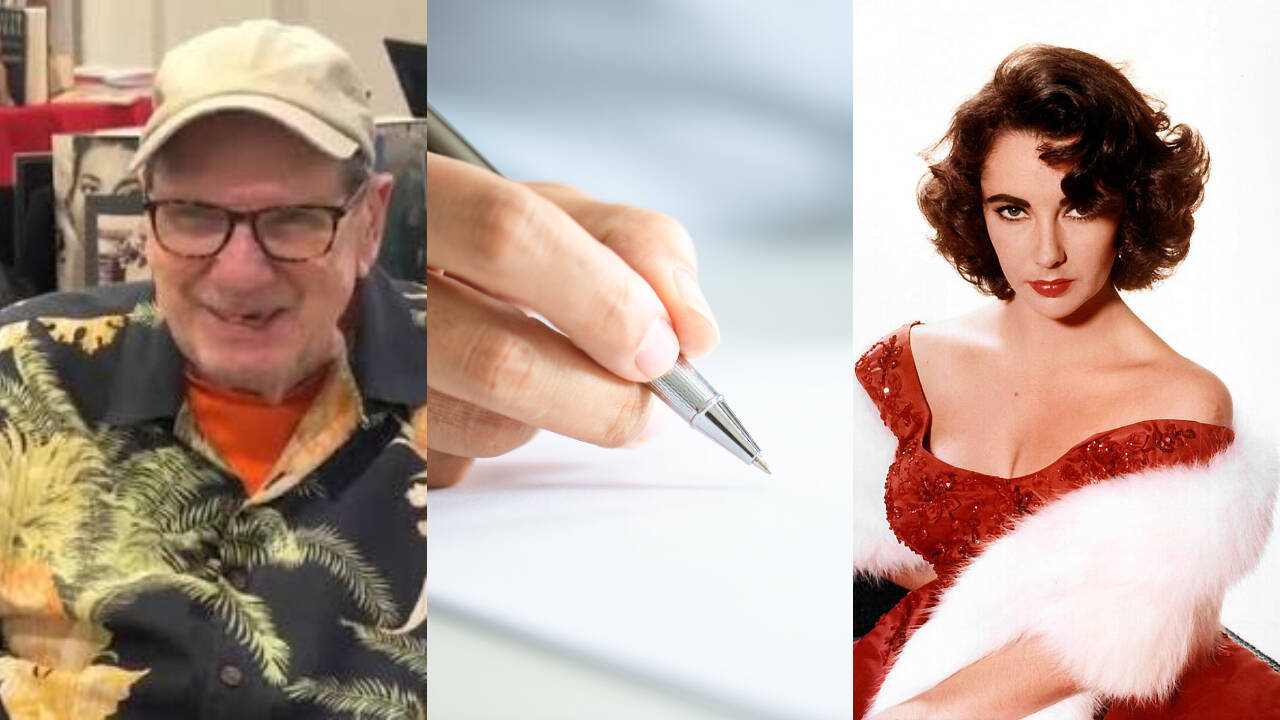
Sustaining a private archive for seven decades converts casual fan mail into an institutional-grade asset class governed by survivorship bias, physical entropy, and historical provenance. When an 82-year-old collector in Florida holds correspondence from Elizabeth Taylor alongside seventy years of accumulated artifacts, the primary analytical failure of standard human-interest reporting is treating the archive as a sentimental curiosity rather than a longitudinal study in cultural preservation and alternative asset valuation.
A seventy-year collection window—spanning roughly from the mid-1950s to the mid-2020s—captures the exact transition from the Classic Hollywood studio system to the fragmented digital celebrity economy. Understanding the structural mechanics of such an archive requires stripping away nostalgia and examining the acquisition channels, preservation variables, and authentication bottlenecks that dictate whether a lifetime of accumulation yields historical significance or unverified clutter.
The Architecture of Longitudinal Acquisition
Building an unbroken seventy-year collection starting at age twelve requires surviving multiple shifts in how public figures interact with the public. The acquisition lifecycle divides into three distinct operational phases, each carrying different friction costs and authenticity probabilities.
Phase One The Studio-Controlled Mailroom Era
In the 1950s, fan correspondence with major stars like Elizabeth Taylor operated through centralized studio publicity departments, such as Metro-Goldwyn-Mayer. Studios treated fan mail as a quantifiable metric of box-office bankability.
The operational mechanism here presents a critical authentication challenge for modern appraisers. High-volume stars rarely answered individual letters personally; studios employed full-time secretarial pools trained to replicate the star's signature, alongside mechanical signing devices like the Autopen, which gained widespread adoption in Washington and Hollywood during the 1950s. A genuine holographic letter—written entirely in the celebrity's hand—from this era represents an extreme statistical outlier. It indicates either a personal connection outside the studio apparatus or a rare moment where a piece of mail bypassed the publicity filter during a film shoot or convalescence.
Phase Two The Direct-Access and In-Person Circuit
As the studio system collapsed in the 1960s and 1970s, the centralized mailroom dissolved, shifting the acquisition bottleneck from postal persistence to geographic proximity. Collectors who maintained momentum through these decades had to transition from passive letter-writing to active in-person interception at premieres, charity galas, stage doors, and regional appearances.
Living in or relocating to Florida—a primary retirement and winter-residence hub for mid-century entertainment figures—provides a distinct geographic advantage. Unlike Los Angeles or New York, where celebrity sightings occur in high-stress, security-heavy environments, regional hubs like Palm Beach, Miami, and Sarasota historically offered lower-friction environments for brief, unhurried interactions. The resulting items from this era shift from studio-issued 8x10 glossy headshots to personalized inscriptions on playbills, hotel stationery, and candid photographs.
Phase Three The Scarcity-Driven Secondary Market
By the final twenty years of a seventy-year timeline, the primary subjects of a mid-century collection are largely deceased, and the surviving peers rarely sign unsolicited mail due to the commodification of autographs. At this stage, organic collection halts, and the collector transitions into a curator managing an illiquid estate. The acquisition mechanism changes from direct engagement to estate auctions, specialized dealers, and peer-to-peer trading to fill gaps in the historical timeline.
The Four Variables of Ephemera Valuation
Standard reporting equates age with value, assuming a seventy-year-old letter automatically commands high market prices. In the collectibles market, age is a baseline requirement, not a value driver. Valuation relies on four multiplicative variables; if any single variable drops to zero, the financial value of the artifact collapses.
- Provenance and Chain of Custody: A single-owner collection accumulated over seventy years possesses the strongest possible provenance—direct-from-recipient status. When a collector retains the original postmarked envelope alongside the letter, it establishes a verifiable timeline. The postmark date, return address, and stamp denomination anchor the item in physical reality, eliminating the primary vector for modern forgery.
- Content vs. Signature Ratio: Market value scales exponentially based on the informational density of the text. A clipped signature on an index card sits at the bottom of the valuation hierarchy. A signed form letter ranks slightly higher. A handwritten letter discussing specific film productions, personal relationships, health struggles, or historical events sits at the apex. In the case of Elizabeth Taylor, correspondence touching on her transition from child star to adult dramatic lead in the 1950s, or her philanthropic work later in life, carries cross-market appeal to film historians, fashion archivists, and cultural institutions.
- Physical Condition and Environmental Entropy: Florida presents one of the most hostile microclimates in North America for paper preservation. High ambient relative humidity, sustained heat, and UV exposure accelerate acid hydrolysis in mid-century wood-pulp paper. Without active climate control—specifically maintaining temperatures below 70 degrees Fahrenheit and relative humidity between 35 and 50 percent—ink fades, paper becomes brittle, and foxing (fungal staining) destroys aesthetic appeal. A seventy-year collection in Florida that remains legible and intact implies deliberate, sustained environmental management rather than passive storage in a garage or attic.
- Cultural Liquidity: Value requires an active buyer pool. Mid-century Hollywood artifacts face a demographic compression problem. The primary collectors who experienced Elizabeth Taylor's peak box-office era in real time are now in their seventies and eighties, shifting from net buyers to net sellers as they downsize estates. Consequently, only top-tier, iconic items retain liquidity among younger institutional buyers and cross-category investors, while secondary artifacts from lesser-known stars of the same era suffer steady price erosion.
The Provenance Trap and Authentication Bottlenecks
A major vulnerability in lifetime collections is the lack of contemporary third-party authentication. A collector who started in 1956 acquired items long before the establishment of modern forensic authentication services like PSA/DNA, JSA (James Spence Authentication), or Beckett.
When an 82-year-old collector presents a letter from Elizabeth Taylor, two distinct risks emerge during appraisal:
- The Secretarial Misattribution: Collectors frequently spend decades believing a secretarial signature obtained through a studio fan club is authentic because they personally received it in the mail. Forensic examiners compare ink flow, pressure variations, and letter-slant consistency against known exemplars from the exact year of the postmark. A studio secretary's signature often exhibits smoother, unhurried strokes compared to a celebrity signing hundreds of items rapidly, or it matches known secretarial templates cataloged by forensic archives.
- The Estate Liquidation Discount: When a massive seventy-year collection enters the market simultaneously—either through pre-mortem downsizing or post-mortem estate administration—the sheer volume creates a supply shock. Auction houses rarely authenticate thousands of low-to-mid-tier items individually due to grading fees, which typically range from $25 to over $100 per item. Instead, they lot secondary items together in bulk boxes, capturing only the top five percent of flagship pieces—such as the Taylor correspondence—for individual cataloging.
The Conservation Deficit in Private Archives
Transitioning a personal collection from a domestic hobby to a preserved historical archive requires overcoming the conservation deficit. Most lifetime collectors rely on consumer-grade storage solutions—magnetic photo albums from the 1970s, PVC plastic sleeves, or acidic cardboard boxes—that actively degrade paper over multi-decade timelines.
Correcting seventy years of suboptimal storage follows a strict triage sequence:
- De-acidification and Re-housing: Removing documents from PVC sleeves, which off-gas hydrochloric acid and lift ink off paper surfaces, and transferring them into inert polyester (Mylar) sleeves and lignin-free, buffered archival boxes.
- Digitization for Access: Creating high-resolution (600 DPI minimum) uncompressed TIFF scans of every item. This decouples the informational value of the collection from the physical object, allowing researchers, journalists, and family members to inspect the texts without subjecting fragile paper to handling oils and light exposure.
- Metadata Indexing: A box of uncataloged letters is functionally invisible to historians. Pairing each digital scan with a structured database entry—recording date, sender, recipient, location, postmark details, and a full text transcription—converts raw ephemera into a searchable dataset.
Strategic Disposition Pathways
For an octogenarian holding a seventy-year collection, time is the primary constraint. Deferring disposition decisions forces heirs—who rarely possess the specialized knowledge required to evaluate historical ephemera—to liquidate complex assets under probate deadlines. Three structured exit strategies exist, each optimizing for a different outcome:
- The Bifurcated Auction Strategy: Separate the top one percent of high-demand, authenticated items—such as verified holographic letters from tier-one icons like Elizabeth Taylor—and consign them to major specialized entertainment auctions (e.g., Heritage Auctions, Julien's, or Sotheby's) to maximize financial return. Liquidate the remaining bulk through regional estate sales or bulk dealer buyouts to clear physical inventory rapidly without incurring per-item authentication fees.
- The Institutional Endowment: Donate the entire collection intact to a university special collections library, a film institute (such as the Academy of Motion Picture Arts and Sciences' Margaret Herrick Library), or a regional historical society. While this yields zero direct cash flow—and tax deductions for self-created or non-purchased ephemera are heavily restricted by IRS rules regarding basis value—it guarantees permanent climate-controlled preservation and keeps the seventy-year narrative unified under the collector's name.
- The Fractionalized Archive: Retain the high-value physical artifacts as generational wealth while donating the complete high-resolution digital archive and metadata index to public domain repositories or film history databases. This preserves the cultural contribution of the seventy-year effort while keeping the tangible assets liquid for estate distribution.
The critical failure mode for any multi-decade collector is inaction. Securing formal third-party forensic authentication for the anchor pieces—specifically verifying the ink, paper stock, and handwriting of the Elizabeth Taylor correspondence—and pairing those certificates with a complete digital inventory must occur while the original recipient is still available to document the exact circumstances of acquisition. Without that primary-source testimony recorded in writing, the moment the collector passes away, a seventy-year chain of custody degrades into an unverified rumor.