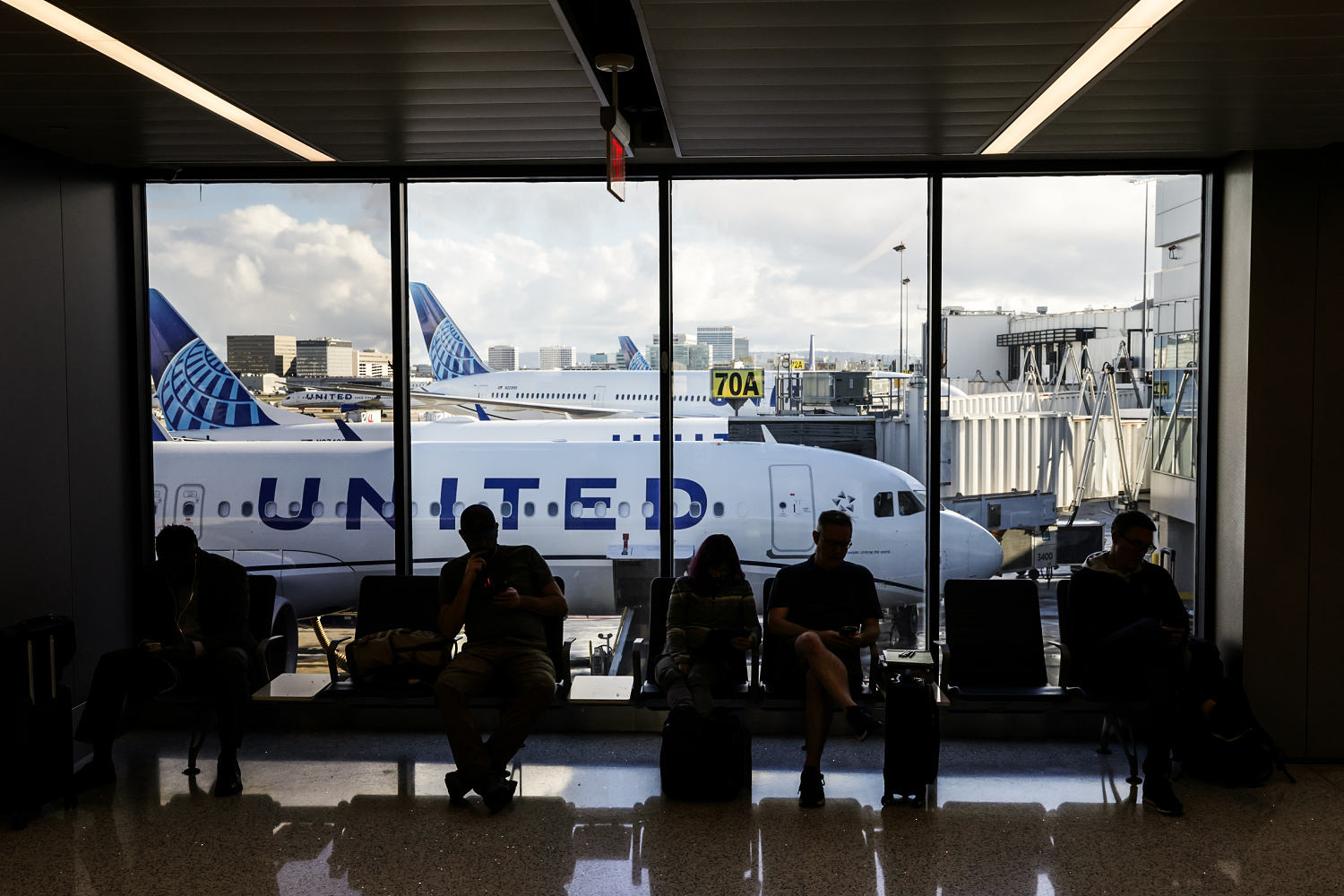
When an airline ground stop paralyzes domestic airspace, standard consumer advice fails because it relies on static pricing models during a dynamic supply shock. Purchasing an automobile to bypass a grounded flight is not an impulsive act of desperation; it is a rational capital allocation decision triggered when the marginal cost of delay exceeds the transaction friction of asset acquisition. To execute this maneuver without destroying personal equity, a stranded traveler must treat the emergency not as a logistics problem, but as an arbitrage opportunity across broken transport markets.
The Structural Failure of Hub-and-Spoke Recovery
Commercial aviation operates on tight asset utilization. Aircraft, flight crews, and gate slots are scheduled with minimal buffer capacity to maximize return on invested capital. When the Federal Aviation Administration issues a ground stop—whether due to systemic IT failure, severe convective weather, or airspace congestion—the network does not pause; it fractures. Recently making waves in related news: The Invisible Dominoes Falling Across American Airports.
The recovery curve for a major carrier is non-linear. A two-hour ground stop rarely results in a two-hour delay. Instead, it triggers a cascading series of secondary bottlenecks:
- Crew Duty Time Expirations: Federal Aviation Regulations strictly cap flight crew hours. A ground delay frequently pushes pilots and flight attendants past their legal duty thresholds, requiring the airline to source reserve crews who are often out of position.
- Aircraft Misalignment: Airframes stuck at regional spokes cannot execute their subsequent legs from major hubs, creating a rolling deficit of available seats that compounds over 48 to 72 hours.
- Rebooking Compression: Modern airlines operate at load factors exceeding 85 percent. When a single widebody or multiple narrowbody flights cancel, the remaining capacity across the entire network cannot absorb the displaced passenger volume for days.
During this window, alternative transport markets experience immediate price inelasticity. Rental car agencies at airport locations operate with finite fleet inventories tailored to predictable weekly business and leisure cycles. Within ninety minutes of a major FAA ground stop, airport rental fleets hit zero availability. Off-airport neighborhood locations follow within three hours. Additional details into this topic are detailed by Lonely Planet.
Once rental inventory depletes, the stranded traveler faces a binary choice: absorb uncapped hotel, food, and lost-productivity costs while waiting in a multi-day rebooking queue, or acquire a depreciating physical asset to self-extricate.
The Stranded Traveler Cost Function
To determine the exact threshold at which buying a vehicle becomes financially superior to waiting out an aviation disruption, apply a basic comparative cost model. Most travelers miscalculate this equation because they anchor on the sunk cost of their airline ticket while ignoring the compounding opportunity cost of time and dynamic hospitality pricing.
Let the total cost of waiting ($C_w$) be defined as:
$$C_w = (H \times D) + (M \times D) + (O \times D) + R$$
Where:
- $H$ (Hospitality Rate): Surge-priced hotel accommodations near major transit hubs, which routinely spike 150 to 300 percent during mass cancellations.
- $M$ (Maintenance Burn): Daily subsistence costs including airport or hotel dining and ground transfers.
- $O$ (Opportunity Cost): Lost billable hours, missed contractual obligations, or degraded operational output for each day of absence.
- $D$ (Duration): Realistic recovery window, typically 2 to 4 days during a systemic ground stop.
- $R$ (Residual Ticket Value): Often zero if the traveler abandons the itinerary without securing a formal carrier cancellation waiver, though federal regulations mandate refunds for canceled flights if the passenger chooses not to travel.
Compare $C_w$ against the net cost of vehicle acquisition and liquidation ($C_v$):
$$C_v = (P_b - P_s) + T + F + I$$
Where:
- $P_b$ (Purchase Price): The out-the-door acquisition cost of the vehicle.
- $P_s$ (Liquidation Price): The wholesale or instant-offer resale value upon reaching the destination.
- $T$ (Transaction Friction): Sales tax, title fees, temporary registration, and dealer documentation charges.
- $F$ (Operating Expense): Fuel, tolls, and per-mile wear over the transit distance.
- $I$ (Insurance Bind): Short-term or policy-addition comprehensive and collision coverage required to drive off the lot.
When $C_v < C_w$, purchasing a vehicle is the mathematically dominant strategy. For a family of four or a team of three corporate travelers, $C_w$ scales multiplicatively across hotel rooms, meals, and collective lost wages. Conversely, $C_v$ remains largely fixed regardless of passenger count, up to the seating capacity of the vehicle. A group of four facing a three-day delay easily incurs $3,500 to $5,000 in combined lodging, subsistence, and lost productivity. If that same group acquires a used vehicle, drives 800 miles home, and liquidates it for a $1,800 net loss including taxes and fuel, they capture an immediate net savings of $1,700 to $3,200 while eliminating schedule uncertainty.
Execution Mechanics of Emergency Vehicle Acquisition
Executing an emergency vehicle purchase under time pressure requires strict operational discipline. Entering a dealership with visible desperation transfers all pricing leverage to the seller. The objective is not to buy a dream car; it is to acquire a liquid commodity with minimal transaction friction and predictable wholesale exit value.
Asset Selection Criteria
Avoid new vehicles entirely. A new car suffers an immediate, steep depreciation cliff the moment it is titled, typically losing 9 to 11 percent of its value upon leaving the lot. Instead, target three-to-five-year-old high-volume commodity vehicles—such as a Toyota Corolla, Honda Civic, Ford F-150, or Toyota RAV4.
These models possess deep secondary market liquidity. Automated valuation algorithms used by major national used-car retailers rely on massive transaction datasets for these specific nameplates, resulting in tighter bid-ask spreads and predictable instant cash offers. Verify that the vehicle has a clean title, no structural accident history, and enough remaining tire tread and brake life to safely complete an interstate transit of 500 to 1,500 miles without unscheduled maintenance.
Managing Transaction Friction and Tax Nexus
The single greatest threat to the $C_v$ equation is state sales tax and registration bureaucracy. Every state enforces distinct tax reciprocity rules and temporary transit permit regulations:
- Reciprocity States: Many states credit sales tax paid in the state of purchase toward the buyer's home state tax obligation upon registration. If you buy a car in a state with a 6 percent sales tax and live in a state with a 6 percent tax, you do not pay twice.
- Non-Reciprocity or High-Tax Jurisdictions: Purchasing a vehicle in a high-tax state when you reside in a zero-tax state (such as Oregon, Montana, or New Hampshire) can create an unrecoverable tax loss if the selling dealer is legally required to collect tax at the point of sale based on physical delivery.
- Drive-Out Permits: Ensure the dealership issues a valid 30-day temporary transit tag recognized across state lines. Driving an unregistered vehicle across multiple jurisdictions invites traffic stops, impoundment risk, and severe delays.
Liquidity and Payment Rails
Dealerships rarely accept personal checks from out-of-state buyers, and wire transfers fail outside banking hours or during weekend ground stops. To execute this maneuver at 6:00 PM on a Friday, you must rely on instant-settlement liquidity rails:
- Debit Cards with Elevated Limits: Contact your banking institution prior to arriving at the dealership to temporarily raise your daily point-of-sale debit limit to $15,000 or $25,000.
- Pre-Approved Captive or Credit Union Financing: If cash liquidity is constrained, secure a pre-approval through a national lender or the dealership's finance desk with zero prepayment penalties. You can pay off the principal balance within ten days upon liquidating the vehicle, limiting interest expense to less than $50.
- Credit Card Deposits: Most dealers cap credit card usage at $2,000 to $5,000 due to merchant interchange fees, though some will accept larger amounts if you agree to cover the 2.5 to 3 percent processing surcharge.
Risk Factors and Strategy Limitations
No arbitrage play is devoid of operational risk. Treating emergency vehicle acquisition as a frictionless hack invites severe financial penalties if key variables are mismanaged.
The Title Delay Bottleneck
You cannot legally resell a vehicle until you hold a clean, transferable title in your name—or until your lender releases the lien upon payoff. When purchasing from a franchise dealership, title processing through state motor vehicle departments frequently takes 14 to 45 days. During this interim period, your capital remains locked in the asset, exposing you to market depreciation and carrying costs. If you intend to liquidate the vehicle immediately upon arrival, prioritize private-party cash transactions where the seller holds a physical, lien-free title in hand, or confirm the dealership can provide immediate title assignment.
Mechanical Failure in Transit
Buying a used vehicle without an independent pre-purchase inspection introduces tail risk. A blown head gasket, failing alternator, or transmission slip 300 miles into an interstate drive puts you in a worse position than sitting in an airport terminal—stranded on a highway shoulder with a depreciating liability. Mitigate this risk by restricting searches to certified pre-owned inventory or franchise dealer lots that perform documented multi-point inspections, and verify battery voltage, fluid levels, and tire manufacturing dates before departing.
Insurance Coverage Gaps
Standard personal auto policies generally provide automatic temporary coverage for newly acquired vehicles for 7 to 30 days, matching the broadest coverage currently active on your policy. However, if you do not currently own a vehicle or carry only state-minimum liability coverage, you will be forced to bind a standalone policy on the spot. Underwriting algorithms flag out-of-state, immediate-bind policies as high-risk, resulting in elevated initial premiums.
The Strategic Play for Disruption Resilience
Organizations and frequent travelers should stop treating airline ground stops as unpredictable acts of nature and start engineering pre-authorized contingency protocols. Waiting until an airport terminal descends into chaos to research state tax reciprocity or call a bank to raise debit limits guarantees failure.
Establish a pre-vetted Emergency Extraction Protocol before your next multi-leg itinerary:
- Pre-Authorize Liquidity: Maintain an active line of credit or a checking account with pre-verified high-limit debit protocols specifically designated for travel contingencies.
- Map Regional Exit Corridors: When flying into major hubs prone to systemic bottlenecks—such as Atlanta, Chicago, Dallas, or Denver—identify three high-volume franchise dealerships located 15 to 25 miles away from the airport perimeter, outside the immediate rideshare surge zone.
- Execute the 90-Minute Rule: The moment an FAA ground stop exceeds 90 minutes and airline app rebooking options push beyond 24 hours, abandon the terminal immediately. Secure a rideshare to the pre-identified off-airport dealership zone while other passengers remain queued at customer service desks. Acquire a high-liquidity used sedan, bind temporary coverage via your insurer's mobile portal, and initiate the drive before interstate highway corridors absorb the spillover traffic from canceled flights.