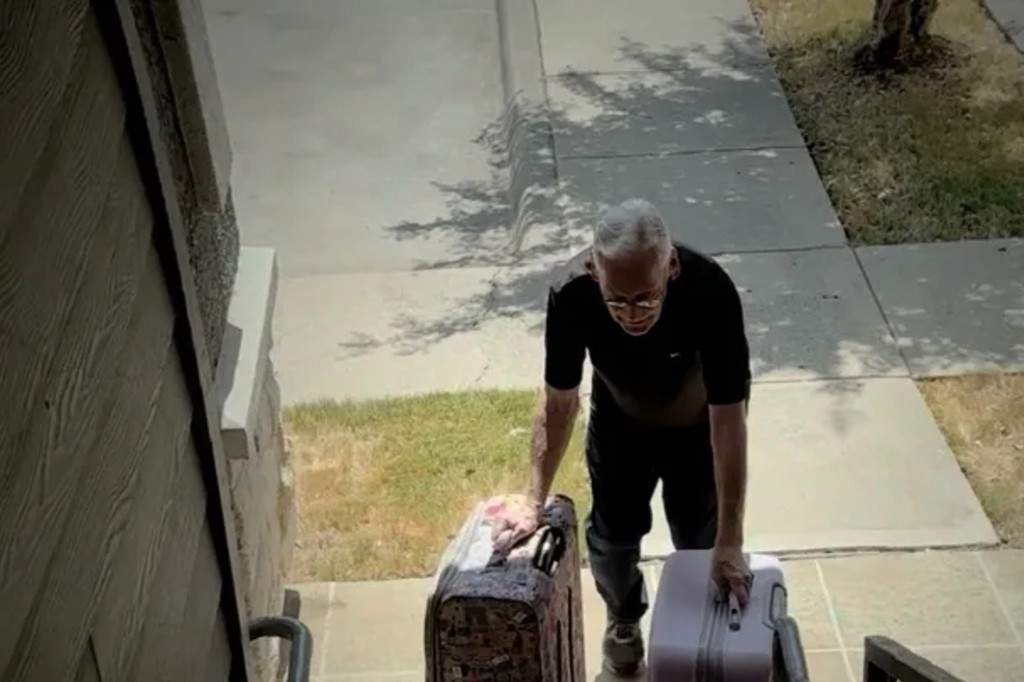
The alarm rings before the sky loses its bruising purple tint. Outside, the pavement is slick with a thin, greasy layer of overnight frost. Inside a small, quiet kitchen in a Chicago suburb, eighty-one-year-old Butch Marion does not stretch. He reaches.
He reaches for his aching knees. He reaches for his boots, stiff from years of enduring Midwestern winters. He reaches for the routine that has defined his life long past the age when most men have laid down their tools to watch the world spin from a porch glider. You might also find this related story insightful: Why Outrage Headlines Hide The Real Failure Protecting Vulnerable Children.
At an age when the body demands rest—when joints pop in protest at the mere suggestion of a cold morning and the heartbeat carries the quiet echoes of a long life well-traveled—Butch walks out the door. He slides behind the wheel of his car. He opens the delivery app on his phone.
He drives. As reported in recent articles by Associated Press, the effects are notable.
We live in a culture obsessed with retirement milestones. We talk about golden years, Florida condos, and kicking back with a fishing rod as if aging were a neat, predictable descent into leisure. But the arithmetic of modern survival often refuses to follow the script. Sometimes, the math is brutal. Sometimes, the medical bills arrive like an avalanche, burying a lifetime of careful saving under a mountain of deductibles, prescriptions, and hospital stays.
For Butch, the crisis was not abstract. It was sitting across the kitchen table in the form of mounting medical expenses for his wife. It was the quiet, terrifying realization that the safety net had frayed.
So he did what people of his generation do when the walls close in. He did not complain. He did not wait for a miracle. He simply worked.
Hour after hour, mile after mile, Butch navigated the chaotic labyrinth of modern food delivery. To the average customer waiting on a lukewarm bag of takeout, he was just a nameless ping on a smartphone screen—a digital avatar dropping off dinner before disappearing into the night. They had no idea that the man handing them their burgers was carrying the invisible, crushing weight of an eighty-one-year-old reality. They had no idea about the exhaustion settling deep into his bones.
Then came the camera.
A TikTok user named Liz Conway ordered food. When Butch arrived at her door, leaning heavily on his cane, the contrast between the digital convenience economy and the human cost of survival collided in a single, unscripted moment. Conway saw past the uniform and the app interface. She saw a man who should have been resting, laboring for someone he loved.
She did not just say thank you. She recorded a video.
Within hours, that digital fragment of empathy broke through the noise of the internet. A GoFundMe campaign was launched with a modest goal: enough to give Butch a brief respite, a little breathing room to pay off the medical debt and take a breath.
What happened next defied the cynical gravity of our digital age.
Donations did not trickle in; they poured. From across the country, strangers looked at Butch’s tired eyes and saw their own fathers, their grandfathers, themselves. They saw the vulnerability of growing old in a world where medical care remains a luxury item. Over three hundred and seventy thousand dollars materialized out of the collective conscience of the internet.
The goal was obliterated. The immediate crisis evaporated.
When told the news, Butch did not scream or leap. He sat quietly. The shock of being seen—of having the invisible labor of his twilight years suddenly illuminated by the kindness of strangers—was heavier than any delivery shift.
We often talk about crowdfunding as a technological phenomenon. We analyze the algorithms, the share buttons, the viral loops. But beneath the code and the server racks, something much older and more fragile is at play. It is the primal human urge to catch someone before they hit the ground.
Butch’s story touched a raw nerve because it exposed the fragile architecture of our safety nets. It reminded us that behind every digital service economy transaction, behind every automated gig-work metric, there is a beating heart. There is a human being making a choice between pride and survival.
As the funds cleared and the headlines faded back into the relentless churn of the daily news cycle, Butch made a quiet decision. He stepped away from the wheel. The endless miles of asphalt gave way to a stillness he had not known in years.
Yet, the image of an eighty-one-year-old man turning a ignition key in the dark remains. It lingers in the mind, a haunting monument to resilience and the steep, quiet price of love in the modern age.
The headlights cut through the dark, empty street, illuminating the falling snow one flake at a time.