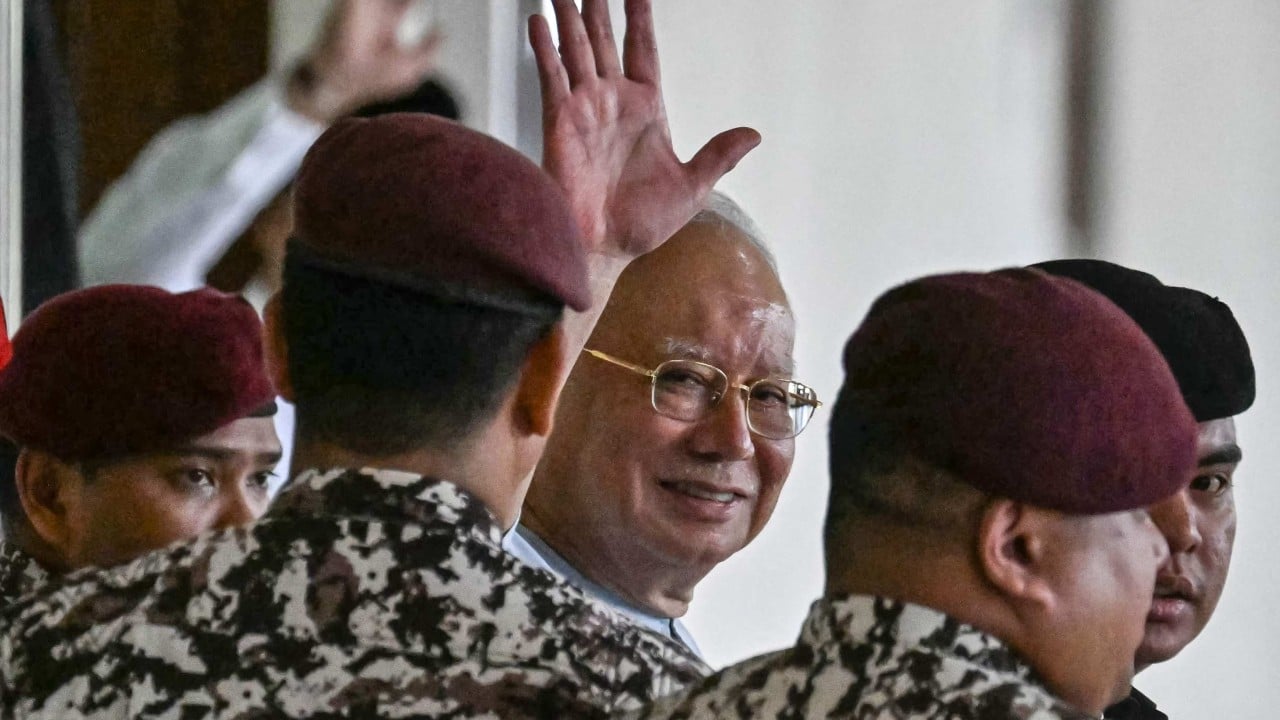
The enforcement of strict political participation bans under house arrest frameworks neutralizes an imprisoned leader's ability to convert personal popularity into state-level electoral capital. When Malaysian authorities restrict former Prime Minister Najib Razak from engaging in political activities ahead of the Melaka state election, the state apparatus executes a precise legal and operational containment strategy. Rather than relying solely on physical incarceration to limit influence, administrative conditions attached to home detention sever the logistical, communicative, and symbolic conduits required to mobilize voters in a localized parliamentary or state assembly contest.
To understand the structural impact of this restriction, analysts must separate the legal mechanics of custodial sentencing from the operational realities of Malaysian party politics. Standard political commentary treats house arrest as a softening of judicial punishment. In practice, when paired with explicit prohibitions on political activity, home detention functions as a targeted behavioral quarantine. It allows the state to manage humanitarian or institutional pressures regarding a high-profile detainee while maintaining an absolute blockade on campaign interference.
The Three Pillars of Custodial Political Neutralization
The exclusion of a high-profile political actor from an active election cycle relies on three distinct operational mechanisms. Each pillar targets a specific vector through which an incarcerated or detained leader traditionally projects power.
- Physical Geofencing and Movement Control: House arrest confines the subject to a designated residential perimeter. In the context of the Melaka state election, this prevents Najib from appearing at ceramah (political rallies), walkabouts, and constituency briefings. Malaysian retail politics depends heavily on physical presence—the distribution of patronage, face-to-face community engagement, and visual solidarity with local candidates. Removing physical mobility eliminates the candidate-endorsement photo opportunity, which remains the primary currency of grassroots mobilization for United Malays National Organisation (UMNO) operatives.
- Communication and Media Interdiction: Standard house arrest protocols prohibit unauthorized public statements, live broadcasts, and direct management of social media accounts. During previous election cycles, Najib maintained significant digital reach through curated Facebook posts that shaped national narratives and pressured coalition partners. Under strict detention terms, any public political commentary constitutes a breach of confinement conditions, triggering immediate revocation of home detention privileges and a return to standard prison facilities. This creates a self-enforcing deterrent against digital campaigning.
- Organizational Decoupling: Political parties operate as hierarchical networks that require clear signaling from top leadership to allocate resources and align messaging. By barring the detainee from meeting party strategists, branch chiefs, or campaign directors without explicit state approval, authorities sever the command-and-control link. Local machinery in Melaka cannot legally coordinate campaign themes around Najib’s direct instructions, forcing party structures to operate independently of his tactical input.
The Cost Function of Non-Compliance
The effectiveness of a political ban under house arrest does not depend on constant physical surveillance; it relies on an asymmetric risk-reward calculation imposed on the detainee. This dynamic mirrors the economic concept of deterrence through high-variance penalties, where the cost of a single violation outweighs any marginal electoral gain.
If Najib violates the political prohibition—whether by recording a campaign video for a Melaka constituency or hosting a strategic meeting with UMNO state leaders—the immediate consequence is the forfeiture of home confinement and transfer back to Kajang Prison. Conversely, the electoral return on a single covert intervention in a state election is diffuse and uncertain. A video message or leaked endorsement might energize a subset of loyalists in constituencies like Tanjung Bidara or Lendu, yet it cannot single-handedly guarantee a legislative majority.
Because the penalty is immediate, personal, and absolute, while the political payoff is probabilistic and collective, rational actors self-censor. The state shifts the burden of enforcement onto the detainee’s own risk management calculus. Party lieutenants face a parallel constraint: attempting to extract a political endorsement from Najib risks exposing him to punitive re-incarceration, making loyalists hesitant to solicit his direct involvement.
Melaka as an Electoral Stress Test for UMNO
The timing of these restrictions ahead of the Melaka state election exposes a structural vulnerability within UMNO and the broader Barisan Nasional (BN) coalition. Melaka serves as a critical bellwether for Malay-majority and mixed-seat electoral dynamics in Peninsular Malaysia. In the 2021 Melaka state election, BN secured a landslide victory of 21 out of 28 seats, a campaign heavily branded around Najib’s "Bossku" persona, which successfully re-engaged working-class Malay voters disillusioned by the 2018 general election defeat.
Without Najib’s active participation, UMNO’s Melaka machinery must test whether its 2021 gains resulted from durable institutional rebuilding or temporary reliance on a single charismatic figure. Several operational bottlenecks emerge when a party loses its primary populist mobilizer mid-cycle:
- Factional Fragmentation: Najib’s presence historically acted as a centripetal force within UMNO, suppressing local disputes over candidate selection in favor of a unified campaign brand. Without his arbitration or unifying appeal, state-level warlords in Melaka face higher friction when allocating seats among competing internal factions and coalition partners within the federal unity government.
- Message Dilution: The "Bossku" phenomenon functioned as a simplified heuristic for voters, framing complex economic grievances around nostalgia for pre-2018 cash transfers and infrastructure spending. Current UMNO leadership lacks an equivalent populist shorthand, forcing candidates to defend incumbent federal policies—such as targeted subsidy rationalization—that carry short-term voter resistance.
- Voter Turnout Attrition: Core UMNO loyalists vote reliably based on party infrastructure, but swing voters and younger demographics require high-energy campaign events to overcome political apathy. Barring Najib from the campaign trail removes the primary draw for undecided voters who view rallies as entertainment and social proof of momentum.
Institutional Precedents and Legal Boundaries
The enforcement of political bans during conditional release or house arrest aligns with established Malaysian statutory frameworks governing the Prisons Act and royal pardons board directives. Under the Federal Constitution, specifically Article 42, the Yang di-Pertuan Agong holds the prerogative of mercy, which includes the power to commute sentences or impose specific conditions on the execution of a sentence. Similarly, the Home Minister and the Commissioner General of Prisons possess statutory authority to regulate the movement and privileges of prisoners placed under alternative detention arrangements.
A critical distinction separates a full royal pardon from a sentence commutation or a house arrest directive. A full pardon expunges the conviction and restores full civil and political rights, including the right to contest elections and hold party office under Article 48 of the Federal Constitution. House arrest, by contrast, leaves the underlying conviction intact. The individual remains a convicted prisoner serving a custodial sentence outside traditional prison walls.
Because legal status remains that of a serving inmate, standard prison regulations regarding communication, visitation, and prohibition from engaging in trade, profession, or political activity continue to apply by default. Authorities do not need to pass new legislation to bar a house-arrest detainee from politics; they merely enforce existing custodial rules that prohibit inmates from conducting public affairs. Any deviation from these prohibitions requires an explicit exemption from prison authorities, which carries severe political liability for the administering government.
The Double-Edged Political Calculus for the Federal Government
While barring Najib from the Melaka campaign neutralizes a potential rival narrative, the restriction creates complex second-order effects for Prime Minister Anwar Ibrahim’s unity government, which relies on UMNO’s parliamentary support for federal stability.
The administration must balance two competing imperatives:
- Rule-of-Law Credibility: Anwar’s core Pakatan Harapan (PH) voter base demands strict accountability for 1Malaysia Development Berhad (1MDB) convictions. Allowing Najib to campaign openly from home would trigger severe backlash among urban and reform-minded voters, eroding PH’s moral authority and depressed turnout in mixed Melaka constituencies.
- Coalition Cohesion: UMNO’s grassroots base views Najib’s continued detention as an unresolved grievance. If UMNO performs poorly in Melaka, party factions aligned with Najib will attribute the loss directly to his absence from the campaign trail, intensifying internal pressure on UMNO President Ahmad Zahid Hamidi to extract further concessions from the federal administration or reconsider coalition alignment.
This dynamic traps the federal leadership in an optimization problem with no friction-free solution. Enforcing the political ban protects PH’s reformist credentials and prevents Najib from overshadowing current coalition leaders, yet it simultaneously deprives the PH-BN electoral pact of a proven vote-getter in Malay-heartland seats where Perikatan Nasional (PN) poses an aggressive challenge.
Asymmetric Adaptation by Party Operatives
When direct participation is blocked, political networks inevitably attempt to circumvent restrictions through indirect signaling. In Melaka, UMNO operatives face strict boundaries on what constitutes permissible referencing of a detained leader.
Direct communication—such as phone calls patched into rally loudspeakers, handwritten letters read aloud on stage, or freshly recorded video endorsements—crosses the legal threshold into active political participation. These actions expose the detainee to immediate administrative sanctions.
Indirect invocation, however, operates in a legal gray zone. Local candidates can reference past development projects initiated during Najib’s premiership, display archival photographs from previous Melaka visits, or utilize established party slogans without Najib’s active involvement. Yet historical branding yields diminishing returns compared to live political intervention. Archival imagery cannot respond to opponent attacks in real time, tailor promises to specific village grievances, or negotiate local turnout deals with community leaders. Without live feedback loops, the symbolic invocation of a barred leader rapidly loses tactical potency as the campaign progresses.
Strategic Execution for Campaign Leadership
Given the hard legal constraints preventing Najib Razak’s direct or indirect entry into the Melaka election, party strategists and coalition managers must abandon reliance on symbolic proxy campaigning and execute a structural pivot before nomination day:
- Decentralize Campaign Accountability to Incumbent Assemblymen: Shift campaign messaging immediately from national personality branding to hyper-local service delivery metrics. Require every Melaka division chief and candidate to run on constituency-specific infrastructure, welfare distribution, and state economic performance data rather than national party nostalgia.
- Ring-Fence Legal Compliance Around the Detainee: Issue an explicit internal directive prohibiting party operatives, division leaders, and family members from soliciting, recording, or leaking any political commentary from Najib during the campaign window. Protecting his custodial status takes absolute precedence over marginal, high-risk propaganda gains.
- Reallocate Mobilization Budgets to Micro-Targeted Ground Operations: Redirect funds previously earmarked for large-scale ceramah rallies—which fail to draw crowds without a marquee populist speaker—into high-frequency, small-group household canvassing (ziarah kasih) and targeted digital voter-turnout tracking in marginal Malay-majority polling districts.