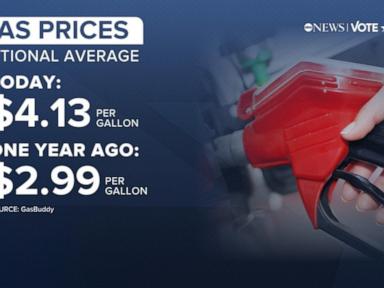
Record retail fuel prices on Election Day act as an immediate, unmediated tax on commuter-heavy electorates, systematically shifting marginal legislative and gubernatorial districts from lean-incumbent to toss-up status. While conventional political commentary treats high gas prices as a uniform national headwind, the actual electoral impact is governed by regional price inelasticity, commuting infrastructure, and local tax structures. Understanding which states move into play requires modeling the intersection of household energy expenditure and historical partisan margins, rather than relying on national polling averages.
The Transmission Mechanism of Retail Fuel Shocks
Gasoline is unique among consumer goods because its price is displayed in illuminated, three-foot-tall numerals along every major commuter corridor. Unlike core inflation—which is diffused across thousands of household SKUs and obscured by shrinkflation or delayed billing cycles—fuel costs register in real time at the point of sale. This creates a high-frequency psychological anchor that directly links macroeconomic conditions to the party in power. For an alternative perspective, read: this related article.
Economists classify short-run gasoline demand as highly price-inelastic. Because workers cannot rapidly alter their residential locations, vehicle efficiency, or public transit availability within a single election cycle, a spike in retail fuel prices does not substantially reduce consumption. Instead, it functions as a direct extraction of discretionary income. When a household's fixed transportation budget expands by 30 to 50 percent over two quarters, that capital is stripped directly from non-essential retail, dining, and savings.
This economic squeeze translates into electoral volatility through two distinct mechanisms: Similar insight on this matter has been shared by BBC News.
- Retrospective Economic Voting: Voters evaluate incumbents based on perceived changes in personal financial well-being over the preceding six to twelve months. Retail fuel prices serve as the primary heuristic for overall economic competence, often overriding positive indicators such as low unemployment or nominal wage growth.
- Differential Turnout Suppression: High fuel costs impose a disproportionate burden on lower-to-middle-income exurban and rural voters who drive longer distances in less fuel-efficient vehicles. While this demographic often trends conservative, severe liquidity constraints can depress turnout among less engaged segments of the incumbent's base, particularly younger and working-class urban commuters who rely on personal vehicles for shift work.
The Four Variables of State-Level Vulnerability
To determine which states genuinely shift into competitive territory during an Election Day price spike, analysts must score jurisdictions across four structural variables rather than looking at nominal pump prices alone. A state with the highest absolute gas prices may be electorally immune if its partisan baseline is locked, whereas a state with moderate prices can flip entirely if those prices breach a specific regional threshold.
1. Commuter Dependency and Vehicle Miles Traveled (VMT)
States with sprawling suburban rings and minimal mass transit infrastructure exhibit the highest electoral sensitivity to fuel costs. In jurisdictions where over 80 percent of the workforce commutes alone by car and average one-way commute times exceed 28 minutes, fuel price spikes affect nearly every voting household simultaneously. Conversely, states anchored by dense metropolitan cores with robust rail and bus networks insulate a significant portion of their electorate from direct pump shock, even if those voters still experience secondary inflationary effects in grocery and freight costs.
2. State Excise Taxes and Regulatory Premiums
Retail fuel prices are not uniform across state lines; they are heavily distorted by state-level excise taxes, environmental fuel standards, and refinery proximity. States that index their gas taxes to inflation or mandate specialized summer and winter fuel blends experience sharper price spikes during supply crunches. When local prices exceed the national average by more than 15 percent, voters frequently assign blame to both federal energy policy and state-level governance, compounding the risk for down-ballot incumbents.
3. Baseline Partisan Margin (The Elasticity Threshold)
An economic shock only alters electoral outcomes when the induced vote swing exceeds the incumbent party's structural advantage. In a state decided by fewer than three percentage points in the prior cycle, a 20 percent surge in fuel prices during the final 60 days of the campaign is sufficient to invert the winner. In states with a partisan lean greater than eight points, the same price shock merely narrows the margin of victory without changing the allocation of electoral votes or legislative control.
4. Household Income Distribution and Energy Burden
The "energy burden"—defined as the percentage of gross household income spent on transportation and residential energy—determines the pain threshold of a price spike. In states with lower median household incomes, a $1.00 per gallon increase consumes a vastly larger share of monthly cash flow than in high-income coastal states. Therefore, industrial and agricultural states in the Midwest and Sunbelt experience acute political backlash at price points that coastal voters absorb with minimal behavioral change.
Categorizing the Realignment Tiers
Applying these four variables allows us to segment competitive states into three operational tiers based on how record Election Day fuel prices alter their strategic posture.
Tier 1: High-Sensitivity Toss-Ups (Immediate Realignment)
These are states characterized by razor-thin historical margins (under 2 percent), high suburban VMT, and moderate median incomes. Examples include battlegrounds in the Upper Midwest and the industrial Rust Belt, alongside sprawling Sunbelt states like Arizona and Nevada. In these jurisdictions, record gas prices act as an immediate catalyst, breaking deadlocked polling in favor of the opposition party. Independent voters in suburban counties—who typically decide these states—exhibit the highest defection rates when transportation costs peak in October and November.
Tier 2: Newly Exposed Lean-Incumbent States (Margin Compression)
This tier encompasses states previously considered safely in the incumbent party's column (margins of 4 to 7 percent) that possess high regulatory fuel premiums or extreme commuter dependency. Pacific Northwest states, parts of the Mid-Atlantic, and high-growth exurban states fall into this category. Record fuel prices force the incumbent party to divert campaign capital and media buys into these defensive territories, starving true Tier 1 battlegrounds of resources. Even if the top-of-the-ticket candidate survives in a Tier 2 state, the down-ballot drag routinely flips competitive suburban congressional districts and state legislative chambers.
Tier 3: Price-Shocked Safe States (Noise Without Signal)
States with extreme retail fuel prices—often exceeding national records due to isolated refining markets and high state taxes—frequently dominate media coverage on Election Day. However, when these states possess a structural partisan lean exceeding 12 to 15 points, the electoral impact is purely cosmetic. High prices generate intense media narratives and localized anger, yet the sheer volume of partisan voters prevents a statewide flip. Treating these states as "in play" represents a classic analytical error: confusing nominal price extremes with marginal electoral elasticity.
Analytical Limitations and Confounding Variables
Relying exclusively on Election Day fuel prices to forecast state-level outcomes introduces significant analytical blind spots. A rigorous model must account for several countervailing forces that can mute or distort the expected backlash against incumbents.
First, price velocity matters more than absolute price. Voters acclimate to high prices over time. If gasoline hits a record high in June, stabilizes through September, and ticks up marginally in November, the political damage is substantially lower than if prices surge 25 percent in the four weeks immediately preceding Election Day. Sharp upward velocity prevents household budgets from adjusting and maximizes media saturation during the early-voting window.
Second, attribution framing can neutralize incumbent blame. When record prices coincide with obvious external geopolitical shocks—such as major foreign conflicts, OPEC+ production cuts, or catastrophic Gulf Coast hurricanes—incumbents can successfully externalize blame. Voters are less punitive when they perceive the price spike as an exogenous supply shock rather than the direct consequence of domestic regulatory or fiscal policy.
Third, non-economic salience can override pocketbook voting. In elections dominated by high-salience social, judicial, or constitutional issues, the correlation between economic misery and anti-incumbent voting weakens. If a critical mass of suburban swing voters prioritizes non-economic issues, they will absorb higher commuting costs without defecting from their preferred party, rendering standard economic voting models overly pessimistic for incumbents.
Tactical Resource Allocation for Campaigns and Strategists
For campaign managers, political action committees, and risk analysts operating in an environment of record Election Day fuel prices, reactive messaging is insufficient. Capital and operational focus must be reallocated according to marginal electoral elasticity.
- Audit District-Level VMT Against Polling Margins: Immediately overlay county-level Vehicle Miles Traveled data onto current polling maps. Withdraw defensive media spending from Tier 3 states where partisan baselines insulate incumbents regardless of pump prices, and redeploy those funds into Tier 2 suburban districts where high commuter dependency threatens down-ballot majorities.
- Shift Messaging from Macroeconomic Defense to Microeconomic Relief: Incumbents must abandon macro-level arguments citing GDP growth or aggregate job creation, which alienate voters experiencing acute cash-flow compression at the pump. Campaign communications in high-VMT districts must pivot entirely to concrete, immediate cost-offset mechanisms, such as state gas tax holidays, direct energy rebates, or targeted utility subsidies.
- Target Early-Voting Windows Before Peak Price Velocity: In jurisdictions with extended early voting, campaigns should front-load turnout operations to capture low-propensity, high-commute voters before seasonal refinery transitions or geopolitical disruptions drive late-October price spikes. Locking in ballots early neutralizes the psychological impact of record numerals on Election Day itself.