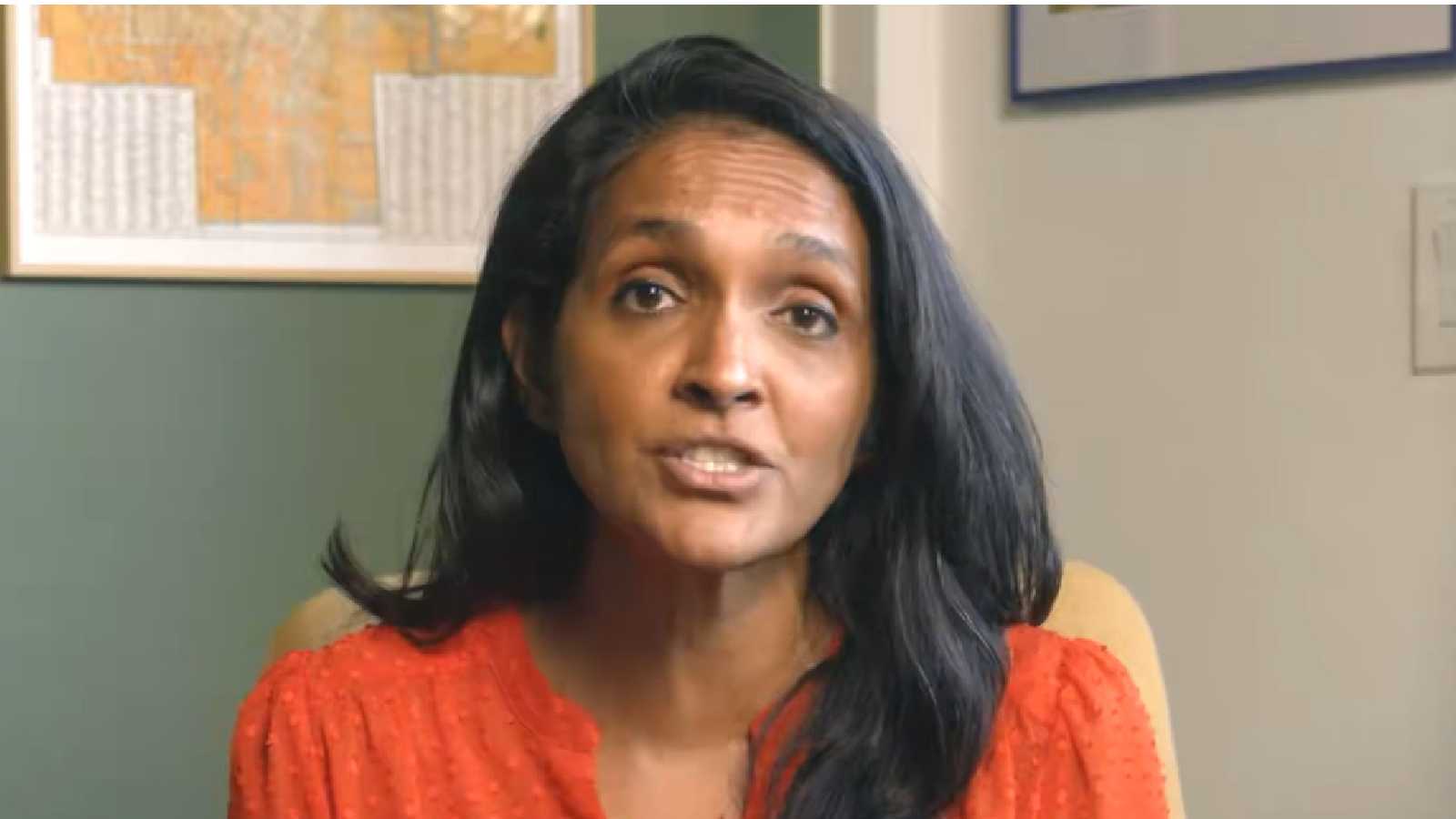
Any credible analysis of Los Angeles municipal politics must first separate verifiable political reality from speculative or false premises. Nithya Raman, an urban planner born in Kerala, India, serves on the Los Angeles City Council representing District 4—she has not become the Mayor of Los Angeles. Evaluating a claim that she holds the mayoralty requires deconstructing both the actual trajectory of her political career and the structural mechanics of Los Angeles city governance, which govern how an outsider urbanist accumulates institutional power in the second-largest city in the United States.
Standard political commentary reduces municipal victories to identity milestones or ideological labels. That framing misses the operational engine behind Raman’s rise. Her entry into City Hall in 2020 and her subsequent re-election in 2024 resulted from a replicable organizational architecture: hyper-local field mobilization, disciplined coalition alignment, and policy positioning anchored in urban planning mechanics rather than traditional party patronage. Understanding how this model functions—and where its ceiling lies in a citywide mayoral contest—provides a far more accurate blueprint of Los Angeles power dynamics than premature victory narratives. Don't forget to check out our recent coverage on this related article.
Factual Baseline and Institutional Reality
Before analyzing electoral strategy, the baseline facts of Los Angeles executive leadership must be established with precision.
- Current Executive Office: Karen Bass won the 2022 Los Angeles mayoral election, defeating real estate developer Rick Caruso to become the first woman and second Black mayor in the city's history. Her four-year term runs through December 2026, with the 2026 municipal election cycle determining the subsequent administration.
- Nithya Raman’s Actual Office: Raman represents Los Angeles City Council District 4, a geographically sprawling district stretching from Silver Lake and Los Feliz through Hollywood Hills and into the San Fernando Valley neighborhoods of Sherman Oaks, Studio City, and Encino. She first won the seat in November 2020, unseating incumbent David Ryu, and secured re-election in the March 2024 primary by clearing the 50 percent threshold outright against challengers Ethan Weaver and Levon Baronian.
- Demographic History of the Mayoralty: Los Angeles has never elected an Asian-American mayor. Past executives have been predominantly white men, alongside Tom Bradley (the city's first Black mayor, serving 1973–1993), Antonio Villaraigosa (its first Latino mayor in modern history, serving 2005–2013), and Karen Bass.
Conflating a council district victory—or a hypothetical candidacy—with an executive triumph distorts the mechanics of municipal power. In Los Angeles, the City Council and the Mayor operate under a "weak mayor" charter modified by significant executive appointment powers. A councilmember exercises direct land-use authority within their district through longstanding councilmanic courtesy norms, whereas a mayor manages department heads, budget proposals, and citywide crisis response without a direct legislative vote. To read more about the history of this, Al Jazeera provides an informative summary.
The Operational Architecture of Raman’s Political Ascent
To understand why Nithya Raman frequently surfaces in discussions of future citywide leadership, analysts must examine the specific structural variables that allowed a first-time candidate with no prior elected office to defeat an entrenched incumbent in 2020 and survive redistricting in 2024.
1. The Technical Credibility Wedge
Unlike career legislative aides or local business owners who dominate municipal primaries, Raman entered politics with formal training in urban planning from the Massachusetts Institute of Technology (MIT) and field experience founding an anti-poverty research organization in India, alongside co-founding the SELAH Neighborhood Homeless Coalition in Los Angeles.
In municipal politics, technical credentials function as a trust proxy. When homelessness and housing affordability rank as the top voter concerns, a candidate who can fluent dissect zoning codes, housing element mandates, and shelter throughput metrics neutralizes attacks characterizing them as naive idealists. Instead of debating abstract ideology, the campaign framed homelessness as an infrastructure and resource-allocation failure.
2. Asymmetric Field Operations and Voter Turnout
Los Angeles municipal elections historically suffered from depressed turnout, particularly when separated from federal election cycles. Following the passage of Charter Amendment 1 in 2015, Los Angeles consolidated its municipal elections with statewide and federal primaries and general elections beginning in 2020.
This calendar shift altered the electorate's composition:
- Expanded Electorate: Consolidating municipal races with presidential cycles dramatically increased the total vote pool, diluting the proportional weight of traditional high-propensity homeowner blocks.
- Volunteer Density: Raman’s 2020 campaign constructed a decentralized field operation powered by thousands of volunteers, primarily mobilized through progressive infrastructure such as the Democratic Socialists of America - Los Angeles (DSA-LA) and Ground Game LA.
- Direct Voter Contact: Rather than relying exclusively on expensive television buys or slate mailers—the traditional currency of Los Angeles politics—the operation prioritized multi-touch door-knocking and relational organizing, converting low-propensity renters into reliable municipal voters.
3. Redistricting Survival as a Stress Test
The true measure of an electoral machine is not winning an open or favorable seat, but surviving adversarial boundary changes. During the 2021 Los Angeles redistricting process, District 4's boundaries were radically redrawn. The new map excised progressive strongholds like Koreatown and parts of East Hollywood, replacing them with more moderate, homeowner-heavy precincts in the San Fernando Valley.
conventional political wisdom held that the redrawn map rendered Raman vulnerable to a moderate challenger in 2024. Instead, her campaign adapted its resource allocation early, establishing constituent service pipelines in the newly acquired Valley neighborhoods while maintaining high turnout in the remaining eastern precincts. Winning 50.6 percent of the vote in the March 2024 primary—thereby avoiding a November runoff—demonstrated that her voter-contact apparatus could scale across divergent socio-economic demographics.
The Structural Friction of a Citywide Mayoral Campaign
Extrapolating a council district victory into a successful citywide mayoral run ignores four severe structural bottlenecks inherent to Los Angeles geography and governance. Any strategist modeling a potential citywide bid by an urbanist progressive must account for these constraints.
Geographic and Demographic Scale
A Los Angeles City Council district contains roughly 260,000 residents. The City of Los Angeles encompasses nearly 3.9 million people spread across 469 square miles.
- The Cost of Reach: Door-to-door field operations that saturate a single council district hit diminishing returns across 469 square miles. Reaching voters in San Pedro, Watts, Sylmar, and Pacific Palisades simultaneously requires tens of millions of dollars in paid media, digital targeting, and broadcast television.
- Coalition Fracturing: In a single district, a candidate can align renters and progressive homeowners around localized transit and housing solutions. Citywide, the electorate fractures along sharp regional fault lines. Policies favored by renters in Silver Lake or Venice—such as eliminating single-family zoning or aggressively reallocating street space to bus and bike lanes—frequently trigger fierce electoral backlash in the San Fernando Valley, South Los Angeles, and the Harbor area.
The Labor and Institutional Veto
Winning a citywide election in Los Angeles requires navigating the institutional power of major municipal labor unions, particularly the Service Employees International Union (SEIU), the Los Angeles County Federation of Labor, and public safety unions such as the Los Angeles Police Protective League (LAPPL).
In her 2020 council race, Raman won without major institutional labor endorsements, defeating a candidate backed by the political establishment. At the mayoral level, running without—or in opposition to—the County Federation of Labor creates a massive structural deficit in independent expenditure funding and precinct-walking capacity. Furthermore, public safety unions routinely deploy multi-million-dollar independent expenditure campaigns against candidates perceived as hostile to police staffing levels, a dynamic that has repeatedly reshaped citywide races in California.
The Accountability Trap of Executive Governance
Legislators can critique systemic failures; executives own them. Moving from a 15-member council to the mayor's office fundamentally alters the voter's evaluation criteria.
- Visibility of Failure: In Los Angeles, the Mayor is held directly responsible by the electorate for street homelessness, crime statistics, and municipal service delivery, even though land-use decisions remain heavily decentralized among the 15 council offices and regional homelessness funding is largely controlled by the Los Angeles County Board of Supervisors.
- Incrementalism vs. Purity: Progressive movements demand rapid structural transformation, such as tenant protections, social housing development, and non-carceral crisis response. However, municipal budgets are constrained by pension obligations, structural deficits, and state preemption laws. An executive who compromises to pass a balanced budget risks alienating their volunteer base, while an executive who refuses to compromise risks administrative paralysis.
Evaluating the South Asian and Asian-American Political Trajectory in Los Angeles
While the claim that Raman has become mayor is factually incorrect, her prominence reflects a measurable shift in the political representation of Asian Americans and South Asians in Southern California.
Asian Americans constitute roughly 11.7 percent of the City of Los Angeles population, with even higher concentrations in the broader county. Historically, Asian-American political power in the region centered in the San Gabriel Valley or focused on non-ideological, business-friendly representation. Raman’s election in 2020 made her the first Asian-American woman—and the first South Asian—elected to the Los Angeles City Council.
Her trajectory illustrates a distinct model of diaspora politics:
- Issue-First Mobilization: Rather than campaigning primarily on ethnic solidarity, her platform centered on universal material concerns—housing costs, tenant rights, and climate resilience—which naturally resonated with younger, multi-racial working-class coalitions while still generating historic pride and fundraising support from the Indian-American and broader South Asian diaspora.
- Down-Ballot Spillover: Successful high-profile campaigns build permanent data and volunteer infrastructure. Staffers, field organizers, and donors trained within one campaign ecosystem subsequently migrate to other municipal, county, and state legislative races, gradually altering the candidate pipeline across Southern California.
Strategic Framework for Assessing Municipal Contenders
When evaluating media reports or political forecasts regarding Los Angeles leadership transitions, apply a four-point verification and feasibility filter before accepting claims of inevitable political ascension:
- Verify Constitutional and Charter Reality: Confirm the current officeholder, statutory term limits, and exact election dates. Los Angeles mayors are limited to two four-year terms, with elections occurring in even-numbered years divisible by four (2022, 2026, 2030).
- Audit Independent Expenditure Ratios: In Los Angeles citywide races, direct candidate contributions are capped, making outside spending via Independent Expenditure (IE) committees the decisive financial metric. Track where business, real estate, and labor IEs place their capital.
- Measure Cross-Regional Vote Share: Discount candidates whose support is concentrated entirely within the urban core (Districts 1, 4, 13, 14). A viable mayoral contender must demonstrate a credible path to at least 40 percent of the vote in the San Fernando Valley and strong institutional backing in South Los Angeles.
- Distinguish Legislative Agility from Executive Capacity: Evaluate whether a candidate’s track record consists of passing council motions and constituent advocacy, or managing complex municipal departments, labor negotiations, and multi-billion-dollar budgets.
Until a candidate demonstrates the capacity to bridge the geographic divide between the basin and the Valley while neutralizing institutional labor and public safety opposition, any narrative declaring an urbanist councilmember the Mayor of Los Angeles remains fiction rather than political reality.


