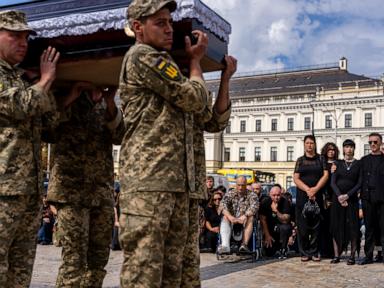
The standard war dispatch follows a predictable script. A grieving young widow, often pregnant, stands over a casket. The cameras zoom in on the flag, the tears, the youth cut short. It is designed to provoke one specific reaction: raw, unadulterated heartbreak.
Media outlets run these profiles daily because grief sells. But this relentless focus on individual tragedy is a smokescreen. It reduces complex geopolitical machinery to a soap opera, masking the systemic failures of mobilization, logistics, and strategy that put those bodies in the ground in the first place.
The Comfort of Tragedy
We prefer weeping widows to uncomfortable audits because sorrow is easy to consume. It demands nothing from the reader except a fleeting moment of empathy before the next notification pops up.
When a twenty-one-year-old soldier dies, the public discussion immediately turns to mourning. Nobody asks why a twenty-one-year-old was holding the line in a protracted attrition war without adequate rotation schedules. Nobody questions the institutional bottlenecks keeping experienced veterans out of active training roles while raw recruits absorb mortar fire.
We romanticize sacrifice to avoid interrogating utility. If a military strategy relies on burning through its youngest demographic to hold static positions, the problem is not just bad luck. It is a structural failure of leadership.
The Mechanics of Attrition
Modern industrial warfare is a math problem. Emotional journalism treats it like a Greek tragedy.
When you strip away the flag-draped coffins, you are left with cold logistics: ammunition output, casualty replacement rates, medical evacuation times, and electronic warfare dominance. A state that prioritizes optics over operational efficiency will always produce more funerals.
I have watched organizations double down on failing projects simply because pulling back looked bad on paper. Governments do the exact same thing on a catastrophic scale. They feed infantry into a meat grinder because admitting that a defensive line is untenable requires political courage they do not possess.
The twenty-one-year-old in that casket was not just a victim of an enemy shell. He was a victim of a system that treats human capital as an infinitely renewable resource.
Challenging the Narrative
The lazy consensus is that reporting on the human cost of war is the highest form of journalism. It is not. It is often the cheapest.
Real reporting would examine the procurement corruption that leaves front-line units short on night vision. It would audit the training pipelines that push soldiers into combat with weeks of preparation instead of months. It would investigate why administrative bloat in the rear echelon remains untouched while combat units run dangerously lean.
Instead, we get a masterclass in deflection. We gaze at the widow so we do not have to look at the generals and bureaucrats who mismanaged the theater.
If we genuinely respect the lives of those on the front lines, we must stop consuming war coverage like reality television. Anger is a far more productive response to a botched campaign than sorrow. Sorrow accepts the loss as inevitable. Anger demands accountability.
Stop crying over the casualty lists and start demanding competence from the people who write them.