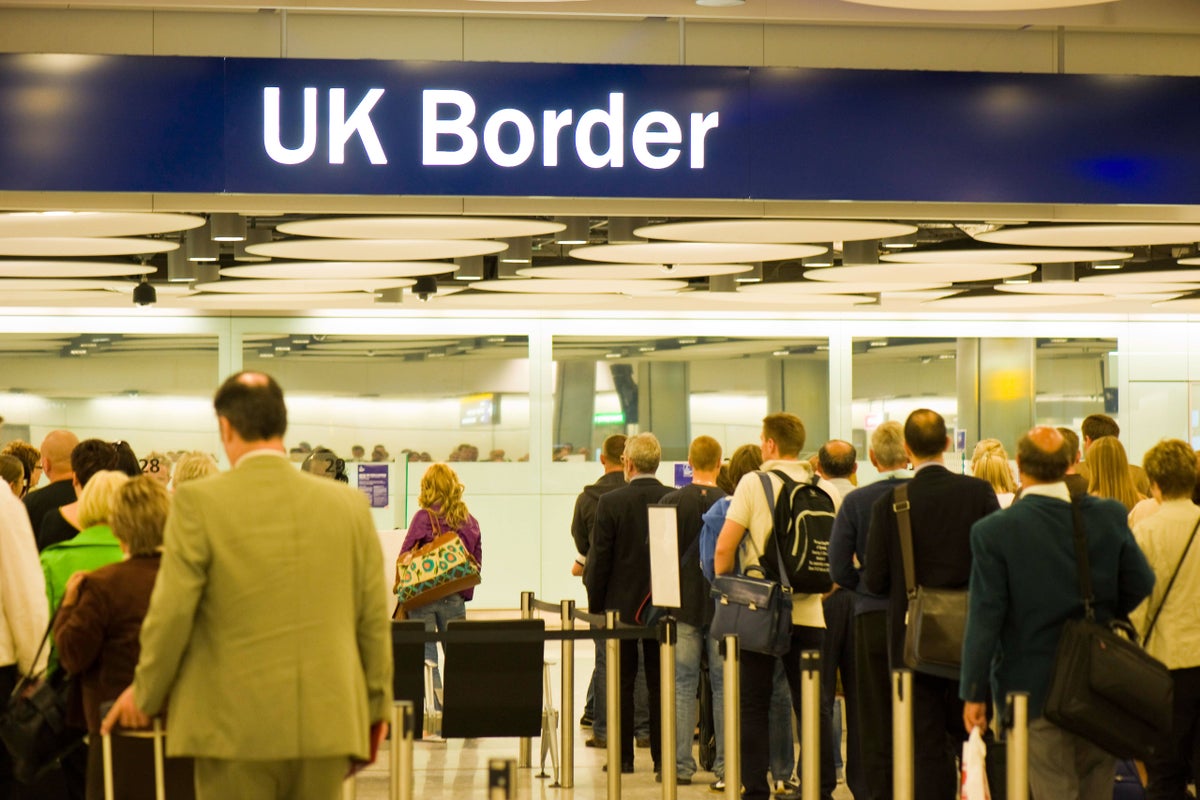
The boarding gate at Stansted or Dublin is a place of frantic, controlled chaos. You know the sound: the rhythmic thud of carry-on wheels hitting the linoleum, the crinkle of meal deals, the sharp beep of a scanner rejecting a mobile boarding pass. For most of us, the worry ends once we find seat 14C. We settle in, wait for the safety demonstration we’ve seen a hundred times, and trust that the physics of lift and the miracle of logistics will deposit us in Alicante or Berlin by dinner.
Michael O’Leary, the man who built an empire on ten-euro fares and a refusal to provide free water, is worried about something far more visceral than seat assignments. He is looking at the fuel gauges. Not just the ones on the current fleet, but the ones that might stay at zero in the coming months.
When the CEO of Ryanair stands up and says there is "no 100% guarantee" that every scheduled flight will take off this summer, the travel industry doesn't just flinch. It braces for impact. This isn't a threat about extra baggage fees or a joke about charging for the toilets. This is a warning about the lifeblood of modern movement: kerosene.
The Ghost in the Engine
Consider Sarah. She is a hypothetical passenger, though her story is being written in real-time by thousands of families across Europe. Sarah hasn’t seen her parents in three years. She saved for six months to book four tickets to a small village in Portugal. To Sarah, the "jet fuel crisis" is a headline she scrolls past while making school lunches. It feels abstract. It feels like "business news."
But the crisis is not abstract. It is a physical bottleneck.
The aviation industry is currently trapped between a surging, desperate demand for travel and a supply chain that has forgotten how to run at full speed. During the long silence of the pandemic, refineries shifted their focus. They recalibrated. Now, as the world tries to make up for lost time, we are finding that the taps don't turn back on quite so easily.
The problem isn't just that fuel is expensive. We’ve dealt with expensive. The problem is availability. If a refinery in the Netherlands has a technical glitch, or if a tanker is delayed in the Mediterranean, the ripple effect isn't a price hike—it’s a cancellation. A "no-go." A silent departures board.
O’Leary’s warning is a rare moment of corporate vulnerability. He is admitting that even the most efficient, ruthless, and well-hedged airline in the world cannot fly on fumes. If the fuel isn't at the airport, the plane stays on the ground. Sarah stays at the gate. The village in Portugal stays a memory on a screen.
The Invisible Pipeline
We treat air travel like a utility, as reliable as the water from our taps. We forget that every flight is a minor industrial miracle. A Boeing 737 doesn't just need fuel; it needs a specific grade of highly refined combustible liquid delivered at exactly the right moment to exactly the right wing.
The logistics are a high-wire act.
Most major airports are fed by pipelines that run deep underground, invisible to the vacationers overhead. These veins are currently pulsing with a frantic energy. Refiners are struggling to balance the production of diesel—needed for the trucks that keep our grocery stores stocked—and kerosene. When you choose between heating a home, moving a freight truck, or flying a hen party to Ibiza, the hen party is often the first thing to be sacrificed.
The tension is visible in the numbers, but it’s felt in the stomach.
Ryanair has historically been the master of "hedging"—the financial equivalent of buying your groceries for the next three years at today's prices to avoid inflation. They are better at this than almost anyone. But you cannot hedge against a dry pipe. You cannot pay your way out of a physical shortage.
The Psychology of the Warning
Why would a man known for bravado and aggressive marketing choose to spook his customers now?
It is a strategic bracing. By shattering the illusion of a "100% guarantee," O'Leary is managing the emotional fallout before it happens. He is shifting the blame from the airline's operations to the global energy infrastructure. It is a classic "act of God" defense, repackaged for the era of energy instability.
But for the traveler, the reason doesn't matter.
What matters is the fragility of the plan. We have entered an era where the ticket in your inbox is a "maybe" rather than a "must." This shift changes how we move through the world. It adds a layer of anxiety to the terminal. We look at the fuel trucks circling the planes with a new, hungry intensity. We wonder if that truck has enough for us, or if it’s being saved for the long-haul flight at the next gate over.
The Cost of the Comeback
We are currently paying the "reopening tax."
After years of stagnation, the global machinery is groaning under the weight of our collective desire to be elsewhere. It’s not just fuel. It’s the pilots who retired and weren’t replaced. It’s the baggage handlers who found better-paying jobs in warehouses and never came back. It’s the air traffic controllers working double shifts.
Fuel is simply the most flammable part of this systemic exhaustion.
Imagine the cockpit of a 737 sitting on the apron at Heathrow. The pilots have their flight plan. They have their passengers. They are ready. But they are waiting for a signal that the fuel load is confirmed. In the past, this was a formality. Today, it is a negotiation.
The aviation industry is a ecosystem of razor-thin margins and "just-in-time" delivery. When "just-in-time" becomes "maybe later," the system collapses. O'Leary knows that a single week of significant fuel disruptions could wipe out a quarter’s profits. More importantly, it could wipe out a decade of consumer trust.
Beyond the Boardroom
This isn't just a story about a budget airline and a volatile commodity. It is a story about the limits of our reach. For forty years, we have lived in a world where the horizon was always accessible, provided you had fifty quid and a backpack. We assumed the supply would always meet our demand.
We are now discovering that the tether is shorter than we thought.
The "jet fuel crisis" is a reminder that our freedom to roam is tied to a complex, aging, and increasingly brittle energy network. We are flying on the edge of a supply chain that was never designed for this level of volatility.
When you hear a CEO talk about a lack of guarantees, he isn't talking to his shareholders. He is talking to the people standing in the security line. He is telling them to look at the plane on the tarmac not as a certainty, but as a privilege.
The engines are thirsty. The tanks are low. The world is waiting to see if the taps stay open.
As the sun sets over the runway, the lights of the terminal flicker on. Thousands of people are still checking their apps, still hoping their flight hasn't been turned into a ghost. The guarantee is gone, replaced by a nervous watchfulness. We are all, in a sense, waiting at the gate, eyes turned toward the horizon, hoping that the miracle of flight has just enough fuel to last one more summer.