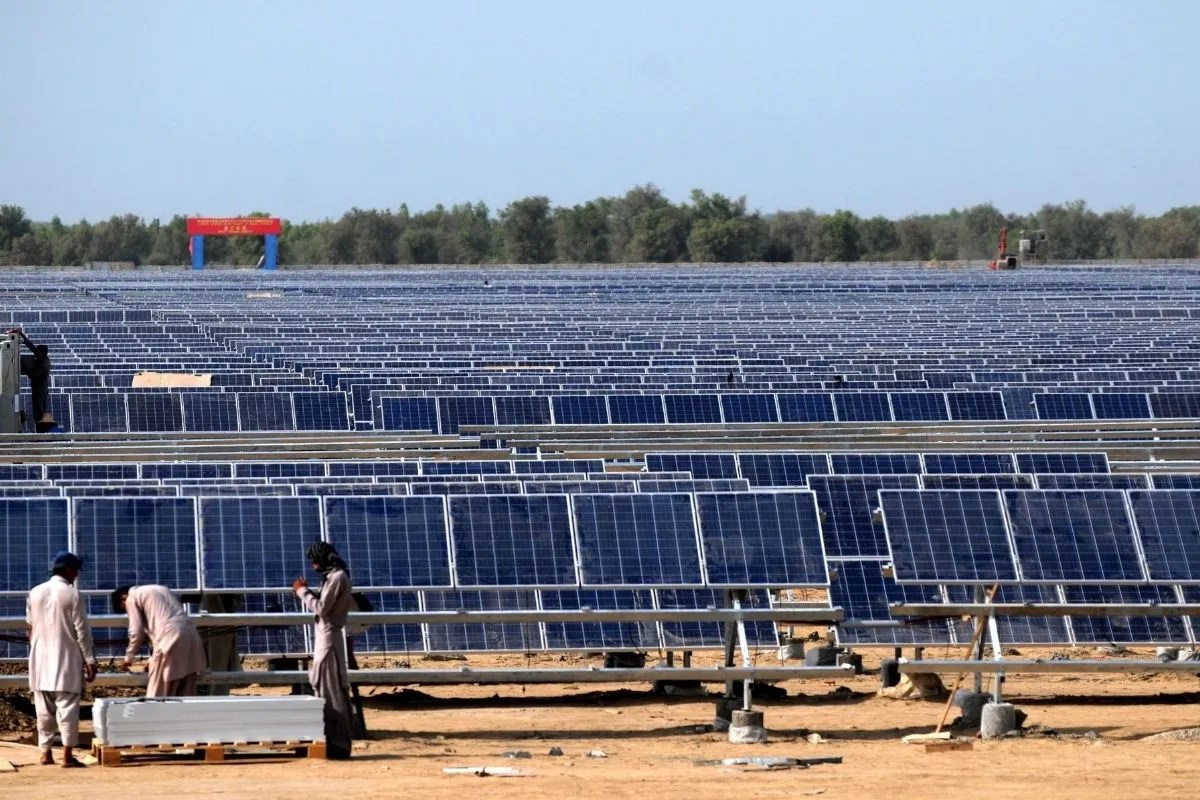
For the first time in the history of modern industrialization, India has hit a ceiling on fossil fuel power generation. This isn't just a statistical blip or a minor adjustment in a government ledger. It is a fundamental break in the link between economic growth and carbon-heavy electricity. While the total demand for power continues to surge, the share of coal and gas in the energy mix has finally begun to retreat, replaced by a massive influx of solar and wind capacity.
This shift marks a critical moment for the national grid. For decades, the logic was simple: to grow the economy, the state must burn more coal. That logic has expired. New data confirms that fossil fuels no longer hold a monopoly on incremental growth. Every new factory and household added to the grid is now increasingly powered by renewable sources rather than the traditional thermal plants that have dominated the subcontinent since independence.
The Economic Engine Decouples from Coal
The narrative around India’s energy transition often focuses on environmental idealism. That is a mistake. The real driver here is hard-nosed economics. The cost of generating a unit of electricity from solar has plummeted to levels that coal simply cannot match without heavy subsidies. When solar power costs drop below ₹2.50 per unit, the financial case for building new thermal capacity evaporates.
Institutional investors have smelled the change. Private capital is fleeing the coal sector, not just because of green mandates, but because coal plants are becoming stranded assets. A coal plant takes years to build, requires complex supply chains for fuel, and faces increasing regulatory hurdles. A solar farm can be deployed in months. This speed to market has allowed renewable energy to capture the lion's share of new demand.
The numbers tell a story of a system under pressure. Even as peak demand hits record highs during summer heatwaves, the thermal fleet is running at lower utilization rates. This creates a financial paradox for power companies. They must keep coal plants operational to handle the "base load" or the night-time peaks when the sun isn't shining, but those same plants are losing money during the day when cheap solar floods the market.
The Grid Under Siege
This transition is far from smooth. Moving from a centralized coal-fired system to a decentralized, intermittent renewable system is the equivalent of changing the engines on a plane while it is flying at thirty thousand feet. The national grid was designed for the steady, predictable output of thermal plants. Solar and wind are erratic.
The engineering challenge is immense. On a clear, windy day, the grid is awash in power. When the clouds move in or the wind drops, the system faces a sudden deficit. To manage this, grid operators are forced to perform a delicate balancing act, often ramping coal plants up and down with a frequency they were never designed to handle. This mechanical stress shortens the lifespan of thermal equipment and increases maintenance costs, further eroding the business case for fossil fuels.
The Storage Bottleneck
If renewables are to truly kill off fossil fuels, the problem of storage must be solved. Currently, India relies on its aging coal fleet to act as a giant, dirty battery. When the sun goes down, coal ramps up. To break this cycle, the country needs a massive rollout of Battery Energy Storage Systems (BESS) and Pumped Hydro Projects.
The scale of storage required is staggering. We are talking about gigawatt-hours of capacity that currently exist only on paper or in small-scale pilot projects. Without this storage, the decline of fossil fuels will eventually hit a wall. You cannot run a digital economy on "maybe" power. The next phase of the energy war won't be fought over who can build the cheapest solar panel, but who can store that energy most efficiently for the hours between sunset and sunrise.
Hidden Costs and Subsidies
We must also look at the murky world of cross-subsidization. In India, industrial users pay higher rates to subsidize farmers and domestic consumers. This system is propped up by the historical stability of coal. As the energy mix shifts, the old tariff structures are fracturing. Renewable energy developers often sign long-term Power Purchase Agreements (PPAs) that bypass the traditional utility model, leaving state-run distribution companies—already drowning in debt—with fewer high-paying customers.
The Geopolitics of the Supply Chain
While India is reducing its dependence on imported coal and gas, it is arguably trading one form of dependency for another. The solar supply chain is heavily concentrated. From polysilicon to solar cells, the path to India’s green future currently runs through foreign manufacturing hubs.
The government has attempted to counter this with the Production Linked Incentive (PLI) schemes to build a domestic solar manufacturing base. However, catching up with decades of industrial lead time is a brutal task. If India wants to ensure that the decline in fossil fuel production leads to true energy independence, it must secure its own supply of critical minerals like lithium, cobalt, and rare earth elements. These are the new "oil" of the 21st century.
The investigative reality is that while the smoke from coal chimneys may be thinning, the industrial machinery required to replace them is still being built elsewhere. The transition is a win for the lungs of citizens in the Indo-Gangetic plain, but it remains a complex strategic puzzle for the Ministry of External Affairs.
The Human Cost of the Transition
We cannot ignore the "Coal Belt." Entire states like Jharkhand, Chhattisgarh, and Odisha are built on the back of the coal economy. Millions of livelihoods—from miners to railway workers to local tea stall owners—depend on the constant flow of black diamonds.
As fossil fuel generation declines, these regions face an existential threat. A "Just Transition" is a popular phrase in policy circles, but on the ground, it means finding new industries for communities that have known nothing but mining for three generations. If the green shift ignores the economic hollow-out of the coal heartlands, it will face a political backlash that could stall progress for a decade.
The decline of fossil fuel energy isn't just a technical achievement. It is a social upheaval.
The Nuclear Wildcard
In the shadows of the solar vs. coal debate lies nuclear energy. While it remains a small fraction of the current mix, it is the only zero-carbon source that provides the same steady base-load power as coal. The long gestation periods and high initial costs have kept nuclear in the background, but as the limitations of battery storage become clearer, the conversation is shifting.
Small Modular Reactors (SMRs) are being discussed as a potential replacement for aging coal plants. By using the existing grid infrastructure of a retired thermal plant and replacing the boiler with a compact nuclear core, India could theoretically solve the intermittency problem of renewables without returning to fossil fuels.
Market Forces Over Mandates
What makes this current decline in fossil fuel power so significant is that it is being driven by the market rather than just government decree. In previous years, green energy was a luxury supported by grants. Today, it is a predatory competitor.
The private sector is no longer waiting for the government to lead. Major industrial houses are setting up their own renewable captive power plants to insulate themselves from the rising costs and volatility of the coal-dependent grid. When the biggest consumers of power start generating their own clean energy, the traditional utility model enters a death spiral.
This isn't a future scenario. It is happening now. The decline in fossil fuel generation is the first visible crack in an old wall.
The era of coal dominance is ending not with a bang, but with a relentless, downward slope on a generation chart. The challenge now is to manage the vacuum left behind. The grid needs more than just green electrons; it needs stability, storage, and a new financial architecture that doesn't rely on the ghost of the industrial revolution.
Build the storage or watch the progress flicker.