Rain slicked the pavement of a rest stop outside of Lyon, catching the neon glow of a vending machine. Inside a parked electric SUV, a father named Elias watched his seven-year-old daughter sleep in the backseat. He looked at the dashboard. 22 percent.
He looked at the charging pylon standing like a lonely sentinel in the dark. To get the range he needed to reach his parents’ house before sunrise, he would have to sit here for forty-five minutes. Maybe fifty. That is the silent tax of the electric revolution—a tax paid in minutes, in bored pacing through convenience store aisles, and in the low-level anxiety of watching a percentage bar creep upward with agonizing slowness.
For a decade, we have been told that the internal combustion engine is a relic. We believe it. We want the silence. We want the clean air. But the human heart is impatient. We are hardwired for the open road, not the parking lot. The bottleneck hasn't been a lack of will; it has been the stubborn chemistry of the lithium-ion cell.
Then came a quiet shift from a company called CATL. They didn't just announce a new product; they began rewriting the physics of the Sunday drive.
The Chemistry of Impatience
To understand why Elias is sitting in the rain, you have to understand what happens inside a battery during a fast charge. Imagine a massive stadium where thousands of people—lithium ions—are trying to rush through a single narrow gate to get to their seats. If they move too fast, they collide. They bottleneck. In a battery, this chaos causes heat. If you push too hard, the lithium doesn't settle into its "seat" (the anode); instead, it plates onto the surface, creating metallic whiskers that can short-circuit the whole system.
Battery engineers have spent years trying to widen that gate. The industry standard was always a trade-off. You could have a battery that charged fast but died young, or a battery that lasted forever but took an age to fill.
CATL’s breakthrough, embodied in their Shenxing and Freevoy lines, changed the fundamental geometry of that stadium. By using a "super-electronic network" cathode and a new type of graphite for the anode, they created more "gates." The ions don't have to push. They flow.
The result is a battery that can gain 400 kilometers of range in just 10 minutes.
Think about that. Ten minutes is the time it takes to order a coffee, use the restroom, and check your messages. It is no longer a "charging session." It is a pause. By the time Elias finishes stretching his legs, his car is ready to go. The tax on his time has been abolished.
The Cold Frontier
But speed is only half the battle. There is a specific kind of dread known to every EV owner in northern climates: the winter dip.
When the temperature drops below freezing, the liquid electrolyte inside a standard battery becomes sluggish. It’s like trying to swim through molasses. Range drops. Charging speeds crater. For someone living in Oslo or Chicago, an electric car can feel like a fair-weather friend—unreliable when the world turns white.
This is where the invisible stakes become visible. If electrification only works in California and the South of France, it isn't a revolution. It’s a boutique hobby for the temperate elite.
The newer generations of high-performance batteries, particularly those utilizing Lithium Iron Phosphate (LFP) chemistry enhanced by CATL’s "fast ion ring" technology, are designed to ignore the thermometer. They have integrated heating systems that allow the battery to reach its optimal operating temperature in seconds, even when the air outside is biting.
Imagine Elias again, but this time he’s in the Alps. It’s -10°C. In a previous generation of EV, he might see his charging speed slashed by 50 percent. With this new architecture, the car maintains near-peak performance. The battery is no longer a fragile chemical soup; it is a resilient engine of movement.
Performance Without the Pedigree
There was a time, not long ago, when "performance" was a word reserved for the ultra-wealthy. If you wanted a car that could sprint from zero to sixty in under four seconds, you bought a Ferrari. If you wanted the latest in energy density, you bought a flagship sedan that cost more than a suburban home.
We are entering an era of democratic performance.
The shift toward LFP (Lithium Iron Phosphate) batteries is the engine of this change. Historically, LFP was the "budget" option—safer and cheaper than the nickel-cobalt-manganese (NCM) batteries used in high-end cars, but heavier and less powerful. It was the dependable turtle of the battery world.
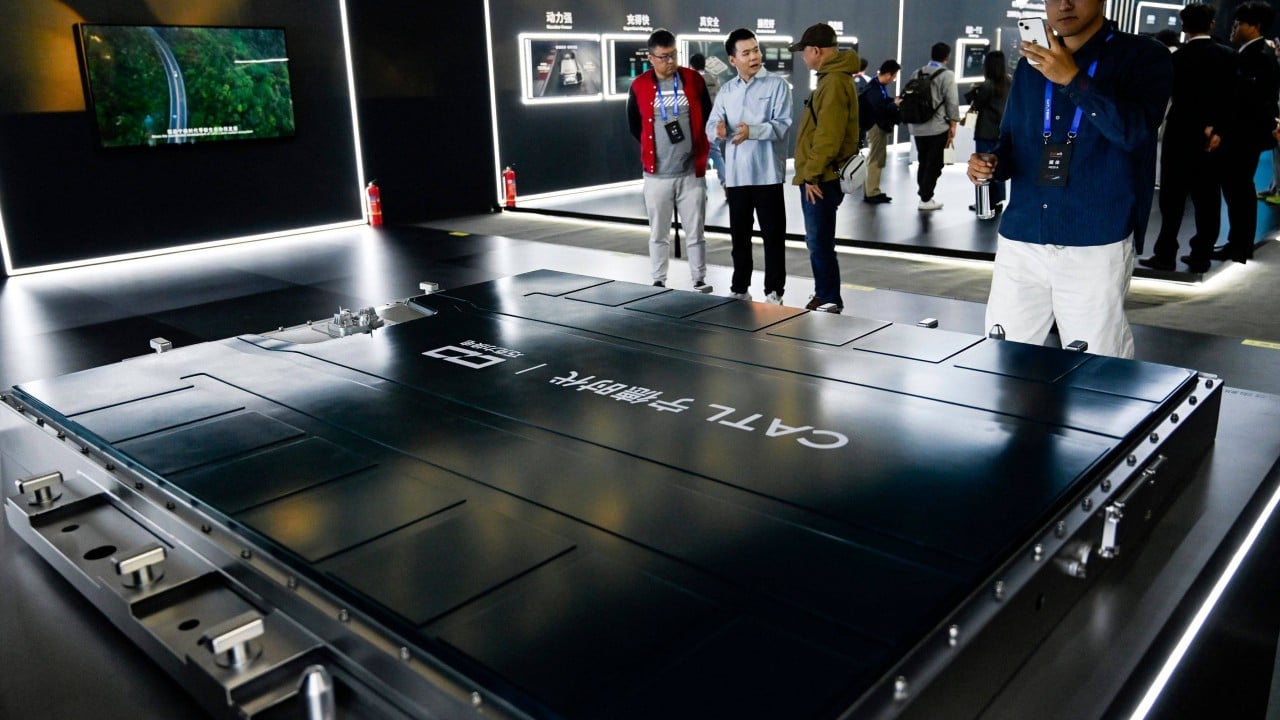
CATL refused to accept that hierarchy. Through a process called "cell-to-pack" (CTP) 3.0, they stripped away the heavy, bulky modules that used to house individual battery cells. They realized that if you make the cells themselves structural, you can fit more of them into the same space.
Suddenly, the "budget" chemistry has the energy density to rival the "premium" chemistry. You get 700 kilometers on a single charge from a battery that doesn't use expensive, ethically fraught cobalt. This isn't just a win for the spreadsheet; it's a win for the person who needs a reliable family car that doesn't cost a decade's salary.
The Invisible Grid
We often talk about batteries as if they are gas tanks—containers that just sit there holding fuel. But the next phase of this journey turns the car into something more.
Consider the "V2G" or Vehicle-to-Grid phenomenon. When millions of cars are equipped with ultra-fast charging, high-durability batteries, they stop being mere consumers of electricity. They become a distributed power plant.
On a hot Tuesday afternoon when the air conditioners are straining the local grid, Elias’s car—parked in his driveway and plugged in—can feed power back to his house or the city. Because the new battery chemistries are designed for thousands of cycles without degrading, he doesn't have to worry that helping the grid will "wear out" his car.
The battery becomes a bridge between renewable energy and the people who need it. It stores the wind from midnight and the sun from noon, releasing it when the world wakes up.
The Quiet Confidence of the Road
The real victory of faster-charging, higher-performing batteries isn't found in a press release or a technical spec sheet. It is found in the absence of a feeling.
It is the absence of that tight knot in the stomach when the "Low Battery" light flickers. It is the absence of the frantic math we do in our heads, calculating distances against temperatures against charging curves.
When the technology becomes good enough, it disappears.
Elias didn't wake his daughter up at that rest stop outside Lyon. He didn't have to. By the time he walked back from the station with a bottle of water and a map, the car was at 80 percent. He unplugged the cable, the heavy click echoing in the quiet night, and slid back into the driver's seat.
He didn't think about ions. He didn't think about graphite anodes or super-electronic networks. He just thought about his parents’ house, thirty miles away, and the breakfast they would have together in the morning.
The car hummed a low, nearly silent note as he pulled back onto the highway. The road stretched out, dark and inviting, no longer a series of obstacles to be managed, but a distance to be traveled.
The wait was over. It was time to drive.