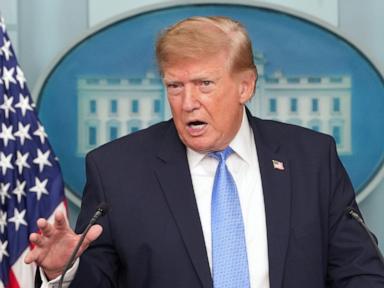
Political rhetoric responds to electoral shocks within hours; federal enforcement bureaucracies operate on multi-quarter capital cycles and rigid statutory mandates. Following the November 2026 midterm elections—which handed Democrats their largest congressional majority in nearly five decades alongside a 31-point shift among Latino voters—President Donald Trump publicly floated softening his administration's immigration crackdown, calling the enforcement campaign potentially "too tough" and signaling an openness to bipartisan legislative talks. Yet on the ground in Los Angeles, Phoenix, Miami, San Diego, and rural Alabama, U.S. Immigration and Customs Enforcement (ICE) arrest operations continued without measurable deceleration. This divergence between executive signaling and field-level execution is neither accidental nor rebellious. It is the predictable output of a federal enforcement apparatus governed by sunk capital, delegated local policing agreements, and legal interpretations that treat administrative ambiguity as probable cause for detention.
To understand why enforcement volume remains insulated from immediate political recalibration, analysts must separate campaign messaging from operational mechanics. Standard political journalism frames ongoing raids alongside presidential hesitation as an ironic contradiction. In practice, three structural mechanisms lock deportation throughput in place regardless of post-election messaging shifts.
The Three Structural Drivers of Enforcement Inertia
1. Sunk Capital and Capacity Utilization
Federal detention and removal operations function like heavy industrial logistics networks. When Congress and the executive branch allocate tens of billions of dollars—specifically $45 billion dedicated to expanding immigrant detention bed capacity and nearly $30 billion earmarked for arrest teams, transportation logistics, and personnel—the resulting infrastructure creates an internal mandate for utilization.
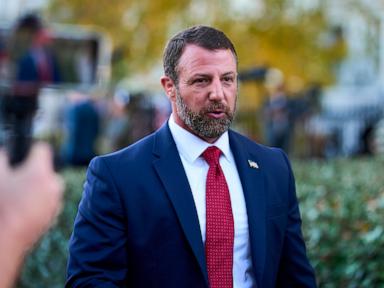
Field offices are evaluated against quantitative throughput targets rather than shifting political sentiment. Throughout 2026, ICE operated under an aggressive internal benchmark aiming for up to 2,000 arrests per day, driving fiscal-year enforcement volume up 78% compared to the final year of the Biden administration. Once private detention contracts are signed, charter flight manifests are scheduled, and tactical teams are deployed across 24 areas of responsibility, slowing the pipeline requires formal regulatory rescission, contract restructuring, and written operational directives from Department of Homeland Security (DHS) leadership. Absent a formal policy memo from Homeland Security Secretary Markwayne Mullin halting specific enforcement categories, field directors continue executing existing standing orders to hit established key performance indicators.
2. Decentralized Force Multiplication via State and Local Delegations
A common analytical error is treating ICE as a monolithic federal force controlled directly from the White House. In reality, interior enforcement relies heavily on decentralized force multipliers—specifically state highway patrols and local municipal police departments operating under federal task force agreements.
When local jurisdictions enter into formal cooperation agreements with ICE, routine traffic stops and municipal policing convert directly into federal immigration detentions. In Talladega County, Alabama, local police operating in a jurisdiction with a July 2026 ICE task force agreement pulled over two 19-year-old Venezuelan college soccer players for rolling through a stop sign. County booking records showed no underlying traffic citation—only a federal administrative hold transferring the brothers into ICE custody and subsequently to a processing center in Louisiana. Similarly, joint operations between the Florida Highway Patrol and federal agents have expanded enforcement footprints into routine transit corridors, supermarkets, pharmacies, and gas stations. Because local officers initiate these encounters independently of White House press briefings, executive second thoughts do not alter patrol behavior at the county level.
3. The Legal Gap Between Work Authorization and Lawful Status
The most significant friction point in post-midterm enforcement stems from a widespread legal misconception regarding asylum applicants. Public debate routinely conflates work authorization with lawful immigration status. Under Department of Homeland Security enforcement protocols applied throughout 2026, federal agents operate on a strict statutory distinction: a pending asylum application—even when accompanied by a valid Employment Authorization Document, a Social Security number, and a state-issued driver's license—does not confer formal legal status.
This legal interpretation dramatically expands the pool of removable targets while lowering the operational cost of apprehension. Rather than expending investigative resources to locate violent offenders evading capture, agents execute low-friction arrests against compliant individuals integrated into formal administrative systems:
- Check-in Apprehensions: Individuals complying with Intensive Supervision Appearance Program requirements have been taken into custody directly upon arriving for scheduled appointments at ICE offices in Miami and San Diego.
- Transit Interdictions: Since May 2025, data-sharing pipelines between the Transportation Security Administration (TSA) and ICE have allowed federal agents to cross-reference domestic flight manifests against administrative databases, resulting in targeted jet-bridge and terminal arrests in cities like Phoenix and Denver.
- Collateral Detentions: During targeted operations, officers routinely detain accompanying individuals who lack formal status, turning single-target warrants into multi-person arrests.
Data from late 2026 underscores the downstream effect of this targeting logic: among deported immigrants who had resided in the United States for at least two years, 71% held no criminal conviction. By classifying administrative overstays and pending asylum seekers as immediately detainable, DHS decoupled arrest volume from criminal intelligence gathering.
The Asymmetry of Enforcement Friction and Civic Blowback
When high-volume arrest tactics collide with dense urban infrastructure, the resulting public friction creates severe political externalities that explain both the midterm backlash and the administration's subsequent rhetorical hedging.
Sensitive-Location Spillover
Official DHS policy maintains that ICE does not target hospitals, schools, or churches. Operational reality blurs this boundary whenever tactical teams stage near sensitive facilities or transport detainees for medical care. When plainclothes or armored federal agents assemble in unmarked vehicles outside an emergency room entrance in a predominantly Latino neighborhood of Los Angeles—as occurred at Adventist Health White Memorial Medical Center—the visual signal to the surrounding community is indistinguishable from a hospital raid. Even when Justice Department officials clarify that agents were merely securing a detainee receiving medical treatment, the immediate convergence of neighborhood protesters and physical altercations generates viral documentation that erodes public trust faster than official press releases can repair it.
Economic Spillover into Non-Targeted Labor Markets
Beyond direct civic confrontation, aggressive interior enforcement imposes measurable wage penalties on the broader workforce. Empirical analysis from the University of California, Merced matching Freedom of Information Act ICE arrest records against Census Bureau and Labor Department data demonstrates that doubling enforcement intensity within an ICE area of responsibility correlates with depressed paychecks for non-detained workers. When enforcement raids disrupt local labor supply and chill worker mobility across agricultural, hospitality, and service sectors, regional economic output contracts. Voters experiencing simultaneous inflation, elevated energy costs, and localized labor disruptions attribute economic friction directly to the incumbent administration, compounding the electoral penalty seen in November 2026.
Administrative Rigidities vs. Humanitarian Exceptions
High-throughput bureaucratic systems struggle to process edge cases without generating acute reputational damage. Summoning an 8-year-old Haitian child—living with a non-guardian uncle following his father's prior deportation—to a San Diego ICE office and taking the minor into federal custody exemplifies how rigid adherence to administrative procedure overrides discretionary restraint. While the child was subsequently released following intense public outcry, the incident illustrates a core operational vulnerability: frontline field offices lack clear political guardrails instructing them when to exercise prosecutorial discretion to avoid catastrophic optics.
Known Facts vs. Strategic Hypotheses
To evaluate where immigration policy moves between late 2026 and the 2028 presidential cycle, decision-makers must separate verified operational realities from political speculation.
- Verified Operational Fact: Arrest and deportation rates reached historic highs in 2026—up 9% over the prior year's peak—backed by $75 billion in combined detention and enforcement funding.
- Verified Operational Fact: Pending asylum status and valid work permits do not currently shield individuals from ICE detention or removal proceedings when stopped by cooperating local police or flagged via TSA passenger data.
- Verified Political Fact: President Trump acknowledged post-election that enforcement tactics may have been "too tough" and expressed interest in legislative negotiations with the incoming Democratic congressional majority.
- Strategic Hypothesis: The president's remarks represent a tactical pressure valve aimed at halting further suburban and Hispanic voter erosion ahead of 2028, rather than an imminent dismantling of the interior enforcement apparatus. Without formal rescissions of the TSA data-sharing program, local task force agreements, and existing prosecutorial priority memos, field operations will remain largely unchanged.
- Strategic Hypothesis: A divided government in 2027 creates legislative gridlock rather than grand bargains. While a Democratic House and Senate can use appropriations riders and oversight hearings to scrutinize detention conditions and sensitive-location incidents, they lack the supermajority required to override presidential vetoes on core statutory enforcement authorities.
Limitations of Executive Recalibration
Assuming the White House eventually attempts to translate its softer rhetoric into concrete operational constraints, leadership will confront three structural bottlenecks that prevent rapid de-escalation:
- Intra-Coalition Resistance: Hardline policy architects within the White House, such as Deputy Chief of Staff Stephen Miller, alongside DHS leadership, have built the administration's core identity around uncompromising interior enforcement. Any formal directive re-establishing protected classes—such as shielding non-criminal asylum seekers with pending cases—will trigger fierce internal bureaucratic resistance and conservative media backlash.
- Loss of Operational Control Over State Partners: Once state agencies like the Florida Highway Patrol or county sheriffs integrate immigration screening into routine traffic enforcement, the federal government cannot easily turn off the inflow of detainees without terminating the underlying cooperation agreements—a move that carries severe political costs with Republican governors.
- Contractual Floor Obligations: Multi-year detention bed minimums and transportation contracts require ongoing federal expenditure regardless of occupancy. Reducing arrest volume below contracted thresholds creates visible fiscal waste without generating immediate budget savings.
The Definitive Operational Forecast
Expect a persistent two-track reality throughout 2027: conciliatory executive messaging paired with high-volume, low-friction interior arrests. Institutional analysts, corporate compliance teams, and municipal leaders should not mistake post-midterm presidential candor for a standing operational order. Until DHS issues a formal written directive restoring prosecutorial discretion for pending asylum applicants and restricting collateral arrests during routine check-ins and domestic transit, the machinery of mass deportation will continue operating at full capacity—governed by its funding, its contracts, and its local policing partnerships rather than the morning news cycle.
Watch Immigration arrests go on unabated despite Trump's misgivings after GOP midterm wipeout for local reporting on how a routine county traffic stop in Alabama triggered federal immigration custody for two college students with pending asylum cases.