Paper carries weight. Not much—a few grams of cellulose, a ribbon of ink, a crease where someone folded it twice before sliding it into an official pouch—yet in statecraft, a single sheet of stationery can feel heavier than a crate of ordinance.
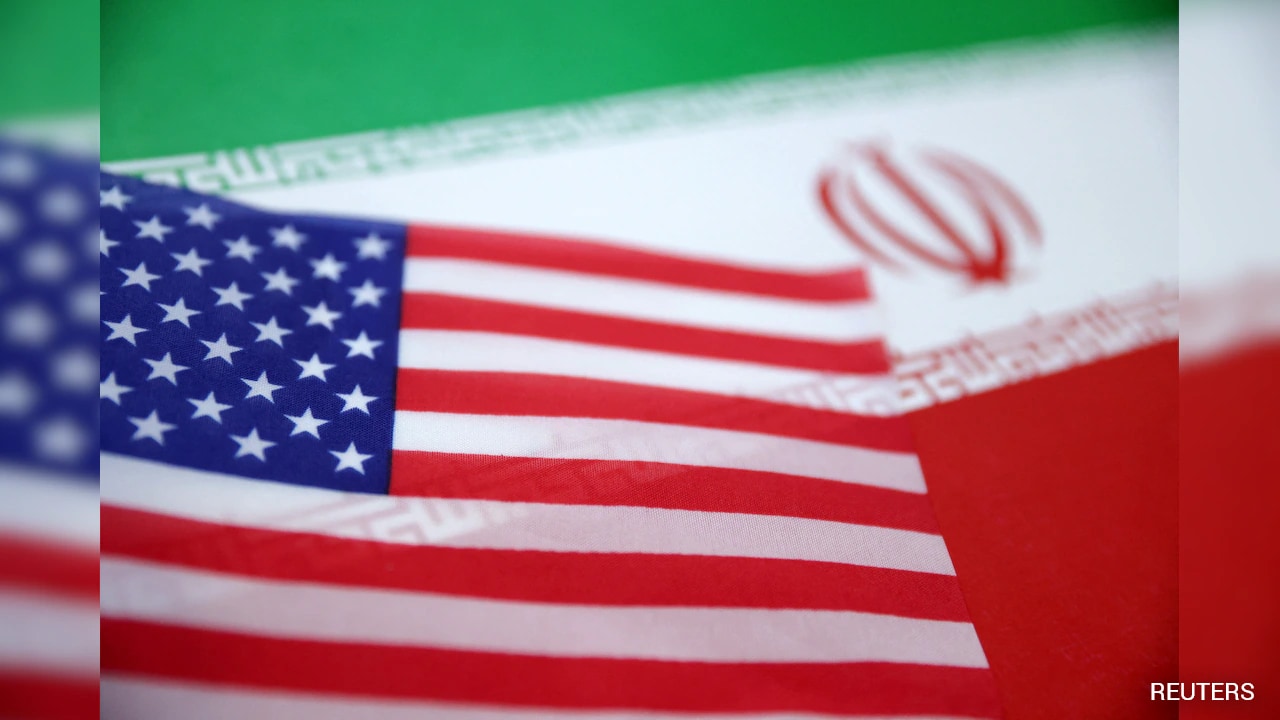
Reports have surfaced that Washington sent a letter from JD Vance to Tehran aimed at reviving peace talks, and that Iran has not yet responded. At first glance, that reads like another dispatch from the endless ticker of geopolitical friction. Diplomatic outreach. Hesitation. Silence. Another line item in a news cycle that numbs people until they stop noticing how close the floor is to the ceiling.
I have spent years watching how distant crises bleed into ordinary mornings. Not with sirens, necessarily, though sometimes with those too, and often with quieter dislocations: a cousin's flight rerouted over unfamiliar airspace, a shipping rate ticking upward in a port half a world away, a family group chat suddenly thick with anxious questions about whether borders are closing or opening. When two capitals exchange a letter across years of mistrust, the real drama does not happen on cable panels. It happens in the pause between arrival and reply.
Silence is never empty in diplomacy. It is crowded.
Why Silence Speaks Louder Than Anger
Outrage is easy to read. When officials trade barbs at a podium or post defiant warnings, observers feel as though they understand the choreography. Everyone knows how to scan a press release for hostility.
Silence is harder. Silence forces every watcher to supply the missing words.
Consider what happens when a message arrives carrying an offer to restart negotiations. A delayed response does not automatically mean rejection, nor does it guarantee acceptance. In high-stakes politics, hesitation can be a calculation, a stall, an internal argument behind closed doors, or a test of how badly the sender wants a different outcome. Waiting becomes a form of leverage—and also a vulnerability, because while the clock ticks, rumors grow faster than verified facts.
Let me offer a hypothetical scenario to make the mechanics tangible. Picture a mid-level desk officer in a foreign ministry—let's call him Farhad, purely as an invented composite figure to illustrate how bureaucratic time works. The letter sits in a secure folder on a Monday morning. Before a single line of a reply can even be drafted, three separate rooms want a say. Security officials ask what concessions are implied and what traps might be hidden between polite clauses. Economic planners weigh whether talk of relief is credible or illusory. Senior leaders ask whether answering quickly looks eager, while answering slowly risks letting momentum slip away.
Farhad does not just read nouns and verbs. He reads subtext. Who drafted the tone? Was it firm, transactional, conciliatory, or guarded? Does the messenger represent a durable policy line or a fleeting tactical move? In diplomacy, words are rarely taken at face value because history has taught both sides that promises can expire with the next election, the next strike, or the next shift in domestic pressure.
Still, I will admit something candidly: even people who follow foreign affairs closely can lose track of which channel is real, which rumor is noise, and what a "peace talk" actually means when trust is already hollowed out. It is confusing. Sometimes it feels deliberately opaque, as if the language of diplomacy were designed to keep outsiders guessing while insiders guard their flanks. That uncertainty is part of the tension. You do not have to be a specialist to feel that something consequential is hanging in the balance when a letter goes unanswered.
The Architecture of Mistrust
To understand why a letter from JD Vance to Tehran matters—and why the lack of an immediate answer carries such charge—we have to look at the ground beneath it. Peace talks do not take place on a blank map. They take place over craters of past broken expectations.
Over recent decades, relations between the United States and Iran have been shaped by cycles of pressure, standoff, brief openings, and sharp reversals. Agreements have been struck, strained, abandoned, or reinterpreted; sanctions and counter-moves have hardened positions on both sides; regional flashpoints have turned every bilateral gesture into a test of broader regional power. When a long relationship is built on suspicion, every olive branch is inspected for thorns.
Think of it like two neighbors who have argued across a shared fence for twenty years. Neither has forgotten the stones thrown in the past. If one walks up to the gate holding a folded note saying, "Let's talk," the other does not immediately swing the latch open. First, they look past the note to see who is standing behind it, what is happening in the yard, and whether the offer is meant to solve the dispute or to gain advantage in front of everyone else watching from the street.
That metaphor is simple, maybe even homely, yet it captures a hard truth about statecraft. Credibility is not granted by a single letter. It has to be earned against a memory bank full of reasons to doubt.
When reports note that Iran has yet to respond, the phrase "yet to respond" holds two opposite possibilities inside a single hinge. One side of the hinge swings toward quiet deliberation—the slow, guarded work of deciding whether engagement is worth the political risk. The other swings toward stalemate—the quiet conviction that nothing meaningful can be built right now, or that waiting costs less than engaging.
What Peace Talks Actually Require
People often talk about "peace talks" as if they were a light switch: flip it on, and hostility turns into harmony. In reality, talks are closer to clearing a minefield by hand. You do not start with grand declarations of friendship. You start with narrow questions that neither side wants to get wrong.
What is on the table? What is off the table? Who goes first on any step back from the brink? How is compliance verified when neither side trusts the other's word?
In high-stakes negotiations, every concession looks like weakness to hardliners at home, and every refusal looks like recklessness to those who fear escalation. Leaders walk a tightrope strung high above domestic politics. A letter proposing to revive talks lands right in the middle of that balancing act. Answering too fast can invite criticism that you are capitulating under pressure. Ignoring it entirely can hand the other side the narrative that you refused a door when it was pushed ajar.
So a pause happens.
During that pause, markets twitch, analysts speculate, and ordinary people try to read tea leaves in headlines. A shipping executive wonders whether insurance costs or route risks will shift next month. A student or traveler looks at flight schedules and visa rules with a knot in their stomach. A family with relatives across borders checks their phones more often than usual, hoping a tense quiet stays quiet and does not break into something worse.
None of those people signed the letter. None of them sit in the room where a reply is debated. Yet they live inside the fallout of every decision made there.
The Weight of the Unsaid
There is a particular kind of suspense that comes with waiting on a diplomatic reply. Unlike a sudden breaking event, waiting stretches time. Hours stretch into days. Days start to look like a pattern.
Let us return briefly to our hypothetical desk officer, Farhad, on a Thursday afternoon. The folder is still there. Nothing has exploded. No dramatic announcement has been broadcast. To an outside observer, Thursday looks just like Tuesday—quiet on the surface, heavy underneath. Inside the ministry, however, the silence itself has become a topic of conversation. What does the delay signal to allies? What does it signal to adversaries? What happens if another incident occurs before a reply is ever sent?
In politics, windows have a habit of narrowing while people debate whether to walk through them. Opportunities that look patient on Monday can look fragile by Friday. That is why every unreturned message carries an edge of urgency, even when no deadline is visible on the page.
At the same time, impatience can be a poor guide. Rushing into talks without clear terms can lead to worse misunderstandings than no talks at all. Sometimes a slow response reflects real internal friction—a system wrestling with genuine divisions over strategy, survival, and sovereignty. Recognizing that complexity does not make the situation less tense, but it keeps us from reducing living political dynamics to cartoon villains and instant solutions.
Why This Moment Matters Beyond the Headlines
It is tempting to treat news about a letter and an unanswered call for talks as just another chapter in a long, exhausting story. We have seen diplomatic efforts sputter before. We have seen hopes rise on a rumor and fade by nightfall.
Cynicism is comfortable. It protects you from being fooled.
Yet cynicism has a cost, too. When we treat every diplomatic opening as meaningless theater, we stop paying attention to the narrow margin between de-escalation and deeper crisis. Even a fragile attempt to revive peace talks matters because the alternative—a complete breakdown of communication—leaves almost no guardrail when miscalculation happens. When channels close, assumptions fill the void, and assumptions in tense environments are rarely generous.
Whether Iran eventually answers the letter with a counter-offer, a cautious probe, a cold brush-off, or continued silence, the mere existence of the outreach reminds us of something essential: even in deep rivalry, someone is still testing whether words can do work that weapons cannot.
That does not mean a breakthrough is around the corner. It does not mean trust has magically appeared where none existed. It means the pressure is real, the stakes are human, and the quiet hours before a response are where history often gathers its breath.
A single sheet of paper can sit motionless on a desk for days, gathering no dust, making no sound, while thousands of lives—quietly, unevenly, across continents—wait to see whether the next move is a reply or a reckoning.


