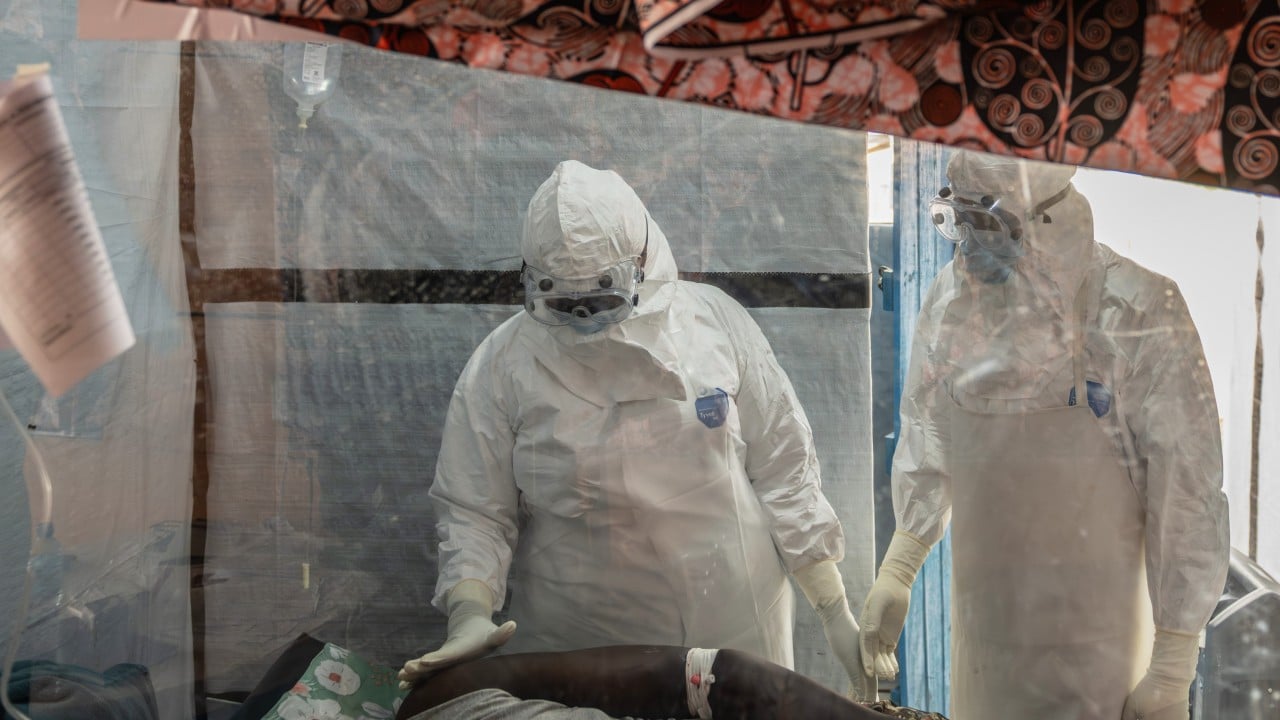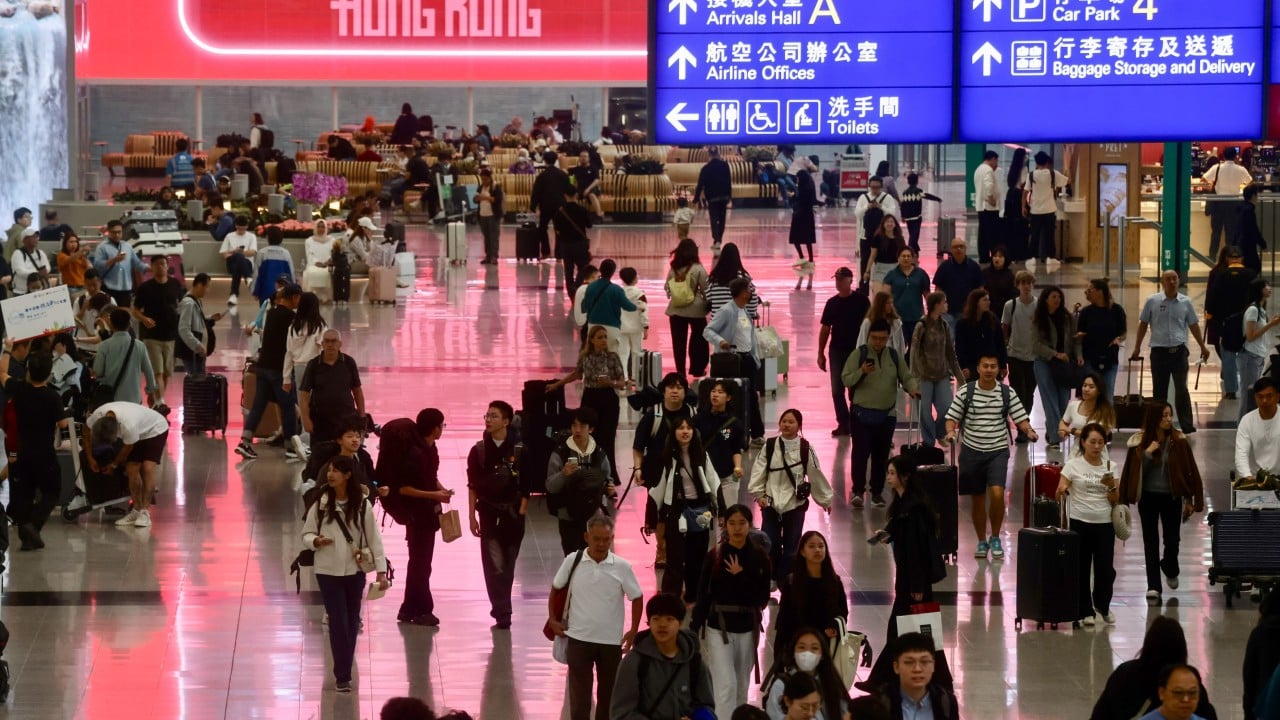
The detection of a third measles case among airport staff in Hong Kong transforms a series of isolated infections into a systemic vulnerability assessment. In high-density transit environments, viral transmission does not follow a linear path; it operates as a network stressor that exposes gaps in herd immunity and occupational health protocols. This cluster at Hong Kong International Airport (HKIA) highlights a critical intersection between global mobility and localized immunological deficits.
The Viral Transmission Mechanics of High-Volume Nodes
Airports function as "super-connectors" within a global epidemiological graph. The measles virus, characterized by a basic reproduction number ($R_0$) typically cited between 12 and 18, poses a unique threat in these environments due to its aerosolized nature. Unlike pathogens requiring direct contact, measles remains suspended in the air for up to two hours after an infected individual has vacated the space.
In an airport setting, the efficiency of this transmission is amplified by three structural variables:
- Air Exchange Rates: While modern terminals utilize sophisticated HVAC systems, localized "dead zones" or areas with lower air changes per hour (ACH) allow viral loads to concentrate.
- Transient Density: The constant flux of passengers from diverse geographic regions creates a rolling risk profile where the "effective" $R_0$ fluctuates based on the vaccination status of the present cohort.
- Interface Frequency: Airport staff—specifically those in ground handling, security, and retail—occupy high-frequency interface points. A single staff member interacts with thousands of individuals from dozens of countries in a single shift, acting as a potential bridge between disparate viral reservoirs.
The current cluster indicates that the virus has bypassed initial containment barriers. When three cases emerge within a specific occupational group, the probability of undetected sub-clinical transmission or "silent" spread among vaccinated individuals with waning immunity increases significantly.
The Immunity Gap and Demographic Vulnerability
The emergence of measles in a highly developed healthcare system like Hong Kong's points to a specific demographic bottleneck. While the city maintains high childhood vaccination rates, the "immunity architecture" of the workforce is not monolithic.
Waning Vaccine-Induced Immunity
The efficacy of the Measles, Mumps, and Rubella (MMR) vaccine is high, but it is not absolute. Data suggests that approximately 3% of individuals who receive two doses will still contract measles if exposed. More critically, the titers of neutralizing antibodies can diminish over decades. Staff members born between specific years may have received only a single dose or were part of early vaccination programs with different formulations, leading to a cohort of "secondary vaccine failures."
The Birth-Year Risk Matrix
The risk profile of the airport workforce can be categorized by birth year, which dictates the likely level of natural or acquired immunity:
- Pre-1967 Cohort: These individuals likely have high levels of natural immunity due to widespread exposure before vaccine availability.
- 1967–1984 Cohort: This group represents the highest risk. They were likely vaccinated during the transition to multi-dose schedules and may have only received one shot, or were vaccinated at an age where the maternal antibody interference reduced long-term efficacy.
- Post-1985 Cohort: Generally more secure due to the standardized two-dose MMR schedule, though still subject to the 3% primary failure rate.
The investigation into the third airport case must move beyond contact tracing to a serological survey of the immediate working environment. Relying on vaccination records is insufficient because a record of vaccination does not always equate to current clinical protection.
Operational Containment and the Cost of Friction
Health authorities face a trade-off between aggressive containment and the operational continuity of a global logistics hub. The strategy employed—targeted vaccination and enhanced surveillance—attempts to balance these forces, but it often misses the psychological and economic secondary effects.
The Contact Tracing Bottleneck
Contact tracing in an airport is an exercise in diminishing returns. The "contact" definition for measles is broad (presence in the same room). For an airport staff member, this could involve thousands of transient passengers who have already departed for other jurisdictions by the time the case is confirmed. This creates a global "tracing lag" where the virus is consistently three to four days ahead of the data.
Surveillance and Thermal Lag
The use of infrared thermal imaging (ITI) for detecting fever in transit hubs is a primary screening tool, yet it is largely ineffective for measles. The prodromal phase of measles—characterized by fever, cough, and coryza—occurs before the pathognomonic rash appears. However, viral shedding begins several days before the rash. Consequently, an airport worker can be highly infectious while remaining below the threshold of thermal detection or while attributing early symptoms to common respiratory fatigue or seasonal allergies.
The Structural Failure of Voluntary Reporting
The current cluster suggests a breakdown in the occupational health feedback loop. If staff members continue to work while symptomatic, it indicates a failure in the "Stay Home if Sick" incentive structure. In high-pressure logistics environments, the "presenteeism" culture is often driven by:
- Staffing Shortages: Pressure to fulfill shifts to maintain flight schedules.
- Symptom Misattribution: The tendency to minimize early-stage malaise as non-critical.
- Economic Disincentives: A lack of robust paid sick leave for contract or outsourced ground staff.
A rigorous epidemiological response must include an audit of the labor conditions within the airport's sub-contractor ecosystem. If the lowest-paid rungs of the operational ladder cannot afford to self-isolate, the airport's sophisticated bio-surveillance technology is rendered moot.
Strategic Realignment for High-Density Hubs
The transition from a "case-by-case" investigation to a "systemic hardening" approach is required. This involves treating the airport not as a public space, but as a high-risk laboratory or clinical environment.
Mandating Serological Baselines
The airport authority should transition from verifying vaccination "records" to verifying "immunity." Implementing mandatory serology testing for high-contact staff would identify the 3-5% of the population who lack sufficient antibody titers despite their vaccination history. These individuals can then be prioritized for booster doses.
Environmental Engineering Upgrades
Airports must move beyond basic HVAC standards toward targeted air disinfection in high-risk zones.
- Upper-Room Germicidal UV (GUV): Installing UVC lighting systems in staff break rooms, security checkpoints, and baggage handling areas can neutralize aerosolized measles virus in real-time, independent of air exchange rates.
- Zone-Based Filtration: Implementing HEPA-grade filtration specifically in the small, enclosed spaces where staff congregate (locker rooms, shuttle buses) would address the areas where the current three cases likely converged.
The Global Reporting Loophole
The Hong Kong incident is a symptom of a larger geopolitical failure in pathogen reporting. Measles cases are rising globally due to "immunity gaps" caused by disrupted vaccination programs and growing vaccine hesitancy. An airport case is rarely an "airport" problem; it is a "source country" problem.
Health authorities must utilize genomic sequencing to trace the origin of the strain. If the three cases share an identical genetic sequence that matches a strain currently circulating in a specific region, HKIA can implement targeted screening for arrivals from that high-risk corridor. This shifts the strategy from reactive containment to proactive risk-tiering.
The focus must shift toward a permanent state of epidemiological readiness. The current three cases are not merely a medical concern; they are a signal that the airport’s immunological "firewall" has been breached. Immediate action must move toward mandatory serological verification for all Category A (high-contact) staff and the integration of GUV technology in staff-only transit and rest zones to decouple operational throughput from viral transmission risk. The goal is to transform the hub from a passive recipient of global viral loads into an active filter that terminates transmission chains before they reach the local community.