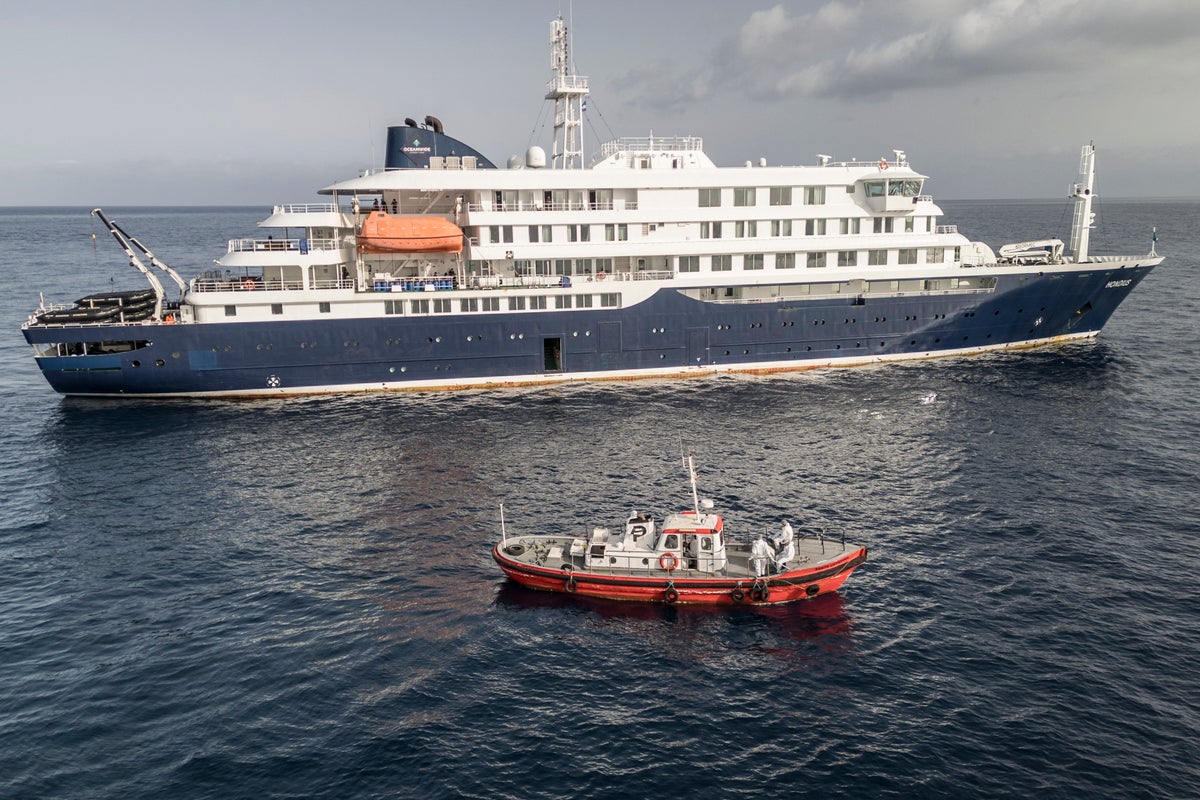
The recent isolation of a cruise vessel bound for the Canary Islands following a Hantavirus outbreak exposes a systemic vulnerability in maritime biosecurity: the failure to distinguish between urban-interface zoonosis and traditional shipboard sanitation. While high-density passenger environments typically prioritize Norovirus or Influenza mitigation, the introduction of Bunyavirales into a closed-loop HVAC environment represents an operational crisis that standard maritime protocols are not equipped to contain. This incident is not merely a medical emergency but a failure of the physical environment to act as a barrier against rodent-borne pathogens.
The Viral Mechanics of Hantavirus Pulmonary Syndrome
Hantavirus is not a communal disease in the way Rhinovirus or SARS-CoV-2 are. It does not typically transmit through human-to-human droplets. Instead, its presence on a vessel indicates a direct breach of the ship’s internal "sterile" envelope by Cricetid or Murid rodents. The virus is shed through saliva, urine, and feces; the danger to passengers arises when these materials dry and become aerosolized. If you enjoyed this post, you should look at: this related article.
In a modern cruise ship, the air handling units (AHUs) are designed for efficiency and comfort, often recirculating a percentage of air to maintain thermal equilibrium. When viral particles enter the ductwork, the ship’s ventilation system ceases to be a comfort feature and becomes a delivery mechanism for Hantavirus Pulmonary Syndrome (HPS). The incubation period ranges from one to eight weeks, creating a significant diagnostic lag. By the time the first passenger presents with dyspnea and pulmonary edema, the exposure window has likely closed, leaving the medical team to manage a retrospective crisis.
The Three Pillars of Maritime Contagion Risk
The containment failure on the vessel currently diverted to the Canary Islands can be traced to three structural bottlenecks. For another look on this story, check out the recent update from Mayo Clinic.
1. The Vector-Infiltration Threshold
Cruise ships are essentially floating cities with massive supply chains. Every pallet of food, linen, or technical equipment loaded at a port is a potential Trojan horse for rodents. The "Vector-Infiltration Threshold" is the point at which port-side pest control fails to prevent a pregnant female or a small colony of rodents from nesting in the sub-flooring or service conduits of the ship. Once inside the vessel’s interstitial spaces—the "dark zones" between passenger cabins and the hull—rodents have access to water, food, and a temperature-controlled environment, allowing for rapid population growth.
2. Aerosolization Dynamics in Confined Volumes
The physics of the vessel’s interior dictate the infection rate. Standard HEPA filtration in many maritime settings is optimized for dust and common allergens, not necessarily for viral particles sized between 80 to 120 nanometers. If the rodent nesting site is located near a primary intake vent, the concentration of viral particles in the air reaches a density that makes infection almost certain for anyone in the downstream airflow. This creates a "hot zone" geography that is invisible to the crew until symptomatic cases emerge.
3. The Diagnostic Latency Gap
The early stages of HPS mimic common fatigue, muscle aches, and fever—symptoms frequently attributed to "seasickness" or general travel exhaustion. This leads to a dangerous delay in isolation. Unlike a gastrointestinal outbreak where the onset is rapid and the source is often traceable to a specific galley, Hantavirus operates on a slow fuse. The ship becomes a "bio-battery," accumulating exposed individuals who will only become critically ill once the vessel is mid-transit or, worse, after passengers have disembarked and scattered globally.
The Cost Function of Quarantine and Diversion
The decision to divert to the Canary Islands and trap passengers on board is a move dictated by the International Health Regulations (IHR 2005). The cost function of this decision is calculated through three primary variables:
- R(c): The Reputation Cost. The immediate loss of consumer trust and the long-term devaluation of the brand.
- L(o): The Operational Loss. Port fees, fuel for diversion, and the refunding of the current and subsequent canceled voyages.
- L(i): The Liability Indemnity. The projected legal settlements for families of the deceased and the long-term health monitoring of the survivors.
Mathematically, the diversion is the only logical path when $L(i) + R(c) > L(o)$. In the case of Hantavirus, where the mortality rate can reach 38%, the liability of allowing potentially infected passengers to disembark and collapse in a foreign city is an existential threat to the cruise line. The Canary Islands serve as a strategic "quarantine node" because of their sophisticated Spanish-integrated medical infrastructure and their relative isolation from the European mainland.
Structural Failures in the HVAC Envelope
The core of this crisis lies in the architectural design of the vessel itself. Most cruise ships utilize a "Zone Ventilation" strategy. If a rodent infestation occurs in Zone A, the fire dampers and smoke curtains can be closed to stop a fire, but the air circulation often continues to mix within that zone.
To truly mitigate Hantavirus, the ship’s lungs—the HVAC system—require a fundamental redesign. Current maritime standards focus on "Air Changes Per Hour" (ACPH) to ensure freshness. However, high ACPH without high-efficiency filtration only serves to keep viral particles suspended in the air longer. This creates a "Turbulent Suspension" effect where the virus remains viable in the air for several hours, increasing the probability of inhalation by passengers walking through high-traffic corridors.
The Limits of On-Board Medical Intervention
A cruise ship’s medical center is essentially an Urgent Care facility, not an Intensive Care Unit (ICU). HPS requires extracorporeal membrane oxygenation (ECMO) and mechanical ventilation in its advanced stages. On a ship with 2,000+ passengers, the medical bay likely has 2 to 4 ventilators at most.
The "Trapped Passenger" scenario is the result of a mismatch between the ship’s capacity to host life and its capacity to sustain it under pathological stress. When the number of critical cases exceeds the number of ventilators, the ship’s medical officer is forced into a triage situation that the maritime legal framework is ill-prepared to defend. The diversion to the Canary Islands is less about "fixing" the virus and more about offloading the "Criticality Load" to a land-based hospital system that can handle the sheer volume of oxygen requirements.
Operational Remediation and Strategic Response
The current situation demands a departure from standard "deep cleaning" protocols. Chemical fogging with chlorine-based solutions is effective for surfaces but does nothing for the rodents nesting behind the bulkheads.
The strategic play for the maritime industry involves a shift from reactive sanitation to "Active Bio-Intelligence." This includes:
- Acoustic Rodent Detection: Installing ultrasonic sensors in food storage and waste management areas to detect rodent activity before a colony establishes itself.
- UV-C Air Sterilization: Integrating high-intensity UV-C lamps within the AHUs to neutralize the DNA/RNA of pathogens in the airflow, providing a secondary layer of protection when mechanical filters fail.
- Thermal Imaging of Bulkheads: Using FLIR technology during port stays to identify "heat signatures" of nesting animals in non-accessible areas of the ship.
The immediate priority for the vessel off the coast of the Canary Islands is a "Zonal Evacuation." This involves moving passengers from the affected ventilation zones to "Clean Zones" that have been verified to have independent air supplies. The crew must then execute a "Vacuum-Seal Decontamination"—a process of sealing off sections of the ship and using high-concentration ozone or vaporized hydrogen peroxide (VHP) to penetrate the service conduits where the virus-laden dust resides.
Failure to address the root cause—the physical presence of rodents and the lack of viral-grade air filtration—will result in this incident being a precursor to a wider industry crisis. The Canary Islands diversion is a temporary pressure-release valve; the real solution requires a re-engineering of the maritime environment to treat the ship not as a hotel, but as a pressurized biological containment unit.
Cruise operators must immediately re-evaluate their supply chain "last-mile" protocols. The most sophisticated air filtration system in the world is useless if a single contaminated crate of produce is brought into the galley. The move from "Sanitation" to "Bio-Security" is the only path to maintaining the viability of high-density maritime travel in an era of increasing zoonotic spillover.
The immediate strategic action is the deployment of specialized hazardous materials (HAZMAT) teams to the vessel upon docking, bypassing local port labor. These teams must conduct a "Forensic Bio-Audit" to map the exact movement of the aerosolized particles through the ship’s internal geometry. This data will provide the only defensible evidence in the inevitable litigation, proving whether the ship's systems exacerbated the spread or functioned as designed under extreme load.