When Donald Trump, Xi Jinping, and Vladimir Putin sat down in Shenzhen in mid-November 2026 alongside APEC, European capitals didn't just watch the cameras—they felt the ground shift beneath their feet.
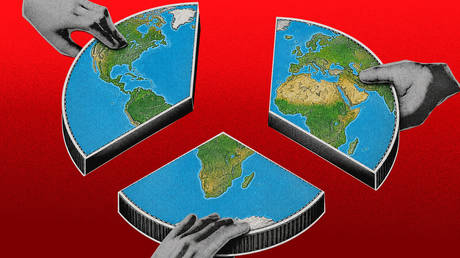
A Putin Trump Xi summit triggers a specific kind of dread in Brussels, Berlin, and Warsaw. At first glance, commentators reach for the easiest historical shorthand: Yalta 1945. Three big powers. Backroom horse-trading. Maps redrawn while smaller nations wait outside.
Honestly, the Yalta comparison is lazy. It misses the real danger for the European Union.
Yalta happened at the end of a world war when the Soviet Red Army already occupied half of Europe, and Franklin Roosevelt, Winston Churchill, and Joseph Stalin were hammering out postwar occupation zones and the contours of the United Nations. What unfolded in Shenzhen in November 2026 wasn't a formal postwar settlement dividing a defeated continent. It was a first-of-its-kind trilateral gathering of nuclear-armed UN Security Council leaders—touching on everything from nuclear arms guardrails after New START expired in February 2026 to the war in Iran and, inevitably, the shadow of Ukraine.
Even when the summit produced a thin statement rather than a grand carve-up of the globe, the format itself sent a chill through Europe. Three heavyweights at one table. No Europeans in the room.
What a Putin Trump Xi Summit Actually Threatens in Europe
When people hear "new Yalta," they picture secret lines drawn across a map like the ones that locked Eastern Europe into decades of Soviet domination. German Chancellor Friedrich Merz pushed back hard on that exact comparison, reminding everyone that Yalta led to the Cold War and a divided continent—something Europe refuses to accept again.
That historical pushback is fair. Yet focusing strictly on whether Trump, Putin, and Xi secretly carved up spheres of influence over espresso misses three sharper, more immediate risks for the EU.
First is diplomatic sidelining. Even if US officials insist Ukraine isn't the centerpiece of a trilateral huddle, European diplomats know how easily bilateral side chats—like Trump greeting Putin warmly or holding separate exchanges—can shift momentum behind closed doors. Every time Washington and Moscow talk over Europe's head, Brussels worries that agreed negotiation lines will bend without European or Ukrainian buy-in.
Second is rehabilitation and leverage. Sitting across from a US president at a major summit gives Vladimir Putin something money and missiles can't buy on their own: visible great-power normalcy. Meanwhile, Moscow keeps pushing sweeping demands on European security and NATO's posture in former Soviet bloc states—demands leaders like Danish Prime Minister Mette Frederiksen have rightly called an attempt to dictate Europe's security order on Russian terms.
Third is strategic distraction. With Washington juggling tensions with Beijing, the fallout from the war in Iran, and post-New START nuclear talks, Europe faces a quieter risk than a dramatic betrayal. It faces becoming a secondary theater—an economic giant whose security priorities get treated as a side note while the big three bargain over global rules.
Why Europe Keeps Getting Caught Off Guard
If you've followed EU foreign policy up close over the past decade, none of this is a bolt from the blue. It's a recurring pattern.
Europe is an economic and regulatory powerhouse. Its single market matters enormously, and its sanctions packages and trade rules pack real weight. Yet economic clout doesn't automatically turn into hard geopolitical leverage when shooting wars are underway or nuclear heavyweights are trading signals.
I've watched European summits for years where leaders spend hours drafting nuanced communiqués, only to discover that the people actually moving the pieces on the ground aren't waiting for Brussels to reach consensus. Twenty-seven member states have twenty-seven domestic calendars, energy exposures, and threat perceptions. A frontline state bordering Russia sees every compromise very differently from a capital thousands of miles away.
And let's be candid about a common mistake: assuming Washington will always lock arms with Europe before talking to Moscow or Beijing. Even when transatlantic ties aren't formally broken, a US administration with its own domestic pressures—including post-midterm political calculations and voter frustration over inflation—will sometimes chase bilateral openings or headline deals that make European diplomats sweat.
As analyst Natalie Tocci argued in a November 2026 commentary for The Guardian, Europe's biggest vulnerability isn't simply autocrats dreaming of spheres of influence—it's Europe's own habit of acting helpless when the script changes. That line stings because there's truth in it.
The Counter-Moves Already Taking Shape
Europe isn't sitting completely still, even if the headlines feel grim.
Right around the November 2026 Shenzhen gathering, European leaders and allies moved to anchor their own diplomatic track—including a "Coalition of the Willing" gathering in Berlin alongside Ukrainian President Volodymyr Zelenskyy, signaling a refusal to treat any outside superpower talk as the final word on Ukraine or European security.
There's also a practical reality check happening around upcoming global gatherings, like the G20 summit set for Miami in mid-December 2026. Summits don't end when the cameras pack up; they set the opening bid for the next round of diplomacy.
Still, there are real debates inside Europe that haven't been settled. One camp argues that Europe must pour resources into hard defense capability, industrial scale, and faster decision-making so it can't be ignored. Another emphasizes keeping channels open with China to avoid a total economic lock-in while holding a firm line against Russian coercion. Neither path is cheap or painless, and both require tough choices from voters at home.
What You Can Do Right Now If You Track This Space
Whether you're an analyst, a business leader managing geopolitical risk, or just someone trying to cut through cable-news panic, you don't have to guess blindly when the next big-power meeting hits the wires.
- Watch the communiqués and troop/sanction actions, not just the handshakes. Summit rhetoric often sounds dramatic while actual policy barely budges. Check what changes on sanctions enforcement, defense procurement, and diplomatic seats at the table over the following two weeks.
- Separate bilateral side meetings from multilateral outcomes. Pay close attention to one-on-one greetings and separate track discussions—that's usually where surprises start before official statements catch up.
- Follow primary European and policy sources alongside major wires. Reading think-tank briefs from groups like the Bertelsmann Stiftung or coverage from outlets like Courthouse News helps you spot how EU capitals actually react behind the scenes rather than relying on one-line historical clichés.
- Map your own exposure across energy, trade, and supply chains. If you run a business or invest internationally, shifts in US-China-Russia bargaining often show up first in shipping routes, energy prices, and export controls rather than overnight border changes.
A Putin Trump Xi summit doesn't turn back the clock to 1945. What it tests is whether Europe has the unity and nerve to write its own security future instead of waiting for someone else to draft it.