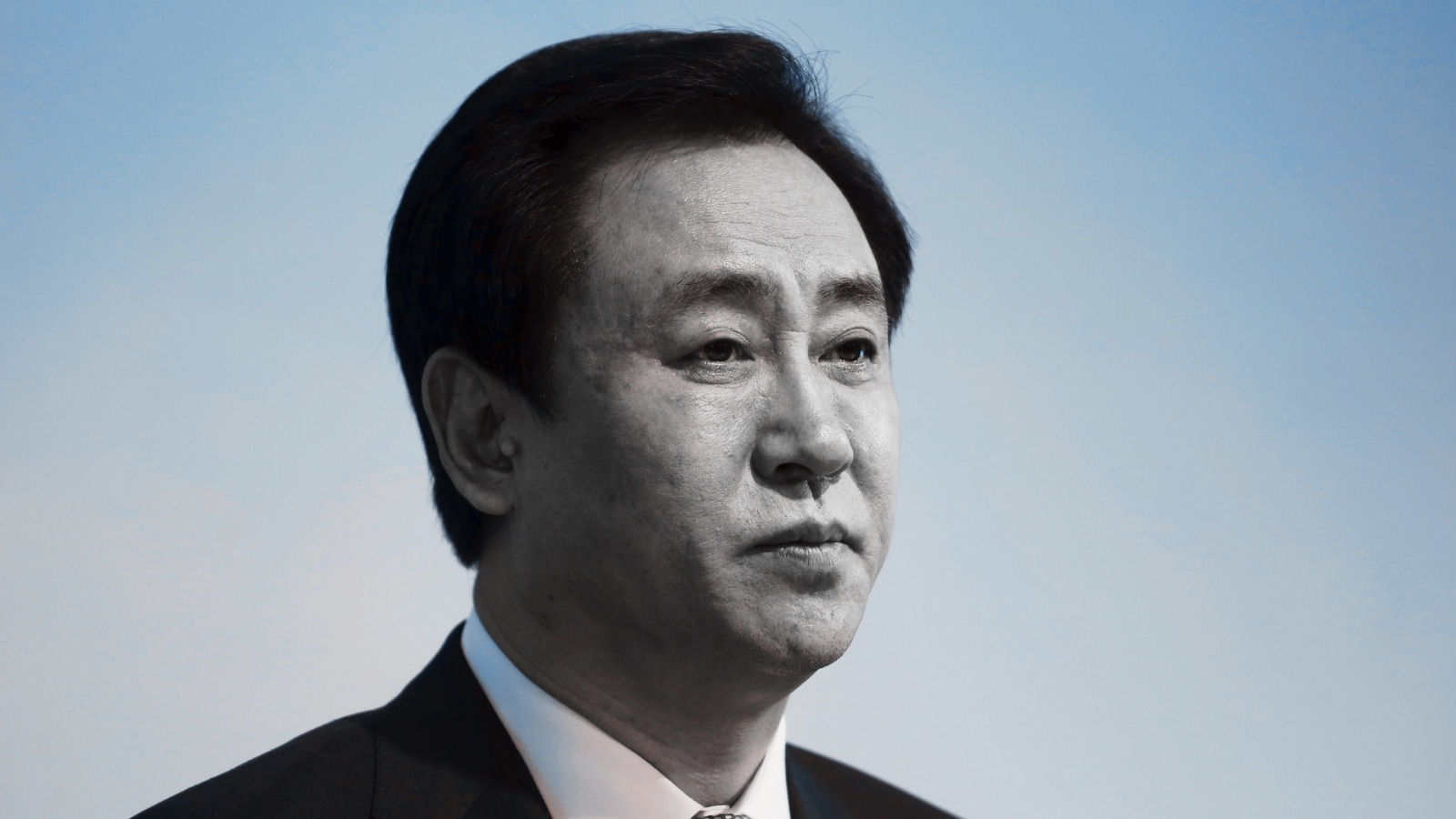
Hui Ka Yan, the man who once sat atop Asia’s richest list, has been sentenced to life in prison by a court in Shenzhen. This verdict marks a definitive end to the public life of the founder of China Evergrande Group. Five years after the developer’s debt crisis began to unravel the stability of the Chinese property market, the judiciary has delivered a sentence that mirrors the scale of the company’s spectacular failure. The 67-year-old was convicted of multiple charges, including massive financial fraud, bribery, and the illegal absorption of public funds.
For those observing the wreckage, this sentencing serves as a harsh punctuation mark. It does not, however, return the life savings of the thousands of homeowners who bought into dreams of property ownership that never materialized. The court has ordered the seizure of all his personal assets, a move that may offer a symbolic sense of justice but remains functionally insufficient against the backdrop of more than $300 billion in liabilities.
The fall of Evergrande was not an overnight disaster. It was a slow-motion collision between aggressive, debt-fueled expansion and a tightening regulatory environment. For decades, the business model relied on a cycle of high-leverage growth: selling apartments before they were built, using those deposits to acquire more land, and repeating the process at an unsustainable velocity. This worked until the music stopped. When Beijing began cracking down on reckless borrowing in 2020, the foundation of the empire cracked.
The sheer audacity of the financial engineering behind Evergrande is what sets this case apart. Court findings indicate that between 2016 and 2021, the company, under the direction of Hui, consistently fabricated financial statements to inflate its assets and mask its mounting liabilities. It is estimated that revenue was overstated by tens of billions of dollars. This wasn't just poor management; it was a sophisticated, multi-year attempt to keep a sinking ship afloat by convincing creditors and buyers that the water was still at a safe level.
The judicial proceedings extended far beyond the founder. Fifty-six other individuals, including senior executives, received varying prison terms and fines for their roles in the operation. This widespread prosecution highlights the depth of the rot. It suggests that the dysfunction was not confined to the corner office but was a systemic feature of the corporate culture. The fines levied against Evergrande and its primary subsidiary, amounting to billions of yuan, underscore the severity of the economic and social harm inflicted on the domestic market.
Consider a hypothetical scenario where a developer uses funds from new projects to settle the interest on debts from older ones. This is the classic definition of a Ponzi-like scheme in real estate. When new buyers stop appearing, or when financing becomes restricted, the entire structure collapses, leaving unfinished buildings scattered across the country. This is the reality that millions of Chinese citizens have faced, and it is why the court’s statement emphasized that the company’s acts caused particularly serious social harm.
The liquidation of Evergrande remains an exercise in frustration for investors. While liquidators continue to hunt for offshore assets and claw back dividends paid to executives, the recovery rate remains dismal. As of mid-2026, only a fraction of the total claims has been addressed by asset sales. The process is bogged down by global legal battles, as liquidators attempt to freeze accounts and pursue former leadership for billions in compensation.
The consequences of this collapse have moved beyond the balance sheets of creditors. It has fundamentally altered how China views property developers. Once treated as engines of growth and urbanization, these firms are now subject to rigorous, often punitive, oversight. The era of unchecked growth has vanished, replaced by a climate where liquidity and transparency are demanded over raw scale.
Some critics argue that the sentence, while severe, serves as a necessary scapegoating to satisfy public anger. The question of who allowed this debt to balloon to such an astronomical level remains a subject of intense debate. Was the regulatory failure just as significant as the corporate fraud? The government’s decision to pursue such a high-profile prosecution suggests an effort to restore confidence in the financial system by showing that no one, regardless of their past status, is beyond the reach of the law.
Yet, for the average citizen in a half-finished housing development, the life sentence of a tycoon is a hollow victory. The money is gone. The trust in the property sector is deeply scarred. The legal victory in a Shenzhen courtroom does little to solve the structural problem of a market that spent years building towards a mirage.
History often remembers the figures who reach the top of the mountain. In this case, the legacy of Hui Ka Yan will be defined by the valley he left behind. The machinery of the state has acted, the assets are being picked apart, and the man who once symbolized the rise of a new China is now a prisoner. The process of picking up the pieces, however, will continue for years. There is no clean exit from this kind of ruin. Every day that the creditors wait for their share, and every day that a homeowner passes an empty concrete shell, the failure of Evergrande remains a present, active weight on the national economy.
:max_bytes(150000):strip_icc():focal(749x0:751x2)/chrissy-teigen-wren-split-071723-6256dab1033241bca6a15fdcd0f5c26a.jpg)

