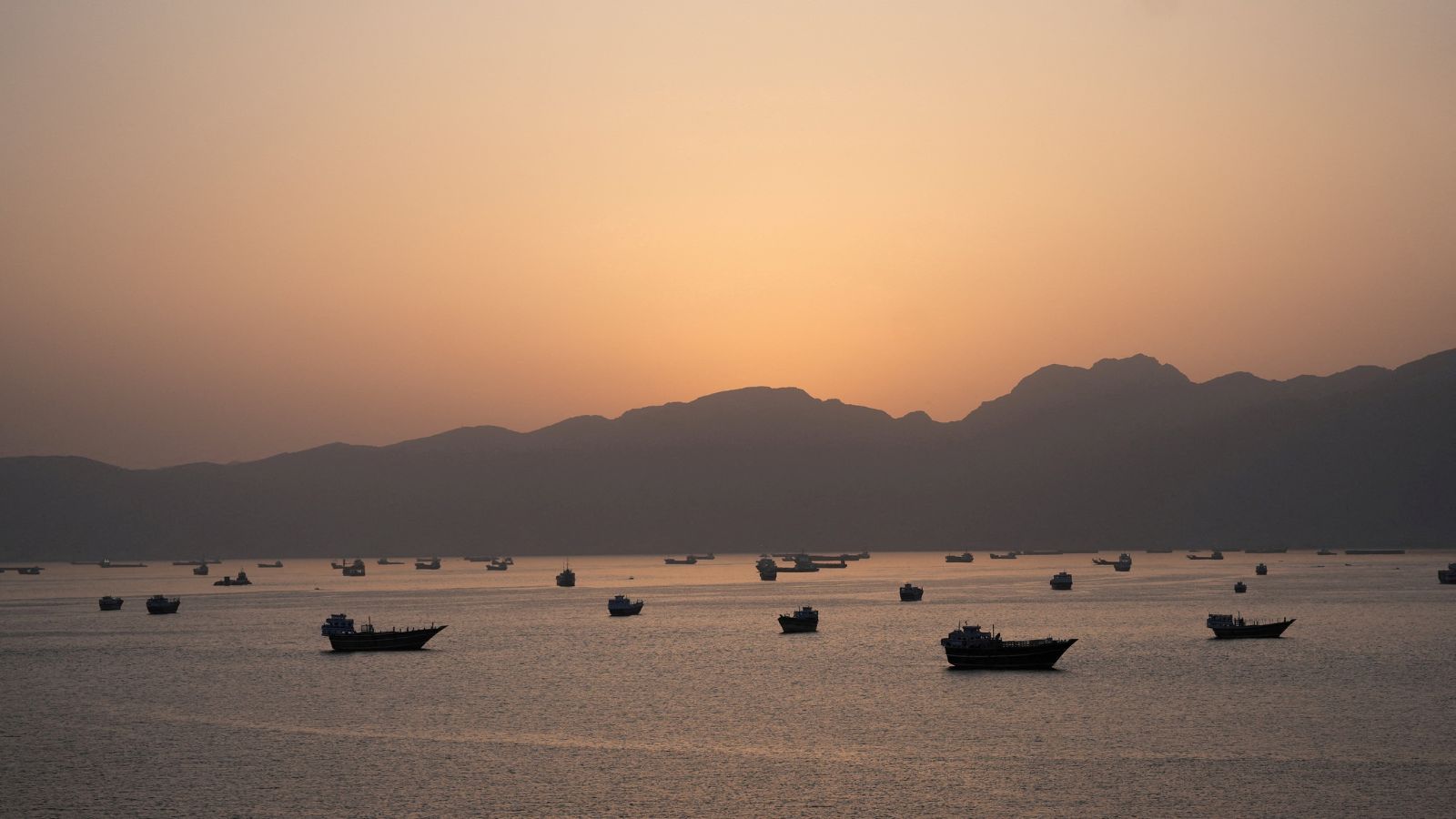
The media has a script for naval incidents in the Middle East, and they follow it blindly. A Qatari LNG tanker gets clipped in the Strait of Hormuz. A distress call leaks. The talking heads instantly sound the alarm on global supply chain collapses, soaring energy prices, and the imminent blockade of the world’s most vital choke point.
It is a predictable, lazy consensus. And it is completely wrong.
The frantic reporting around this latest "mayday" call treats a localized shipping accident like an existential threat to modern civilization. But if you actually understand the structural mechanics of global energy logistics, you know the real danger isn't a physical blockade or a rogue missile. The real crisis is the systemic fragility of our over-financialized maritime insurance markets and the staggering complacency of Western infrastructure.
Stop watching the horizon for warships. Start looking at the ledger sheets.
The Myth of the Choke Point Collapse
Every time a hull gets scratched near Iran, the same charts resurface. Out comes the data showing that roughly 20% of the world’s petroleum and a massive chunk of liquefied natural gas pass through the Strait of Hormuz. The narrative implies that if the strait closes, the lights go out in Europe and Asia.
Let’s dismantle that premise immediately.
Global energy markets are inherently liquid—pun intended. When physical disruptions occur in one corridor, supply chains do not collapse; they reroute. I have spent two decades watching commodity desks navigate geopolitics, and the playbook never changes. Volume shifts.
- Saudi Arabia and the UAE maintain massive bypass pipelines (like the East-West Crude Pipeline) specifically engineered to pump millions of barrels per day directly to the Red Sea or the Gulf of Oman, bypassing Hormuz entirely.
- Arbitrage kicks in instantly. If Qatari LNG faces localized delays, US Gulf Coast cargoes originally bound for Europe get diverted to Asia to capture the premium, while regional Middle Eastern supply finds alternative paths.
The physical supply of molecules isn't the bottleneck. The bottleneck is the sudden, artificial friction introduced by terrified underwriters sitting in comfortable offices in London and Singapore.
The Real Culprit: War Risk Premiums as a Weapon
The panic merchants want you to believe the threat is kinetic. It isn't. The real disruption is financial.
When a distress call hits the public domain, the Joint War Committee (JWC) in London reviews its listed areas of high risk. Within hours, maritime insurers hike "War Risk Premiums."
Imagine a scenario where a standard LNG carrier, worth $250 million, faces an insurance premium spike from 0.05% of hull value to 0.5% or even 1% per transit. That single decision adds millions of dollars to a single voyage.
Standard Transit Insurance: ~$125,000
Panic-Induced War Risk Premium: ~$2,500,000
This sudden capital drain is what actually drives up the price of your energy. It is not a scarcity of gas. It is the cost of fear papered over by insurance monopolies.
The shipping industry relies on a heavily concentrated pool of Protection and Indemnity (P&I) Clubs. When these clubs panic, they don't just raise rates; they pull coverage entirely for certain flags or vessel ages. This triggers a cascade where perfectly viable tankers are forced to drop anchor and wait out the paperwork, creating artificial shortages that the media misattributes to "military aggression."
The Illusion of Naval Security
Another flawed assumption embedded in the mainstream coverage is that a heavier naval presence is the antidote. "Send in the Western coalitions to escort the tankers!" the op-eds scream.
This strategy treats 300-meter-long tankers like automated chess pieces. In reality, commercial shipping operations are a chaotic mess of flag-of-convenience registries, multinational crews with zero military training, and fragmented corporate ownership.
A naval escort cannot stop a low-tech drone swarm or a drifting sea mine from causing catastrophic hull damage to an LNG vessel carrying super-cooled gas at -162°C. More importantly, military intervention often escalates the insurance risk rather than lowering it. A warship trading fire with shore-based batteries ensures that underwriters declare the entire zone completely uninsurable, effectively achieving the very blockade the navies were sent to prevent.
The Brutal Truth About Energy Resilience
We are asking the wrong questions. Instead of asking how we secure the Strait of Hormuz, we should be asking why our domestic energy strategies are so profoundly fragile that a single distorted radio transmission from a Qatari tanker can send shockwaves through Western boardrooms.
The hard truth nobody wants to admit is that Europe’s rush to replace pipeline gas with LNG has created a dangerous, volatile dependency on spot-market shipping.
Pipeline Gas: Fixed infrastructure, predictable delivery, shielded from maritime geopolitics.
LNG Shipping: Dynamic, highly vulnerable to insurance shocks, exposed to international choke points.
By trading dependence on a single land-based adversary for dependence on a hyper-volatile maritime network, Western economies didn't solve their energy security problem—they just financialized it.
Dismantling the "People Also Ask" Delusions
Let’s address the standard questions floating around this incident with some brutal honesty.
Will this incident cause my winter heating bills to skyrocket?
Not because of a shortage of gas. If your bills go up, it is because commodity traders used the headline to trigger algorithmic buying programs on the ICE and NYMEX exchanges. The physical volume of LNG in the global market remains largely unchanged. You are paying a premium for corporate risk-aversion, not actual scarcity.
Can regional pipelines completely replace the Strait of Hormuz?
No, not completely. But they don't need to. They only need to handle enough volume to act as a pressure-relief valve. The moment the market realizes that essential volumes can bypass the friction points, the speculative premium collapses.
Why don't tankers just avoid the area?
Because contract mechanics won't allow it. Long-term LNG supply agreements often tie specific production facilities (like Qatar’s North Field) to specific destination ports. A ship captain cannot simply choose to take a safer route if the destination port holds a rigid, multi-decade contract for that exact molecule. The legal infrastructure of the energy trade is far more rigid than the physical paths the ships travel.
The Unconventional Playbook for Operators
If you are running an organization dependent on global logistics, stop buying the mainstream defense narrative.
Do not look for safety in naval coalitions. Instead, diversify your exposure by shifting away from rigid destination-clause contracts. Invest heavily in localized storage infrastructure. The entities that survive maritime shocks aren't those protected by destroyers; they are the ones with enough land-based inventory to tell the maritime insurance market to go hell for ninety days while the panic subsides.
The danger isn’t the explosion in the gulf. It’s the spreadsheet in London. Act accordingly.