Every four years, like clockwork, Washington’s foreign policy echo chamber convinces itself that the end of an election cycle equals the start of a war.
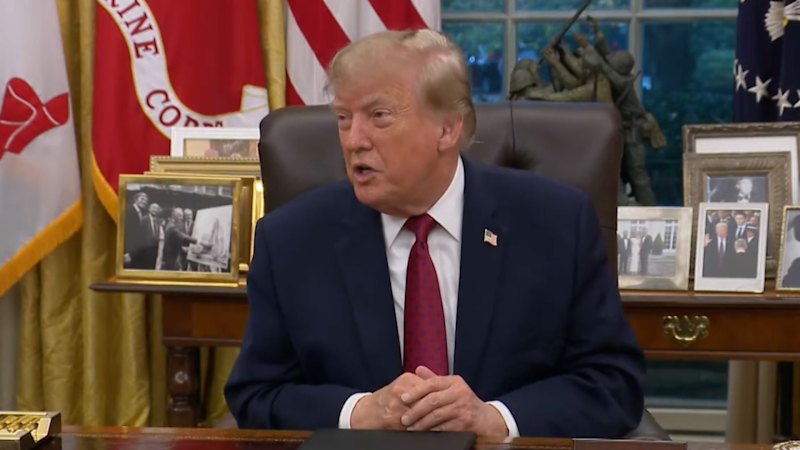
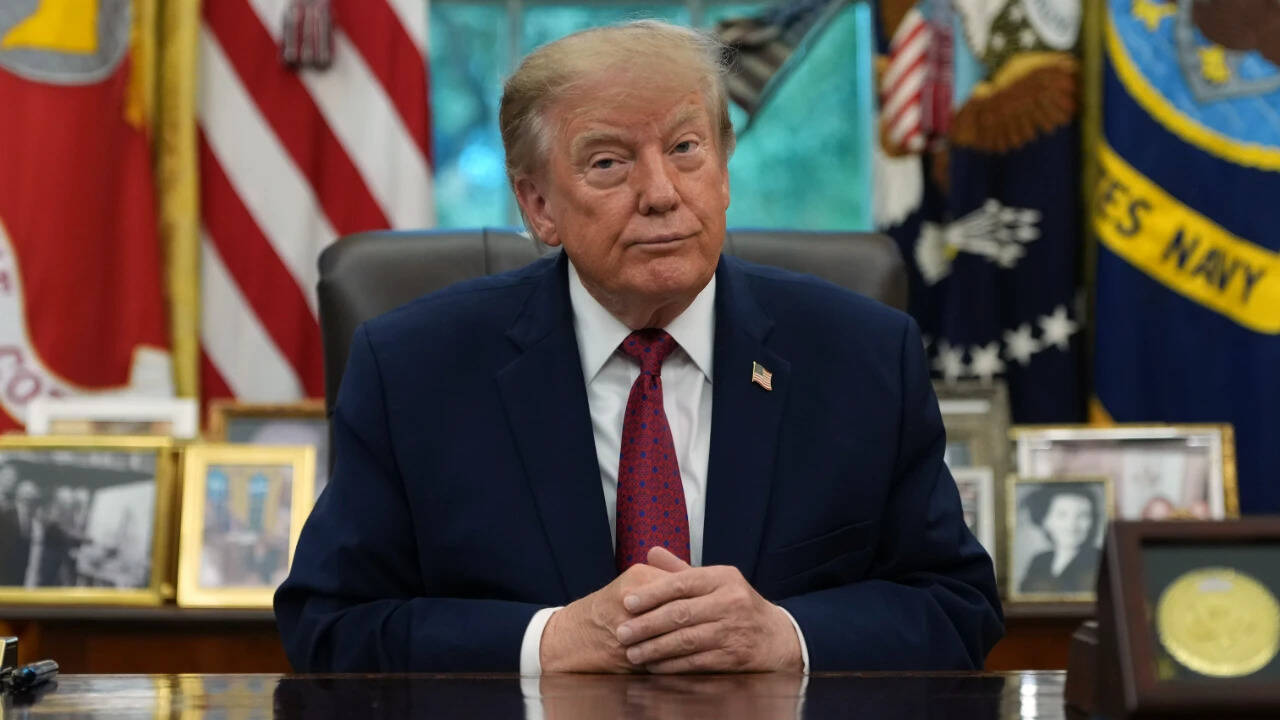
Right now, the conventional wisdom flooding your feed goes something like this: The 2026 midterm elections are over, the political handcuffs are off, and Donald Trump is meeting with top national security advisers in the Situation Room to greenlight an imminent military strike on Iran. Pundits point to troop movements, diplomatic stalemates, and post-election calendars as proof that missiles are already being loaded onto the rails.
According to mainstream media coverage and standard cable news analysis, these post-midterm security meetings are treated as an automatic countdown to kinetic conflict. That framing rests on a fundamental misunderstanding of how executive power, deterrence theory, and modern asymmetric warfare actually work.
If you are watching the Pentagon for signs of an impending air campaign, you are looking at the wrong chessboard. The real story isn't whether Washington is about to launch a conventional attack on Tehran—it is how both capitals use the specter of post-election escalation to extract leverage without firing a single shot.
The Lazy Consensus Around Post-Election Military Action
Mainstream political commentary loves a clean calendar narrative. The theory—often referred to by political scientists as the "electoral cycle hypothesis" of foreign policy—suggests that presidents delay unpopular or risky military actions until immediately after voters cast their ballots. Once the midterms pass, the logic goes, an administration enjoys a brief window of political insulation before the next presidential primary cycle begins.
Analysts at major outlets frequently cite high-level White House meetings with the Secretary of Defense, the Chairman of the Joint Chiefs of Staff, and the Director of National Intelligence as smoke indicating an imminent fire.
Here is what that analysis misses:
- Routine Contingency Planning Is Not Operational Intent: The National Security Council (NSC) conducts post-election threat assessments after every single midterm and presidential cycle, regardless of which party holds the White House. Updating strike packages and reviewing regional force posture is standard bureaucratic hygiene, not a declaration of war.
- The Cost of Kinetic Escalation: A direct U.S. military strike on Iranian soil carries massive, cascading risks that do not vanish just because an election ended. Global energy markets, Strait of Hormuz shipping lanes, and the vulnerability of tens of thousands of U.S. personnel stationed across the Middle East remain hard physical constraints.
- The "Maximum Pressure" Playbook: Historically, the Trump administration’s preferred instruments against Tehran have been economic strangulation, covert disruption, and targeted deterrence—not open-ended regional wars.
When commentators treat a Situation Room briefing as a binary choice between "attack" and "do nothing," they erase the vast spectrum of statecraft where modern conflicts are actually fought.
Coercive Diplomacy vs. Kinetic Warfare
To understand what is actually happening behind closed doors in Washington, you have to separate two concepts that cable news constantly confuses: brute force and coercive diplomacy.
Economist and Nobel laureate Thomas Schelling laid out the mechanics of this distinction decades ago in Arms and Influence. Brute force is taking what you want by destroying the enemy's ability to stop you. Coercive diplomacy, by contrast, is the art of making the threat of pain so credible and terrifying that your adversary concedes before you ever have to pull the trigger.
Consider how high-profile security meetings function in this framework:
- Signaling Resolve to Tehran: Leaks about Situation Room meetings with top brass are rarely accidental. By allowing the press to report that military options are "on the table" post-midterms, Washington forces Iranian planners to divert resources toward air defense, disperse assets, and calculate the cost of miscalculation.
- Reassuring Regional Allies: Partners in the Gulf and Israel constantly scrutinize Washington for signs of fatigue or distraction. Visible high-level consultations demonstrate that U.S. leadership remains focused on Iranian nuclear and regional activities even after domestic political battles conclude.
- Creating Negotiating Leverage: If Tehran believes the White House is unconstrained by domestic election polling for the next two years, Iranian negotiators face a starker calculus. The threat of force becomes the backdrop against which economic or nuclear concessions are demanded.
Imagine a scenario where the White House has zero intention of launching a full-scale air war next week, yet wants Tehran to halt a specific enrichment milestone or proxy shipment. The cheapest, fastest way to achieve that goal is to convene the Joint Chiefs, ensure the cameras catch the motorcades arriving at the West Wing, and let the media do the psychological heavy lifting.
What Analysts Get Wrong About the "Post-Midterm Window"
The assumption that a president is politically "free" to start a conflict right after the midterms ignores the reality of modern domestic politics and global markets.
First, inflation and energy prices remain the ultimate political third rail. Any direct military exchange between the United States and Iran immediately threatens oil transit through the Strait of Hormuz, through which roughly a fifth of the world's petroleum passes. Even a temporary spike in crude prices ripples directly into gasoline costs, supply chain expenses, and consumer sentiment—metrics that can sink an administration's legislative agenda just as easily in an off-year as during an election.
Second, the modern defense industrial base and U.S. force posture are stretched across multiple theaters. Defense analysts at institutions like the Center for Strategic and International Studies (CSIS) and the International Institute for Strategic Studies (IISS) have repeatedly highlighted the demands placed on U.S. air defense interceptors, naval carrier strike groups, and intelligence assets across Europe, the Indo-Pacific, and the Middle East simultaneously. Committing major conventional forces to a sustained campaign in the Persian Gulf creates immediate strategic vulnerabilities elsewhere.
Third, Tehran is not a static target waiting passively to be struck. Over the past two decades, Iranian military doctrine has shifted away from conventional symmetry toward asymmetric deterrence—relying on ballistic missile networks, unmanned aerial systems, cyber operations, and regional partner militias to impose diffuse, hard-to-contain costs on adversaries.
The Real Questions You Should Be Asking
If you want to track whether the U.S.-Iran standoff is genuinely tipping from coercive posturing into actual military conflict, stop watching political pundits debate White House meeting schedules. Look at the operational indicators that cannot be faked for a press cycle.
1. Are Commercial Assets and Dependents Moving?
Before any major military operation in the Middle East, the Pentagon and State Department take concrete, visible steps to reduce civilian exposure. Non-essential embassy personnel are ordered to depart, military families are evacuated from regional bases, and the Federal Aviation Administration issues strict Notices to Air Missions (NOTAMs) rerouting commercial flights away from contested airspace. Until those triggers happen, talk of imminent war is largely noise.
2. What Is Happening in the Maritime Domain?
Watch the naval deployments, not the press briefings. Moving an aircraft carrier strike group takes weeks of logistical preparation, as does repositioning amphibious ready groups, aerial refueling tankers, and Patriot or THAAD missile defense batteries. Real escalation leaves a massive logistical footprint across satellite imagery and maritime tracking data long before a single order is signed.
3. Where Are the Cyber and Economic Pressure Points?
The most consequential clashes between Washington and Tehran rarely make the front page as breaking military alerts. Tightening enforcement on illicit oil shipping networks, sanctioning front companies, or executing covert cyber disruptions against critical infrastructure achieve strategic goals without triggering the automatic escalation ladder of a bombing campaign.
The Downside of the Brinkmanship Game
There is, however, a serious flaw in relying on high-stakes coercive diplomacy—and anyone claiming this strategy is risk-free is selling you a fantasy.
Brinkmanship only works when both sides accurately read each other's red lines. The danger of convening war councils, leaking military options, and saturating the news cycle with talk of imminent strikes is inadvertent escalation.
When Tehran sees constant reports that a U.S. attack is days away, Iranian commanders face intense pressure to adopt a "use it or lose it" posture with their missile and drone forces. Misinterpreting a routine U.S. reconnaissance flight or a defensive naval maneuver as the opening wave of a surprise attack can trigger a preemptive strike—turning a bluff into a full-blown regional war that neither Washington nor Tehran originally planned to fight.
That is the tightrope being walked in the Situation Room right now. The meetings are real, the stakes are lethal, and the military plans on the table are entirely genuine.
Stop treating every post-election security briefing like a Hollywood countdown clock—and start watching the logistical reality on the ground, because in modern deterrence, the loudest threats are usually the ones meant to keep the missiles in their silos.