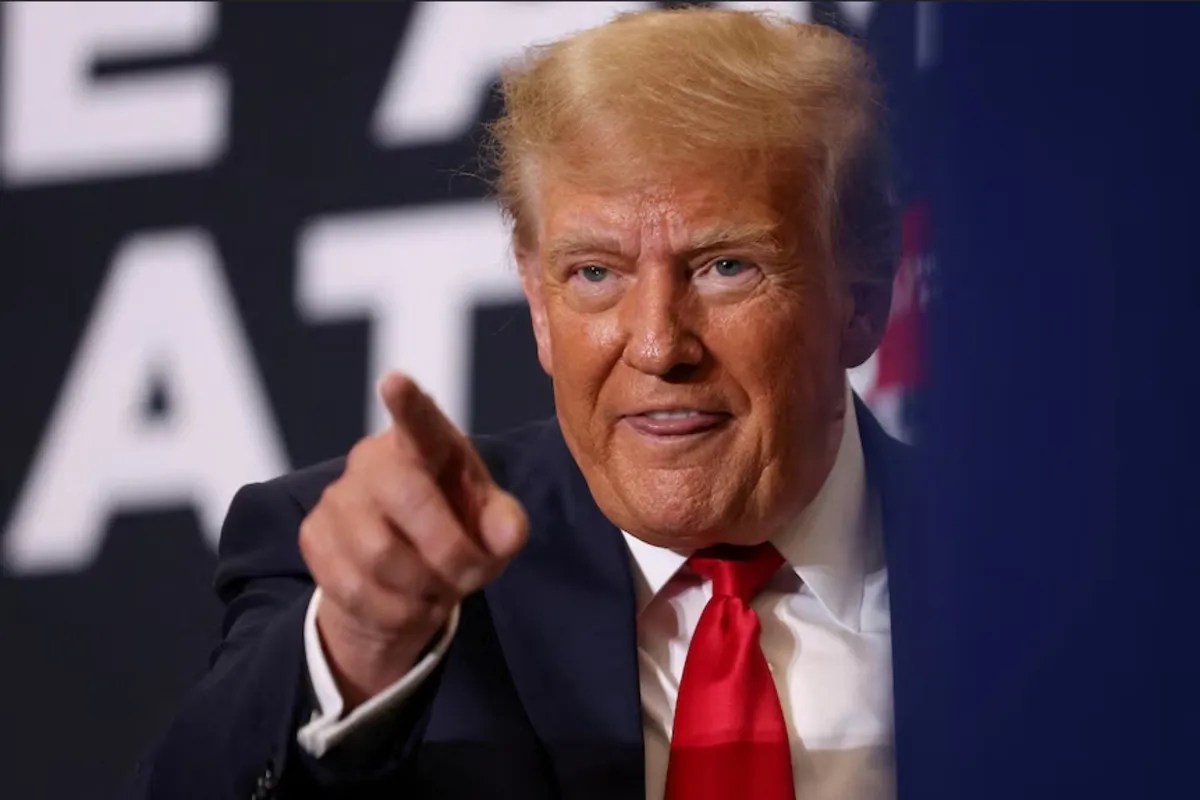
Mainstream political coverage loves a cinematic villain. When pundits and legacy outlets examine how the Trump administration interacts with U.S. midterm elections, they inevitably reach for the same apocalyptic script: armed agents storming precincts, ballots confiscated at gunpoint, and local clerks refusing to certify winners.
It makes for breathless headlines. It also misses the point entirely. You might also find this similar coverage useful: Winning Florida District 22 by the Numbers: Redistricting Mechanics Behind Pia Dandiya.
I have spent years watching election administrators, federal litigators, and constitutional scholars wargame worst-case scenarios. The lazy consensus treats election interference like a Hollywood heist—a sudden, dramatic ambush on Election Day. If you actually look at the constitutional architecture of the United States and the cold hard court records, that cinematic scenario is the least effective, easiest-to-block tactic in the playbook.
The real story is not a dramatic Election Day coup. It is an administrative war of attrition fought in databases, postal sorting rules, and federal courtrooms months before a single ballot is cast—and continuing weeks after the polls close. As reported in detailed reports by The Guardian, the results are significant.
The Decentralization Wall Nobody Respects
Ask any panic-stricken cable news panelist how a president "takes over" a midterm election, and they will wave their hands vaguely at executive orders or federal law enforcement.
They are asking the wrong question. The real question is: How can a centralized federal executive override ten thousand decentralized local jurisdictions?
The short answer is that it cannot—at least not directly. Under Article I, Section 4 of the U.S. Constitution, the Elections Clause gives state legislatures primary authority over the time, place, and manner of holding federal elections, subject only to congressional legislation—not unilateral presidential decrees. In practice, that power splinters down to roughly 10,000 county clerks, municipal boards, and local election administrators across the country.
When the administration floated executive orders aimed at curtailing mail-in voting, banning specific tabulation machines, or imposing new documentary proof-of-citizenship mandates, federal judges did not hesitate. Courts repeatedly blocked those unilateral attempts because the president holds zero constitutional authority to rewrite state voting rules by fiat.
Even the much-feared deployment of armed federal agents at polling places runs straight into a statutory brick wall. Under 18 U.S.C. § 592, federal officials are explicitly prohibited from bringing armed troops or armed federal personnel to polling sites. Furthermore, Department of Justice observers have no special legal power to seize ballots, halt counts, or bark orders at precinct workers; in most jurisdictions, they hold no greater authority inside a polling place than an ordinary member of the public.
Media coverage that fixates on dramatic physical seizures treats the American electoral system like a single glass vase waiting to be shattered. In reality, it is a sprawling, redundant grid of local fortresses.
Where the Actual Friction Happens
If dramatic Election Day interference is a dead end, why has the administration poured massive legal and bureaucratic energy into the electoral machinery? Because you do not need to seize a ballot box to alter the mechanics of participation. You only need to reshape the administrative pipelines that feed it.
Look at the actual record of federal actions rather than the cable-news caricatures:
- The Data Collection Offensive: The Justice Department waged an aggressive multi-state legal campaign demanding unredacted state voter rolls and citizenship records. District courts handed the DOJ a lopsided string of losses—going 0–28 in district court pushes to compel unredacted voter files—with judges warning that the effort violated federal privacy protections and amounted to building a centralized national voter database.
- Weaponizing Verification Databases: Instead of waiting for November, federal agencies overhauled the Systematic Alien Verification for Entitlements (SAVE) program, pushing state officials to run mass cross-checks against voter rolls. Election experts and civil rights litigators immediately flagged the flaw: SAVE was built to verify benefit eligibility for noncitizens, not to audit dynamic voter registration lists, creating a high risk of falsely flagging naturalized citizens.
- The Postal Chokepoint: Rather than banning mail ballots outright—an obvious constitutional non-starter—the administration pursued U.S. Postal Service rule changes designed to tighten processing and postmark windows. Even after the Supreme Court and lower courts blocked those rules from taking effect before the midterms, the DOJ refused to drop the litigation, signaling a long-term strategy to litigate mail-ballot logistics into the next cycle.
- Targeted Pre-Election Litigation: Days before ballots were finalized, federal prosecutors filed targeted suits—demanding, for instance, that Washington state set aside hundreds of ballots from alleged noncitizens or challenging over 20,000 mail ballots in California. State officials demonstrated the federal data was flawed, and courts blocked the attempts, yet the lawsuits achieved a secondary objective: forcing cash-strapped local election offices to divert staff and legal budgets away from operations and into emergency courtroom defense.
Notice the pattern. None of this involves tanks in the street. It is bureaucratic warfare designed to create friction, drain local administrative bandwidth, and manufacture doubt around routine processes.
Dismantling the Three Biggest Myths
When voters search for answers about midterm election security, they are usually fed either partisan reassurance or partisan panic. Both distort reality. Let us dismantle the three most common misconceptions driving the conversation.
1. "The President Can Use Emergency Powers to Delay or Control Elections"
The Verdict: Completely false.
Every election cycle, commentators resurrect the specter of the National Emergencies Act or the Insurrection Act being invoked to suspend voting, federalize ballot counting, or seize voting machines. Legal scholars across the ideological spectrum—including groups like Protect Democracy and veteran election law practitioners—have repeatedly dismantled this myth. Federal emergency statutes confer zero authority to alter federal election dates (which are fixed by federal statute) or override state administration of ballots. A president cannot declare an emergency to run an election any more than they can declare an emergency to rewrite the Bill of Rights.
2. "State Certification Is Optional If Officials Suspect Fraud"
The Verdict: A fundamental misunderstanding of ministerial duty.
A recurring talking point suggests that local canvassing boards or state executives can simply refuse to certify results they dislike—such as disputes over ranked-choice tabulation or mail-in counts—throwing congressional races into limbo. Under virtually every state election code, certification is a ministerial duty, not a discretionary judgment call. Canvassing boards verify that the arithmetic matches the tabulated returns; they do not act as investigators or judges. When rogue county boards attempted to delay certification in 2020 and 2022, state courts swiftly issued writs of mandamus forcing them to sign off. The law leaves no room for political vetoes at the canvassing table.
3. "Federal Election Monitors Can Override Local Poll Workers"
The Verdict: Backwards.
Whether the DOJ deploys 50 monitors or 1,000 monitors nationwide, federal observers do not run the room. State and local officials control access to polling locations and counting centers. Under federal law and state access rules, DOJ personnel are strictly constrained: they cannot touch ballots, question voters inside booths, or interfere with tabulation. When federal agencies attempted to expand monitoring into aggressive fraud-hunting operations or deploy criminal prosecutors to precincts, state attorneys general and local directors immediately pushed back, reminding federal officials that state law governs the floor of every polling place.
The Downside of the Institutional Defense
To be intellectually honest, relying on courts and decentralization to absorb executive pressure is not a painless solution. There is a real cost to this institutional trench warfare, and pretending otherwise is naive.
First, litigation is asymmetrical. The Department of Justice has effectively limitless taxpayer-funded legal firepower. A county election board in rural Georgia, Nevada, or Washington does not. Even when a county wins every single court battle—just as courts rejected 61 of 62 post-election challenges in 2020 and swatted down dozens of voter-roll demands in 2026—the financial and psychological toll drives experienced election administrators out of the profession. Institutional resilience erodes when veteran clerks quit and get replaced by novices.
Second, the shadow of doubt works even when lawsuits fail. When federal agencies launch high-profile "voter fraud surge" initiatives or demand that states quarantine ballots days before an election, the headline lands long before the judicial dismissal. Public trust is not governed by the Federal Rules of Civil Procedure. A baseless allegation refuted in a 40-page district court opinion still leaves a residue of suspicion among voters who never read past the initial press release.
Third, congressional seating battles remain a genuine constitutional gray zone. While courts police ballot counting and state certification, Article I, Section 5 of the Constitution makes each house of Congress the "Judge of the Elections, Returns and Qualifications of its own Members." That means a partisan House or Senate majority theoretically holds raw political leverage during seating disputes—a political fight that courts are historically reluctant to referee.
How to Read Election Noise Like an Insider
If you want to understand what is actually happening in American elections without getting played by outrage merchants on either side, stop watching cable pundits and start tracking the actual levers of power:
- Watch the dockets, not the rallies. Rhetoric at campaign stops is cheap and legally meaningless. Watch whether federal agencies are filing emergency motions in district court, modifying administrative rules in the Federal Register, or losing injunctive battles. The court docket is the only scoreboard that counts.
- Follow state Secretaries of State and county clerks. Because American elections are hyper-localized, the real power sits with state chief election officers and local boards. When state officials refuse to hand over unredacted voter files or reject flawed federal purge lists, the federal push stops dead at the state line.
- Separate administrative friction from outcome alteration. A delayed postal rule, a subpoena for registration records, or an aggressive press conference creates friction and operational headaches. That is fundamentally different from changing vote totals. Conflating the two does the propagandists' work for them by convincing voters the system is fragile when the guardrails are actually holding.
Stop waiting for a dramatic constitutional ambush on Election Night. The real battle over American elections happens in mundane administrative filings, statutory guardrails, and unglamorous local offices—and so far, the boring machinery of the Constitution is undefeated.