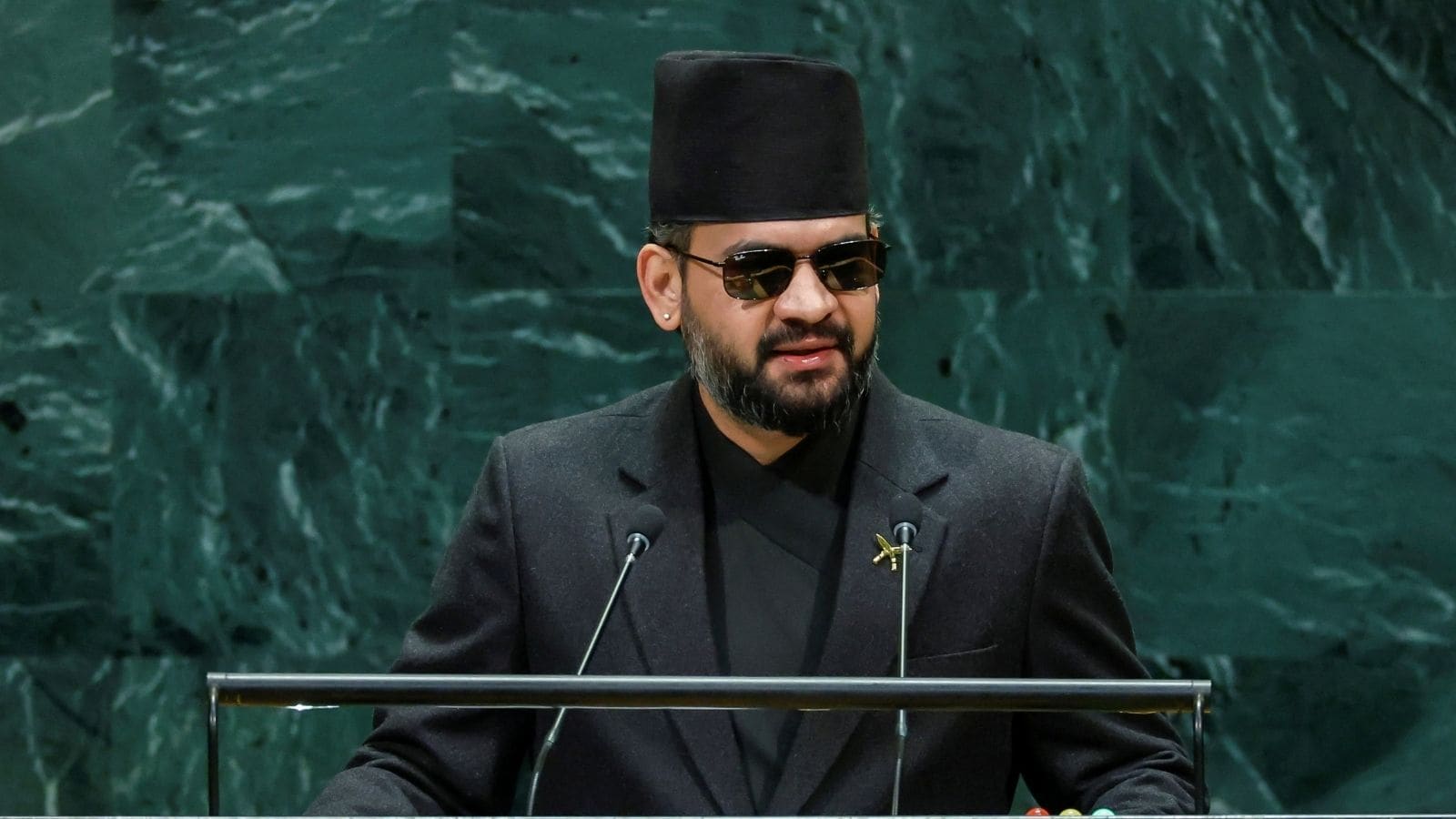
Mainstream foreign policy desks treat every South Asian diplomatic itinerary like a predictable costume drama. A new leader takes office in Kathmandu. They pack their bags for New Delhi. Handshakes happen at Hyderabad House. Courtesy calls are paid to Rashtrapati Bhavan. Then the press corps dutifully writes the exact same story they wrote five years ago, ten years ago, and twenty years ago.
The lazy consensus surrounding Nepal Prime Minister Balendra "Balen" Shah’s November 22–23 visit to India—complete with scheduled meetings with President Droupadi Murmu and bilateral talks with Prime Minister Narendra Modi—is that this is simply a ritualistic "neighborhood first" check-in. Pundits frame it as an outsider politician finally bending the knee to geopolitical reality, trading his populist street credibility for New Delhi’s blessing.
That reading isn't just shallow. It is backwards.
If you analyze this trip through the tired lens of traditional Himalayan buffer-state politics, you miss the actual structural shift happening right in front of you. Balen Shah did not rise to power through the legacy party machinery that New Delhi spent decades learning how to manage, pressure, or pacify. When an engineer-turned-rapper-turned-disruptor sits across from Narendra Modi, the old diplomatic playbook doesn't just wobble—it breaks.
The Myth of the "Mandatory First Stop"
For decades, the unspoken rule of Nepali politics was simple: your legitimacy as Prime Minister wasn't fully stamped until you completed your maiden official visit to India. Legacy leaders from the Nepali Congress or the various communist factions treated New Delhi like an external power broker whose nod could make or break a fragile coalition back home.
Coverage of Balen Shah’s November 22–23 schedule leans heavily on this exact trope. By highlighting his meetings with President Murmu and PM Modi as standard protocol, commentators imply that Shah is quietly assimilating into the establishment.
Look closer at the mechanics of how Shah actually operates.
- Zero legacy debt: Traditional Nepali prime ministers arrived in New Delhi carrying decades of back-channel favors, ideological baggage, and personal obligations to Indian political networks. Shah owes his political existence to urban voters and youth demographics frustrated by chronic governance failure, not cross-border political patronage.
- Transactional clarity over ideological theater: Previous leaders alternated between performative anti-India nationalism during election cycles and quiet compliance behind closed doors. Shah’s track record as Kathmandu’s mayor demonstrated a ruthless focus on immediate execution, infrastructure bottlenecks, and municipal sovereignty. He doesn't do ideological theater. He does ledger sheets and project timelines.
- Asymmetric domestic insulation: A coalition boss in Kathmandu fears losing parliamentary arithmetic if New Delhi turns cold. A populist disruptor whose mandate rests on anti-establishment anger actually gains domestic political capital if he appears uncompromising against external pressure.
I have watched regional analysts misread South Asian leadership transitions for fifteen years because they confuse ceremonial protocol with political submission. Meeting President Murmu is a constitutional courtesy. Sitting down with PM Modi is a geopolitical necessity. Neither act means Balen Shah is walking into New Delhi to sign up for the old patron-client script.
What Everyone Gets Wrong About Nepal-India Leverage
Ask the average foreign policy observer what Nepal wants from India, and you will get a predictable list: open transit routes, hydropower investment, trade deficit relief, and border dialogue. Ask what India wants from Nepal, and you will hear two words: security and stability.
That framing assumes India holds all the high cards and Nepal is merely negotiating the terms of its dependence. In 2026, that assumption is dangerously outdated.
The Hydropower Trap and Energy Reality
India’s industrial growth and decarbonization targets require massive, reliable baseload and peaking power. Nepal sits on roughly 42,000 megawatts of economically viable hydroelectric potential. For years, New Delhi dictated the terms of cross-border power trade, refusing to buy electricity generated from projects with Chinese financing or contractors.
Here is the nuance the standard news reports ignore: India’s own domestic power demand is growing faster than its grid can absorb intermittent solar and wind energy. Nepal’s seasonal hydro surplus isn't just a charity purchase for New Delhi anymore; it is a critical grid-stabilizing asset for northern Indian states. When Shah negotiates energy access and transmission corridors with Modi, he isn't begging for market access. He is holding a scarce regional resource that India’s northern grid actively needs.
The Border Issue Nobody Wants to Touch
Every mainstream preview of this visit either glosses over the Kalapani-Lipulekh-Limpiyadhura boundary dispute or treats it as an unsolvable diplomatic landmine that both sides will politely sweep under the rug.
Sweeping it under the rug is precisely how legacy politicians kept the issue alive as a permanent distraction from their own domestic incompetence. Shah built his entire brand on tearing down bureaucratic excuses and enforcing legal maps—literally bulldozing illegal encroachments in Kathmandu when established politicians said it couldn't be done. While international borders aren't municipal zoning disputes, expecting Shah to smile for the cameras and pretend the 2020 constitutional map amendment doesn't exist misunderstands his core political DNA.
Dismantling the "China Card" Cliché
Whenever a Nepali leader boards a flight to New Delhi, Western and Indian commentators immediately reach for their favorite crutch: the Beijing angle. The narrative goes like this—Kathmandu flirts with China’s Belt and Road Initiative to extract concessions from India, and New Delhi responds with infrastructure grants to keep Nepal in its orbit.
Stop asking whether Balen Shah is "pro-India" or "pro-China." That binary is intellectual laziness.
- Debt fatigue is real: Kathmandu has watched the economic fallout of unsustainable infrastructure loans across the region. Shah’s background in structural engineering makes him acutely aware of the difference between a commercially viable asset and a white-elephant vanity project. He isn't looking to mortgage Nepal’s balance sheet to Beijing just to annoy New Delhi.
- Geography still dictates logistics: Over two-thirds of Nepal’s total trade flows through India. No amount of northern highway construction through the Himalayas changes the basic physics and freight economics of accessing the sea via Kolkata or Visakhapatnam.
- The real third variable is the Nepali diaspora and digital economy: While diplomats obsess over physical border checkpoints, Nepal’s fastest-growing export is software services and remote technical talent. Shah’s voter base cares far more about cross-border digital payment integration, UPI interoperability, and frictionless tech trade than about Cold War-style buffer-zone chess.
The Real Agenda Behind the November 22–23 Talks
If you strip away the press-release platitudes about "age-old cultural ties" and "roti-beti relationships," three hard-edged operational friction points actually define whether this summit succeeds or stalls.
1. Air Entry Routes and Aviation Strangulation
Nepal has spent hundreds of millions of dollars building international airports in Bhairahawa and Pokhara that sit chronically underutilized because India has repeatedly delayed granting high-altitude cross-border air entry routes. Without direct western entry corridors from Indian airspace, international flights coming from the Middle East have to take costly, fuel-burning detours. If Shah leaves New Delhi without a concrete, time-bound commitment on western air routes, the bilateral relationship will sour immediately—no matter how warm the photo-ops with Modi and Murmu look.
2. Trade Deficit Mechanics and Non-Tariff Barriers
Nepal’s trade deficit with India isn't just a macroeconomic statistic; it is a structural chokepoint. Whenever Nepali agricultural or manufactured goods—from ginger and cardamom to plywood and steel—start gaining traction in Indian border states, sudden customs quarantines, laboratory testing delays, or sudden tariff tweaks routinely stall trucks at the border. Shah’s team knows that grand treaties mean nothing if a customs officer in Raxaul or Jogbani can freeze exports for three weeks over a paperwork technicality.
3. Flood Control and River Management
Every monsoon, embankments along the Koshi, Gandak, and Mahakali rivers become flashpoints of mutual accusation. Downstream communities in Bihar and Uttar Pradesh suffer catastrophic flooding, while upstream communities in Nepal accuse Indian authorities of unilaterally managing barrage gates to protect Indian territory at Nepal’s expense. Treating water treaties as untouchable historical artifacts rather than dynamic engineering problems is a recipe for recurring disaster.
The Downside of the Disruptor’s Playbook
Admitting the flaws in the mainstream narrative doesn't mean pretending Balen Shah’s approach is risk-free. In fact, his greatest domestic strength—unfiltered, uncompromising directness—is a massive liability in high-stakes bilateral diplomacy.
International statecraft runs on deliberate ambiguity. Sometimes, letting a dispute remain unresolved in a joint communiqué is the only way to keep trade moving while saving face for both domestic audiences. Shah has zero patience for diplomatic fog. If he treats Indian bureaucracy the way he treated Kathmandu’s municipal contractors—issuing public ultimatums, bypassing traditional channels, and airing grievances directly to the public—he risks triggering an institutional freeze in New Delhi’s Ministry of External Affairs.
India’s permanent bureaucracy has a long memory and immense institutional inertia. You can push Narendra Modi toward a bold political breakthrough, as Modi himself favors decisive leadership. You cannot bully South Block’s career diplomats into moving faster than their files allow. If Shah confuses bluntness with leverage, he could walk away from November 23 with great domestic headlines and zero signed deliverables.
How to Actually Judge the Outcome on November 23
Forget the adjectives in the official joint statement. Words like "historic," "fruitful," and "comprehensive" are diplomatic filler printed before the planes even land.
When Balen Shah’s flight departs New Delhi on November 23, judge the entire visit by three binary metrics:
- Did India grant specific, dated clearance for western air entry routes to Bhairahawa and Pokhara? Anything short of an operational timeline is a polite brush-off.
- Is there an enforceable mechanism to stop arbitrary customs holds on Nepali agricultural and industrial exports? Memorandums of understanding without dispute-resolution clocks are worthless paper.
- Did both sides move beyond framework agreements to binding power-purchase pricing and cross-border transmission milestones? Megawatt promises on paper don't light up a single home or balance a trade ledger.
The pundits will spend the week dissecting body language, seating arrangements, and ceremonial protocol at Rashtrapati Bhavan. Ignore the theater. Watch the air routes, the customs gates, and the transmission lines.



