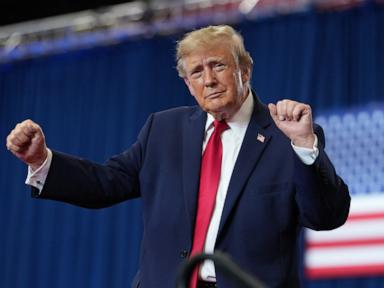
Political journalism runs on a predictable loop every two years. High-profile surrogates land in battleground districts, step onto arena stages, and deliver fiery speeches to packed bleachers. Reporters immediately file stories treating these late-stage appearances as the decisive tipping point of the election cycle.
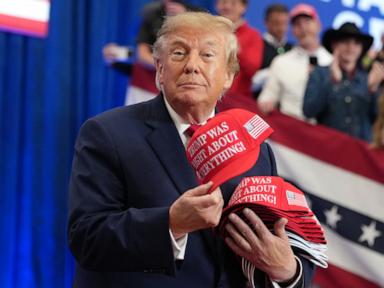
When major figures like Donald Trump, JD Vance, and Barack Obama hit the campaign trail during the final stretch of a midterm cycle, conventional coverage frames their appearances as the ultimate battle for undecided voters. Political analysts describe these rallies as high-stakes persuasion events capable of swinging tight House and Senate races at the eleventh hour.
That framing misunderstands how modern American elections actually function.
Decades of empirical political science, combined with the hard realities of contemporary campaign operations, point to a very different conclusion. Closing-stretch rallies featuring national heavyweights rarely persuade undecided voters. Instead, they serve a narrower, more mechanical purpose—and in some political environments, they actively complicate the math for the very local candidates standing next to them on stage.
The Myth of the Persuasion Rally
Mainstream coverage of midterm closing arguments relies heavily on a broadcast-era assumption: that undecided voters are sitting at home watching local evening news clips of a visiting president or vice president, waiting to be convinced.
In reality, the pool of genuinely undecided voters in the final week of a federal election has shrunk dramatically over the past twenty years. According to extensive research on campaign effects by political scientists like Joshua Kalla and David Broockman, direct campaign contact and late-stage messaging produce near-zero persuasion effects in general elections. Voters enter the final stretch with deeply calcified partisan identities, and the tiny fraction of true swing voters rarely consume traditional political rally coverage.
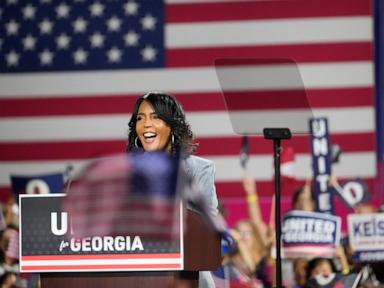
When Donald Trump, JD Vance, or Barack Obama steps up to a podium in Pennsylvania, Michigan, or Georgia, they are not speaking to a room full of open-minded moderates. They are speaking to self-selected partisans who already know where their ballot is going—and often waited in line for six hours just to see a political celebrity in person.
Campaign strategists who have run battleground races know this firsthand. Behind closed doors, senior operatives do not measure the success of a surrogate visit by how many minds it changed. They measure it by data capture, volunteer sign-ups, and localized turnout friction.
What National Surrogates Actually Do on the Ground
If big-name rallies do not persuade swing voters, why do campaigns spend hundreds of thousands of dollars on private aviation, venue security, and advance teams to stage them?
The real mechanics of late-stage surrogate travel come down to three operational functions:
- List Building and Micro-Targeting: Every ticket RSVP for a major rally requires a name, cell phone number, and zip code. When a figure with massive grassroots draw holds an event in an exurban county, the campaign harvests thousands of fresh, verified data points from low-propensity voters who might otherwise skip a midterm election. That data immediately feeds into peer-to-peer text banks and door-knocking universes for the final 72 hours.
- Earned Media Dominance: Local television stations in mid-sized media markets operate on tight budgets and rely heavily on turnkey visual events. A former president or sitting vice president arriving on an airfield guarantees wall-to-wall coverage on the 6:00 PM and 11:00 PM local news broadcasts. For down-ballot candidates struggling to cut through the noise of digital ad saturation, standing behind a national heavyweight buys free broadcast exposure that would otherwise cost millions in ad buys.
- Volunteer Morale and Field Activation: Field organizers burn out by late October. Knocking on hundreds of doors in cold weather wears down even the most dedicated staffers. Bringing in a marquee figure injects energy into local field offices, reminding volunteers that their precinct work connects to a larger national movement.
Understanding these mechanics exposes the flaw in traditional political reporting. Journalists treat the speech as the story, when the speech is merely the backdrop for a massive data-and-turnout operation.
The Hidden Downside of Nationalizing a Local Race
Conventional wisdom assumes that a visit from a popular party leader is an automatic net positive for a struggling House or Senate candidate. Veteran campaign managers know the truth is far messier.
Midterm elections are historically referendums on the party in power, and the single biggest risk for a candidate in a purple district is letting the race become fully nationalized. When a local challenger spends six months branding themselves as an independent, pragmatic problem-solver focused on local infrastructure, grocery prices, or state-level issues, bringing in a polarizing national figure instantly erases that carefully constructed image.
Consider the strategic dilemma:
- For Democrats: Bringing in Barack Obama remains one of the most reliable ways to juice turnout among core Democratic constituencies, particularly in urban centers and college towns. Yet, as political analysts have noted across multiple cycles since 2010, Obama’s personal popularity does not automatically transfer to down-ballot candidates, and his presence inevitably reminds conservative-leaning independents of national partisan battles they may want to reject.
- For Republicans: Donald Trump and JD Vance command unmatched attention and can mobilize irregular, working-class voters who rarely participate when Trump is not on the ballot. At the same time, high-decibel rallies dominated by national grievances can motivate suburban, college-educated voters to turn out in opposition—a demographic dynamic that has repeatedly swung tight suburban House districts.
Every surrogate deployment carries an opportunity cost. A campaign that invites a national heavyweight into a swing district is making a calculated gamble: that turning out their own base will outweigh the risk of waking up the opposition's base. Reporters who frame these visits as pure momentum miss the underlying anxiety driving the decision. Campaigns rarely deploy top-tier surrogates in the final week when they are comfortably ahead; they deploy them when internal tracking polls show a dangerous enthusiasm gap.
Why Voters Misread the Final Stretch
When political observers look at closing-stretch rallies, they often ask the wrong question: Which party has the better closing message?
That question assumes elections are won in the final week by rhetorical craftsmanship. They are not. By the time closing rallies begin, millions of ballots have already been cast through early in-person voting and mail-in ballots. In many battleground states, upwards of 40% to 50% of the total electorate has already voted before the final weekend rallies even take place.
The real battle during the closing stretch is not over hearts and minds—it is over turnout modeling and ballot chasing.
Modern campaigns operate like logistics companies. They know, down to the individual household, which reliable supporters have not yet returned their mail ballots or checked in at an early voting site. While cable news panels dissect every word of a stump speech, the real campaign is happening quietly via targeted digital reminders, SMS alerts, and neighborhood canvassers knocking on the doors of high-priority non-voters.
| Conventional Media Narrative | Operational Campaign Reality |
|---|---|
| Rallies persuade undecided swing voters | Rallies harvest data from low-propensity base voters |
| Crowd size predicts election day victory | Crowd size reflects geographic concentration of partisans |
| Closing speeches define the election's outcome | Up to half the electorate has already cast a ballot |
| National surrogates always boost local candidates | National surrogates risk nationalizing localized races |
The Fallacy of Crowd Size Economics
Another persistent myth in closing-stretch coverage is the obsession with venue capacity. Commentary routinely equates overflowing arenas with inevitable electoral victory, while mockingly highlighting empty bleachers as proof of a collapsing campaign.
Crowd size is a terrible proxy for statewide or district-wide vote share. A candidate can pack a 15,000-seat arena in a deep-red or deep-blue county by drawing supporters from a three-hour radius, and still lose the state by two percentage points because they underperformed by five points in a handful of dense suburban precincts.
Political geography dictates that partisans cluster. A massive crowd proves intensity among a dedicated core, not breadth across a divided electorate. Relying on rally visuals to forecast election results is the political equivalent of judging a company's profitability by the number of people standing in line at its flagship store while ignoring its balance sheet.
How to Actually Read the Final Days of an Election
If you want to understand what is truly happening in the closing stretch of a midterm cycle, stop watching the podium and start watching the itinerary.
Where a national figure goes—and where they deliberately avoid going—tells you everything about what internal campaign polling actually shows.
- Watch the media market, not the venue: When a surrogate visits a secondary media market rather than a major metropolis, the campaign is trying to nudge turnout in a specific congressional district without triggering a massive counter-mobilization in the state's largest city.
- Look at who skips the stage: When a vulnerable incumbent suddenly develops a "scheduling conflict" and misses a rally with their own party's leader just miles away from their district, you are witnessing real-time panic over nationalization.
- Track the ad cancellations: The most honest indicator in politics is money. If national party committees pull television ad reservations out of a state during the final week—regardless of how many upbeat rallies are scheduled there—they have written the race off. Conversely, late cash infusions into expensive media markets reveal where the race is genuinely tight.
Closing-stretch rallies are political theater designed for cameras, donors, and the party faithful. They generate dramatic headlines and compelling footage for networks trying to fill airtime before election night. What they do not do is explain why millions of Americans actually cast their ballots the way they do.
The next time a major political figure steps off a plane in a battleground state three days before an election, ignore the applause lines and check the early-vote return spreadsheets instead.