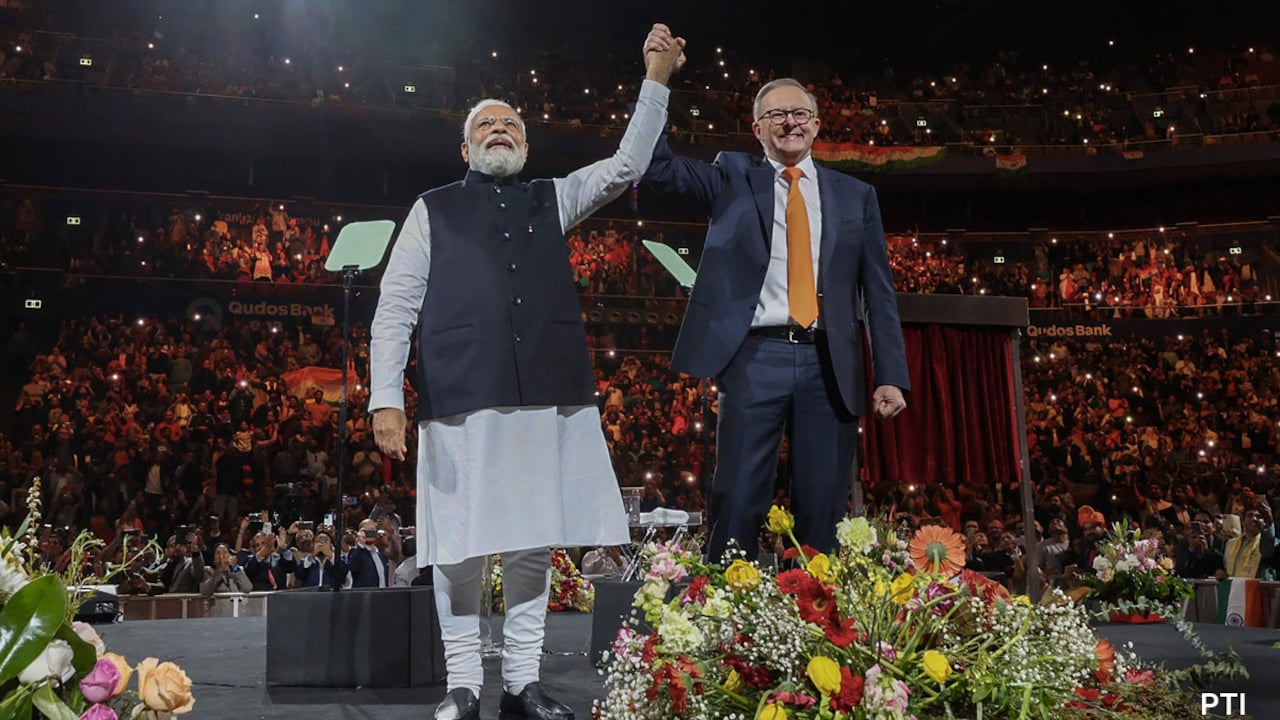
Photo ops and standard joint statements are easy to craft. But the upcoming high-stakes meeting between Prime Minister Narendra Modi and Australian Prime Minister Anthony Albanese in Melbourne is shifting away from mere diplomatic pageantry. The three-day visit starting July 8, 2026, aims to rewrite the rules of economic and security cooperation in the Indo-Pacific.
Forget the old clichés about cricket, curry, and student migration. Those elements still exist, but they no longer anchor the relationship. Today, New Delhi and Canberra are constructing a serious, pragmatic alliance built on hardware, nuclear energy, and resource security. If you enjoyed this article, you should read: this related article.
The primary driver behind this shift is simple. Both nations realize that depending on concentrated, volatile global supply chains is a dangerous vulnerability. As Prime Minister Modi embarks on his three-nation tour covering Indonesia, Australia, and New Zealand, the Australian leg stands out as a test of whether these two Indian Ocean powers can turn strategic alignment into hard, institutional outcomes.
Closing the Loop on Uranium and Clean Energy
The biggest piece of news dropping during this summit isn't just about raw minerals. It's about nuclear fuel. India and Australia are moving to finalize a long-awaited landmark uranium supply agreement. For another angle on this story, refer to the latest coverage from BBC News.
Australia sits on nearly one-third of the world’s known uranium reserves. India, meanwhile, is aggressively expanding its civil nuclear power infrastructure to fuel massive manufacturing hubs, rapid urban growth, and power-hungry data centers driving artificial intelligence projects.
Bilateral Trade Growth (FY25): $54.4 Billion
Key Trade Mechanism: Economic Cooperation and Trade Agreement (ECTA)
ECTA Terms: 100% duty-free access for Indian exports; 98.3% zero-duty access for Australian goods
This proposed pact builds directly on a foundational framework signed over a decade ago. By locking down a steady, predictable supply of Australian uranium under strict international safeguards, India gains a cleaner power baseline to hit its long-term climate targets without compromising industrial growth. It's a pragmatic trade-off. Australia gets a massive, reliable buyer for its resources, and India stabilizes its energy grid.
Breaking the Monopoly on Critical Minerals
The race for electric vehicles, defense hardware, and renewable energy grids requires immense quantities of specialized metals. Australia possesses some of the largest global deposits of lithium, cobalt, nickel, and rare earth elements. Right now, the global processing lines for these materials are heavily monopolized by a single neighbor: China.
Neither New Delhi nor Canberra wants to remain trapped in that dynamic. However, the current strategy needs to evolve. Up until recently, the relationship was primarily transactional—Australia dug things out of the ground, and partners bought them raw.
That model doesn't work for India's long-term manufacturing goals. During the India-Australia CEOs Forum in Melbourne, the core pitch from the Indian side will center on collaborative investment across the entire value chain. Indian engineering talent and processing facilities can handle refining, manufacturing, and battery recycling. The goal is to move beyond simple shipping agreements and start building integrated processing ecosystems that keep supply chains resilient against geopolitical shocks.
Hard Power in the Indian Ocean
Defense collaboration has quietly transformed from occasional joint naval exercises into deep institutional integration. In early June 2026, Indian Defense Minister Rajnath Singh and Australian Defense Minister Richard Marles laid the groundwork for a new Memorandum of Understanding focused on the reciprocal provision of defense articles and services.
This moves the needle significantly. The two nations are building out procedural interoperability based on their 2020 Mutual Logistics Support Arrangement.
- Air-to-Air Refueling: Military transport and fighter aircraft are actively using each other’s bases for long-range deployments, notably operationalizing refueling agreements during regional exercises like Pitch Black.
- Maritime Patrols: Regular deployments of maritime patrol aircraft from Cocos (Keeling) Islands and Indian bases have turned the eastern Indian Ocean into a tightly monitored zone.
- Joint Exercises: Following Australia’s participation in Exercise Milan and India’s presence at Exercise Kakadu, both militaries are planning deep integration for Exercise Talisman Sabre.
Canberra’s latest National Defence Strategy explicitly classifies India as a top-tier security partner. This isn't just diplomatic flattery. It reflects a mutual panic over maintaining a free, open, and rules-based maritime corridor through the Malacca Strait and broader Indo-Pacific waterways.
Fixing the Real Roadblocks in Trade and Visas
While the high-level strategy looks solid, everyday friction points still threaten to slow things down. Bilateral trade hit a massive $54.4 billion in FY25, largely supercharged by the Economic Cooperation and Trade Agreement (ECTA). The agreement gives immediate zero-duty access to 100% of Indian exports and over 98% of Australian goods.
Yet, negotiations for the full Comprehensive Economic Cooperation Agreement (CECA) have hit snags. Indian technical experts and businesses constantly run into non-tariff barriers, complex regulatory hoops, and administrative friction when trying to operate in Australian markets.
Furthermore, student and professional mobility remains a sore point. Indian officials are bringing a clear grievance to the table regarding persistent delays in Australian student visas and visa processing times for highly skilled professionals. If Australia wants access to Indian markets and critical manufacturing partnerships, it has to make its borders less frustrating for the specialized workforce driving those sectors.
Practical Next Steps for Evolving the Alliance
To move past symbolic agreements and realize the actual value of this bilateral push, both governments must focus on immediate, actionable implementation:
- Streamline Regulatory Paths for Private Investment: Establish a fast-track compliance corridor for joint ventures specializing in critical mineral refining and processing, bypassing lengthy state-level bureaucracy.
- Harmonize Technical Standards: Resolve the technical non-tariff barriers currently slowing down the finalization of the CECA trade agreement.
- Establish a Fixed Visa SLA: Create a dedicated processing track with a strict Service Level Agreement for students and technical professionals tied to joint strategic projects.
- Operationalize the Defense Logistics Pact: Move from theoretical exercises to routine, unannounced logistical turnarounds for naval vessels and maritime surveillance aircraft across the Indian Ocean.