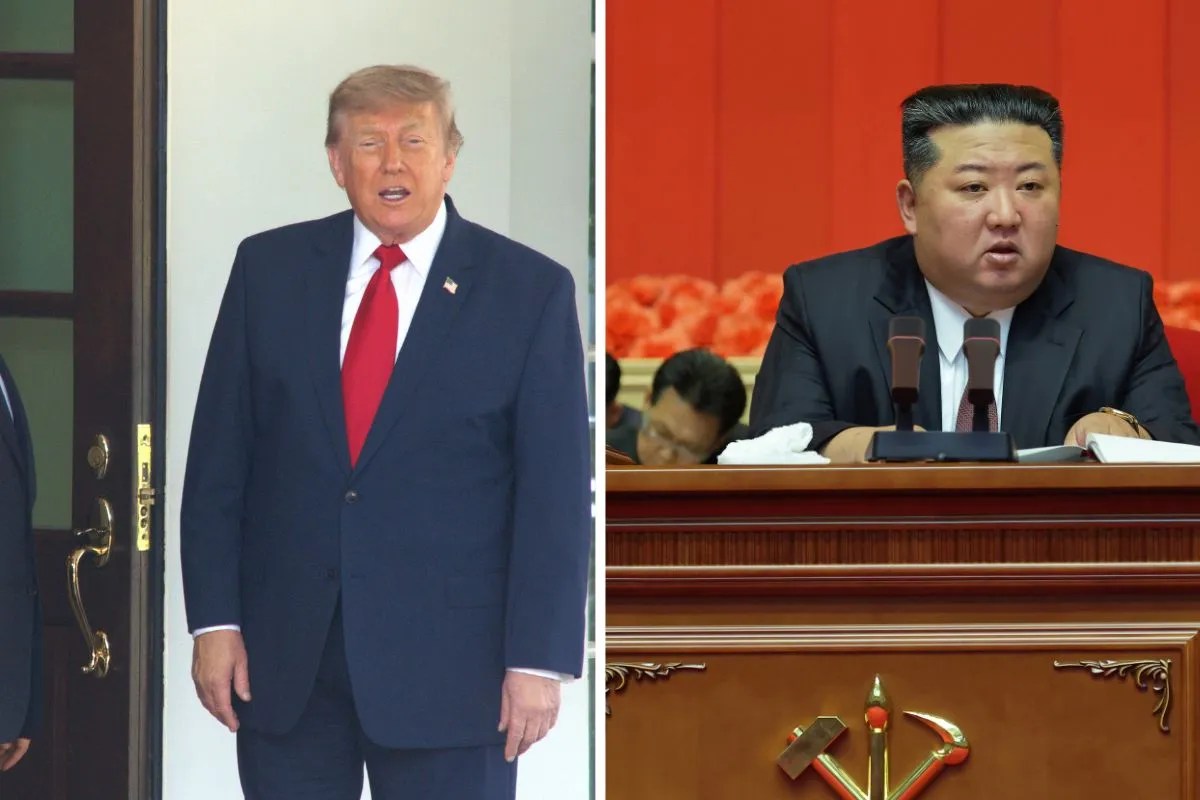
Pre-transition executive actions aimed at curtailing legislative oversight operate on a single structural principle: altering the administrative cost of inquiry before subpoena power changes hands. As reported by The Times of India regarding efforts by President Donald Trump to limit congressional scrutiny ahead of Democrats taking control of Congress, an outgoing or shifting executive majority relies on procedural friction rather than outright statutory repeal to protect executive branch operations. When a sitting administration anticipates losing unified control of the legislature, the strategic window narrows to the lame-duck period or the final months before a new congressional session convenes. Within that window, executive maneuvers target document retention protocols, agency reorganizations, personnel classifications, and executive privilege assertions to delay or neutralize incoming committee investigations.
The Structural Anatomy of Executive Insulation
Standard media coverage often frames pre-transition maneuvers as isolated political skirmishes or reactive defensive postures. In operational reality, insulating the executive branch from an incoming opposition majority requires systematic modifications across three institutional layers: administrative jurisdiction, information custody, and personnel governance. Each layer functions as a buffer that forces incoming congressional committees to spend finite political capital and calendar time litigating access rather than conducting substantive hearings.
1. Jurisdictional Fragmentation and Agency Restructuring
Congressional oversight relies on clear lines of statutory authority mapped to specific committee jurisdictions. When an executive administration reorganizes sub-agencies, transfers task forces, or shifts operational mandates between departments prior to a congressional transition, it disrupts established oversight pathways.
- Reassigning Reporting Lines: Moving an investigative or policy unit from an independent agency structure into the Executive Office of the President alters its disclosure obligations. Units operating directly under presidential advisory umbrellas frequently claim broader immunity from compelled testimony than line-level departmental bureaus.
- Decentralizing Program Execution: Splitting a contested policy initiative across multiple cabinet departments forces multiple House or Senate committees to coordinate subpoenas. In practice, overlapping committee jurisdictions create internal congressional bottlenecks, slowing down document requests before a single deposition occurs.
- Terminating Temporary Commissions: Disbanding advisory boards or interagency working groups prior to the swearing-in of a new Congress removes active institutional targets. Once a temporary body ceases to exist, incoming investigators must reconstruct its activities through archived communications rather than live operational oversight.
2. Information Custody and Archival Friction
Oversight power depends entirely on the speed and completeness of document production. Legal analysts and congressional historians note that the primary bottleneck in legislative investigations is rarely the refusal to comply, which triggers immediate contempt proceedings, but rather protracted disputes over custody, classification, and privilege review.
When executive officials prepare for a shift in congressional control, information management protocols undergo specific adjustments. Transferring records to presidential libraries, invoking deliberative process privileges across broad categories of internal communications, and tightening interagency clearance rules all extend the timeline required to fulfill a congressional subpoena. Because a standard House term lasts only two years—and the effective investigative window before the next election cycle is roughly fourteen to sixteen months—extending a privilege dispute in federal court by twelve months achieves functional immunity without ever winning a final constitutional ruling on the merits.
3. Personnel Reclassification and Departure Sequencing
Institutional memory resides in career civil servants and political appointees. Strategic timing of personnel transitions directly impacts how easily a new congressional majority can compel testimony.
- Sequenced Resignations: High-ranking political appointees who depart office before a new Congress convenes transition from sitting government officials to private citizens. While private citizens remain subject to congressional subpoenas, they no longer control agency logistics, and compelling their appearance requires separate service of process and distinct legal negotiations.
- Schedule and Status Adjustments: Reclassifying policy-adjacent roles or altering the tenure protections of specific administrators changes who holds statutory responsibility for answering committee inquiries.
- Legal Representation Protocols: Establishing formal guidelines regarding agency counsel presence during depositions—or restricting former officials from testifying without executive branch privilege reviewers present—creates a mandatory clearance step for every witness interview.
Constitutional Asymmetry and the Delay Calculus
The separation of powers under Article I and Article II of the U.S. Constitution creates an inherent structural asymmetry during periods of divided government. Congress possesses broad implied powers to investigate matters tied to potential legislation, appropriations, and agency administration. Simultaneously, the executive branch holds operational control over the physical records, security clearances, and personnel required to execute those investigations.
According to constitutional scholars and analyses of historical transitions—such as the shifts preceding the 1995, 2007, 2011, and 2019 congressional sessions—this asymmetry favors the branch that controls the administrative apparatus during the transition phase. The mathematical logic of congressional oversight is governed by a strict time-decay function:
- Committee Organization Phase (Months 1–2): Following the swearing-in of a new Congress in January, leadership must assign committee chairs, adopt oversight rules, and hire investigative staff. Subpoenas rarely issue immediately because committee rules often require formal votes or minority consultation periods.
- Voluntary Request Phase (Months 3–5): Courts generally require Congress to demonstrate that it attempted to resolve information disputes through traditional accommodation processes before enforcing a subpoena. Committees must issue voluntary document letters and wait through initial executive responses.
- Subpoena and Contempt Phase (Months 6–9): If voluntary accommodation fails, committees issue formal subpoenas, followed by extended negotiations over scope and redactions. Moving from a subpoena to a full chamber contempt vote consumes additional calendar weeks.
- Judicial Enforcement Phase (Months 10–24): Once a dispute enters federal district court, briefing schedules, appellate stays, and potential Supreme Court review routinely push final resolution past the end of the two-year congressional term. When a House term expires, pending civil subpoena enforcement actions frequently lapse or require reauthorization by the subsequent Congress.
By introducing administrative friction prior to Month 1, an outgoing majority or sitting administration pushes the start of the timeline forward, ensuring that any contested inquiry collides with the expiration of the legislative calendar.
Known Mechanisms Versus Strategic Hypotheses
Evaluating pre-transition executive actions requires separating documented procedural realities from unverified political projections.
Established Operational Facts:
- Incoming congressional majorities regularly announce investigative agendas months before taking office, giving the executive branch advance notice of targeted agencies, contracts, and policy decisions.
- Executive branch lawyers consistently rely on Office of Legal Counsel (OLC) opinions regarding executive privilege, deliberative process, and testimonial immunity for senior presidential advisors to set the boundaries of cooperation.
- Administrative rule changes, document archival transfers, and agency staffing adjustments executed prior to January 3 carry full legal force until formally rescinded, litigated, or superseded by statute.
Analytical Hypotheses and Uncertainties:
- Judicial Deference Trajectory: While delay tactics historically succeed due to slow court dockets, federal appellate courts periodically expedite separation-of-powers disputes when systemic obstruction is alleged. Assuming a guaranteed 18-month judicial delay carries significant legal risk if a district judge orders accelerated production.
- Internal Whistleblower Leakage: Tightening official document channels often increases the incentive for career officials or disaffected insiders to leak unredacted records directly to committee staff. Over-engineering formal barriers can inadvertently accelerate informal disclosures that bypass executive privilege review entirely.
- Appropriations Retaliation: An opposition-controlled House or Senate controls federal spending bills. Aggressive pre-transition insulation frequently triggers retaliatory riders in must-pass appropriations legislation, such as withholding operational funds for specific executive offices until document production benchmarks are met.
The Cost Function of Pre-Transition Stonewalling
Every defensive maneuver executed before a congressional power shift carries an operational trade-off. Treating oversight insulation as a zero-cost strategy ignores secondary institutional consequences that directly constrain executive governance during the subsequent two years.
Loss of the Accommodation Doctrine
Federal courts evaluate executive-legislative disputes under the United States v. Nixon and Trump v. Mazars frameworks, which weigh the legislative need for information against the executive branch's need for confidentiality. A core component of this judicial balancing test is whether both branches engaged in good-faith negotiation and accommodation. When an administration visibly erects structural barriers before a new Congress even convenes, incoming committee chairs present those pre-emptive actions to federal judges as evidence of bad faith. This weakens the executive branch's standing in court and increases the likelihood that judges will narrow the scope of claimed privileges.
Radicalization of Investigative Tools
When routine document requests and voluntary staff interviews are blocked by pre-transition restructuring, incoming majorities abandon incremental oversight in favor of high-friction tools. Instead of negotiating document tranches, committees move directly to unilateral depositions, public hearings featuring adverse witnesses, and subpoenas directed at third-party contractors, financial institutions, or private communications providers who cannot invoke executive privilege. Third-party subpoenas bypass agency gatekeepers entirely, stripping the executive branch of its ability to review or redact records before they reach congressional investigators.
Paralysis of Routine Legislative Priorities
Divided government still requires baseline legislative cooperation to raise the debt ceiling, fund federal agencies, confirm nominees (in the Senate), and pass reauthorization bills. Pre-emptive efforts to neutralize congressional scrutiny poison the institutional baseline between committee chairs and cabinet secretaries. Cabinet officials who execute aggressive insulation protocols prior to the transition face prolonged confirmation holds for subordinate nominees, hostile appropriations markups, and constant floor scrutiny that consumes senior leadership bandwidth.
Tactical Counter-Measures Available to Incoming Majorities
Understanding how an executive branch limits scrutiny also clarifies the exact sequence an incoming congressional majority uses to dismantle those barriers. Because executive orders and internal agency directives lack the permanence of statutory law, a new committee majority can neutralize pre-transition insulation through targeted procedural adjustments:
- Adopting Unilateral Subpoena Rules: During the opening week of a new Congress, committee majorities frequently rewrite internal rules to authorize the chair to issue subpoenas without a full committee vote, eliminating weeks of procedural debate.
- Targeting Non-Privileged Custodians: Rather than litigating executive privilege with the White House Counsel's Office, committees issue parallel subpoenas to Inspectors General, the Government Accountability Office (GAO), external vendors, and state-level partners who hold duplicate records outside executive privilege boundaries.
- Leveraging Individual Appropriations Riders: Rather than relying on slow civil litigation, appropriators insert language into departmental funding bills prohibiting the expenditure of funds for specific executive travel, salaries, or administrative offices until overdue document requests are satisfied in full.
- Compelling Testimony via Statutory Penalties: Utilizing statutory criminal contempt referrals or inherent contempt mechanisms forces executive officials to weigh personal legal exposure against institutional loyalty to prior administrative directives.
Strategic Forecast and Operational Imperative
Pre-transition maneuvers to restrict congressional oversight are fundamentally exercises in time management rather than permanent legal shields. By fragmenting agency jurisdiction, accelerating archival transfers, and sequencing personnel departures before an opposition majority takes power, an executive administration successfully raises the initial administrative cost of legislative inquiry and forces incoming committees to burn valuable calendar months on procedural litigation.
However, relying exclusively on pre-emptive administrative barriers creates a brittle defense. The optimal operational posture for managing an impending shift in congressional control is selective accommodation paired with strict privilege segmentation. Rather than executing blanket restrictions that invite expedited judicial pushback, third-party subpoenas, and appropriations retaliation, executive leadership achieves greater durable protection by releasing non-sensitive operational records rapidly while isolating core presidential communications behind narrow, legally defensible constitutional claims.