The political career of Ruben Rocha Moya did not just stumble; it collapsed under the weight of a secret meeting that changed the geography of Mexican power. For months, the Governor of Sinaloa maintained a precarious balance between federal loyalty and local realities, but the arrest of Ismael "El Mayo" Zambada on U.S. soil stripped away his remaining cover. Facing direct accusations from the Department of Justice and the literal testimony of a drug lord, Rocha Moya has vacated his post. This is not a standard leave of absence. It is the tactical retreat of a man caught between a vengeful cartel and a neighbor to the north that has stopped playing by the old rules of diplomatic courtesy.
The Zambada Letter and the Culiacan Betrayal
On July 25, 2024, the world watched as a private plane landed in New Mexico carrying two of the most significant figures in the history of organized crime: El Mayo Zambada and Joaquin Guzman Lopez. While initial reports suggested a clean surrender or a simple kidnapping, the truth was far more damaging to the Sinaloa administration. Zambada released a statement through his lawyers that hit the state capital like a precision-guided munition. He claimed he was lured to a meeting at a ranch outside Culiacan under the guise of mediating a political dispute between Rocha Moya and a local rival.
The Governor's defense was immediate and frantic. He claimed to be in Los Angeles on that day, providing flight logs and records to prove his absence. However, the U.S. intelligence community and the Mexican Attorney General’s Office (FGR) began finding holes in the timeline. The "vacation" looked less like a coincidence and more like an alibi prepared in advance. If the Governor was indeed the intended mediator, his absence suggests he either knew the trap was set or was intentionally clearing the stage for a violent transition of power within the Sinaloa Cartel.
The implications for the Mexican state are staggering. When a governor is named as a primary witness—or participant—in the abduction of a high-level target for the U.S. government, the "hugs not bullets" policy of the federal government ceases to be a philosophy and becomes a liability. Rocha Moya’s temporary withdrawal is a desperate attempt to stop the bleeding before the federal government is forced to strip his immunity entirely.
The Architecture of a Narco State
Sinaloa is not a typical province. It is the headquarters of a global logistics enterprise. For decades, the relationship between the governor’s palace in Culiacan and the hills of the Sierra Madre has been governed by an unwritten code. This code ensures that while the cartels move their product, the streets remain relatively calm and the economy continues to function. Rocha Moya, a former academic, was supposed to be the man who brought "Institutional Transformation" to this volatile region. Instead, he became a case study in how the cartel absorbs the state.
The "why" behind this collapse is rooted in the fragmentation of the Sinaloa Cartel itself. With the "Los Chapitos" faction—the sons of El Chapo—at war with the old guard represented by Zambada, the political leadership was forced to pick a side. In the past, a governor could remain neutral. Today, neutrality is seen as a betrayal by both sides. Rocha Moya’s administration was increasingly viewed as being under the thumb of the Chapitos, a move that alienated the Zambada faction and, crucially, the U.S. agencies that preferred the "stability" of the old guard.
The Financial Chokehold
Organized crime in Sinaloa is not just about fentanyl and cocaine; it is about the legitimized economy. The "business" side of this crisis involves the following sectors that are now under intense scrutiny:
- Agricultural Exports: Sinaloa is Mexico’s breadbasket. The cartels use legitimate produce shipments to mask the movement of contraband, and the state government’s control over permits is a vital tool for this synergy.
- Infrastructure Contracts: Millions of pesos in state funds for road construction often end up in the pockets of companies with ties to the Sinaloa Cartel’s money-laundering wings.
- Real Estate Development: The skyline of Mazatlan and Culiacan has been transformed by "new money" that the Rocha Moya administration was loath to investigate.
When the U.S. Treasury Department begins looking at a governor, they don't just look at his bank accounts. They look at the state’s procurement history. The sudden exit of Rocha Moya suggests that the financial trail has become too hot for the federal government in Mexico City to ignore any longer.
Washington's New Strategy of Public Humiliation
The U.S. Department of Justice has shifted its tactics. In previous decades, an investigation into a sitting governor would have been handled with back-channel diplomatic pressure. Not anymore. By allowing the Zambada accusations to enter the public record and by naming Rocha Moya in the broader context of the "Chapitos" indictment, Washington has effectively ended his political life.
This is a deliberate message to the rest of Mexico’s governors. The U.S. is signaling that "sovereignty" will no longer serve as a shield for officials who facilitate the fentanyl trade. The pressure on the Mexican presidency to clean house is immense. If Rocha Moya is allowed to return to power without a full investigation, it will be viewed in Washington as a direct provocation, potentially leading to the designation of cartels as foreign terrorist organizations—a move that would allow for even more aggressive U.S. intervention.
The Power Vacuum in Culiacan
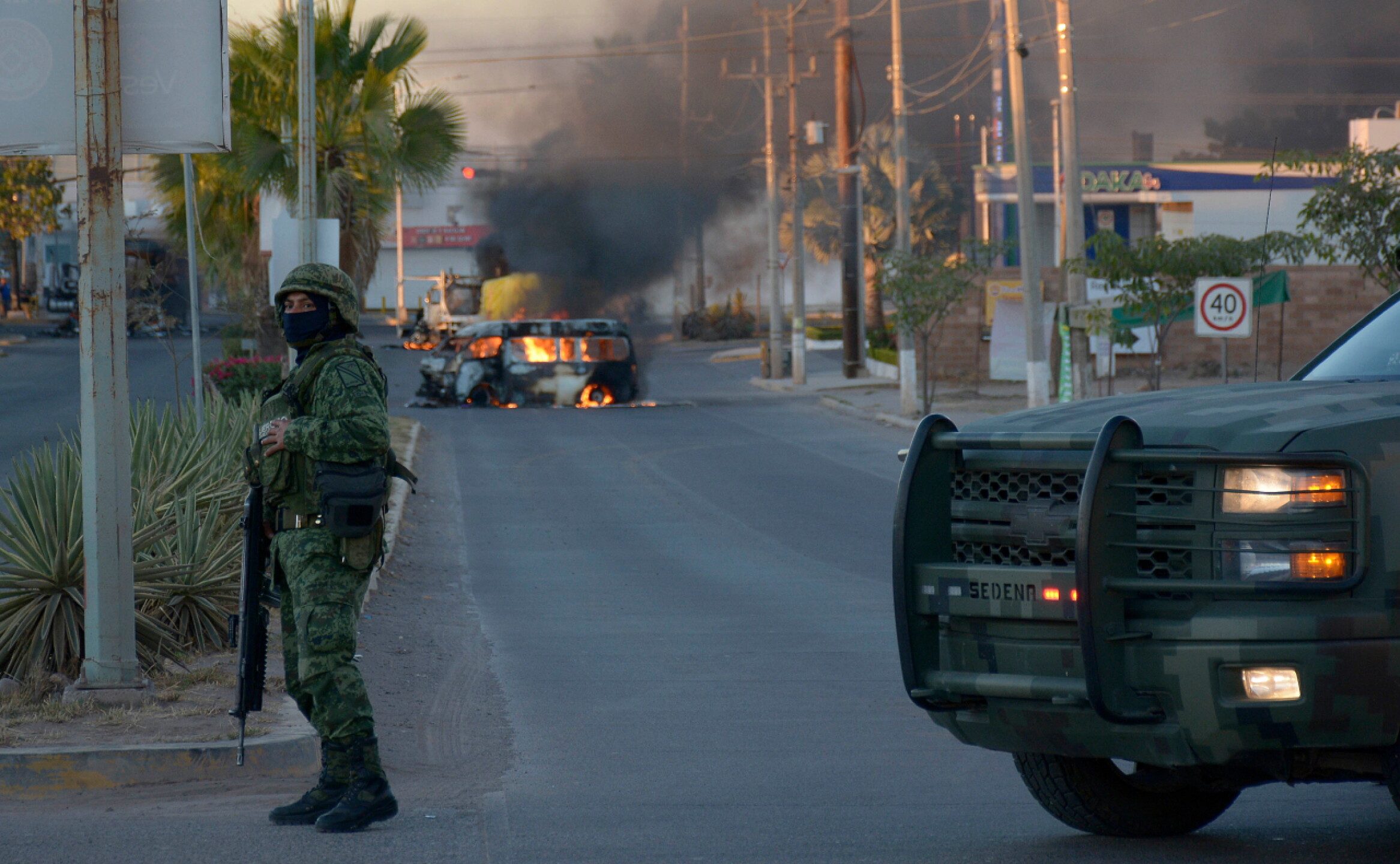
What happens when the man at the top disappears? In Sinaloa, the answer is usually found in the streets. The absence of a recognized leader in the governor's chair creates a vacuum that both the Chapitos and the Zambada loyalists will try to fill. We are already seeing the signs of this transition. Increased military presence in the state has not stopped the "disappearances" or the tactical skirmishes on the outskirts of the city.
The federal government has sent in hundreds of Special Forces troops, but their mission is unclear. Are they there to protect the people, or are they there to ensure that the "correct" faction of the cartel wins the current civil war? Rocha Moya’s departure removes the middleman. Now, the federal government is in a direct, unmediated confrontation with the most sophisticated criminal organization on the planet.
The Failure of the Institutional Model
Rocha Moya was the face of a new era. He was supposed to prove that the ruling party could govern Sinaloa without the shadow of the cartel. That experiment has failed. The failure lies in the belief that one can reform the system from within while the primary source of the state's wealth remains illegal. You cannot have a clean government in a region where the largest employer is a shadow syndicate.
The Governor's "temporary" retirement is a semantic fiction. In the history of Mexican politics, a governor who leaves under the cloud of a DEA or DOJ investigation rarely returns to the podium. They either vanish into a life of quiet exile or they are eventually escorted to a federal prison. The fact that the federal government allowed him to step down rather than defending him to the end shows that his utility has expired.
The Road to Extradition
The real fear for Rocha Moya isn't losing his job; it's the prospect of a dark blue suit and a courtroom in Brooklyn. The precedent set by Genaro Garcia Luna, the former Secretary of Public Security now sitting in a U.S. prison, looms large. If the DOJ can prove that Rocha Moya used state resources to facilitate the kidnapping of Zambada or provided protection to the Chapitos, an extradition request is a matter of "when," not "if."
His legal team is likely working on a strategy of total denial, but the evidence gathered from the New Mexico landing site—including forensic data from the ranch where Zambada says he was taken—is reportedly damning. The bloodstains found at the site match the DNA of a former commander who was part of the Governor's circle. The physical evidence is starting to match the narco-narrative.
The Fentanyl Factor
The urgency behind the Rocha Moya investigation is driven by the body count in the United States. Fentanyl has changed the political math. The U.S. public no longer views Mexican drug politics as a distant problem; they see it as a domestic health crisis. This has stripped the Mexican government of its usual leverage. Every time a governor like Rocha Moya is linked to the cartels, it fuels the fire of those in the U.S. calling for military action across the border.
The Governor’s exit is a sacrificial offering. By removing him, the Mexican state hopes to cool tensions with Washington and signal a "new" commitment to the rule of law. But for the people of Sinaloa, it is just another chapter in a long, violent book. They know that while governors come and go, the men in the mountains remain.
The collapse of the Rocha Moya administration is the clearest sign yet that the old pact is dead. The "Pax Mafiosa" that allowed for a quiet coexistence between the state and the cartels has been replaced by a chaotic, three-way war between the government, the old guard, and the new generation of narcos. In this environment, a governor is not a leader; he is a target.
The state of Sinaloa now faces a choice between a total federal takeover or a slow descent into further warlordism. The temporary nature of Rocha Moya's departure is a lie that everyone in Mexico City understands. He is gone because the secret is out, and in the world of high-stakes geopolitics, a secret that becomes public is a death sentence for any political career. The next governor will not be looking to "transform" the state; they will be looking to survive the first week in office.
The evidence is clear. The witnesses are talking. The plane has landed. For Ruben Rocha Moya, the flight back to Culiacan is a journey he will never truly complete. There is no coming back from a betrayal of this magnitude, especially when the person betrayed was the man who held the keys to the kingdom for forty years.
The Mexican government must now decide if it will continue to protect its own or if it will finally admit that the line between the palace and the plaza has been erased. The world is watching the border, but the real story is happening in the boardrooms and ranches where the fate of a nation is traded for a few more days of survival.