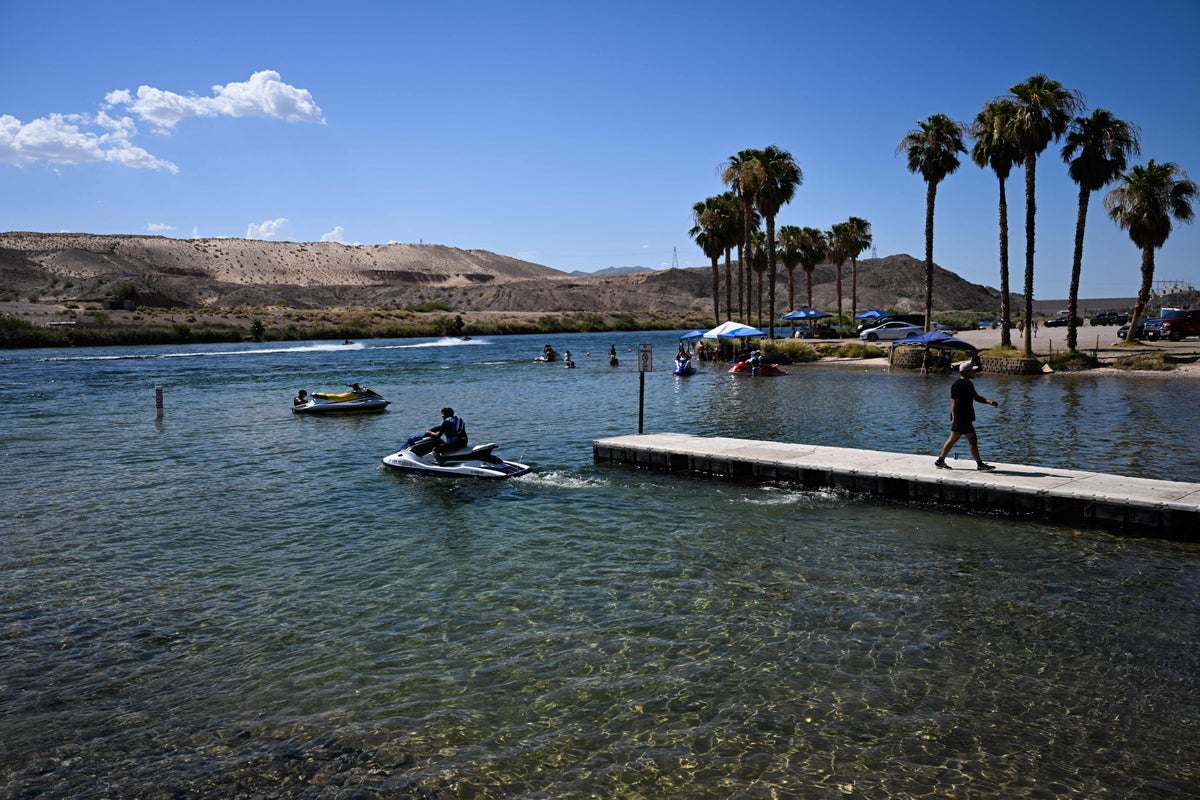
The incident at the Colorado River was over in less than two minutes. A gust of wind, a reaching hand, and a sudden plunge into moving water turned a routine outing into a recovery operation. While local reports often frame these events as freak accidents, a deeper look at the mechanics of river drownings reveals a recurring pattern of human psychology clashing with physics. When a person jumps into a fast-moving current to retrieve a trivial item like a hat, they aren't making a conscious choice to trade their life for a piece of apparel. They are falling victim to a survival reflex that miscalculates the power of hydraulic force.
The Colorado River is not a swimming pool. It is a massive, cold, and unpredictable machine. Every year, visitors underestimate the sheer weight of the water moving against them. A river flowing at just four miles per hour exerts about 66 pounds of force against a person's legs. If that speed doubles to eight miles per hour, the force quadruples to over 250 pounds. Most people cannot stand, let alone swim, against that kind of pressure.
The Psychology of the Split Second
The decision to chase an object into the water happens in the prefrontal cortex, but the execution is often driven by an instinctive "grab" reflex. We are wired to retrieve things we drop. This impulse is so strong that it frequently bypasses the logical assessment of risk. In the context of a riverbank, this micro-decision is lethal because it ignores the reality of cold-water shock.
Cold-water shock is a physiological response that occurs the moment the body hits water below 60 degrees Fahrenheit. The Colorado River, fed by snowmelt, rarely climbs far above that mark. The immediate effect is an involuntary gasp. If your head is underwater when that gasp happens, you inhale water directly into the lungs. This isn't drowning in the way movies portray it. There is no splashing or shouting. It is a silent, internal catastrophe that happens before the victim even realizes they are in trouble.
The Myth of the Strong Swimmer
Many of the individuals who lose their lives in river accidents are described by family members as "strong swimmers." This label is a dangerous comfort. Swimming in a controlled environment like a chlorinated gym pool bears no resemblance to navigating a natural waterway. In a pool, the water is static. In a river, the medium itself is moving, often carrying debris and creating "strainers"—submerged branches or rocks that allow water to pass through but trap human bodies like a sieve.
Once a person is caught in a strainer, the force of the river pins them down. Even a team of professional rescuers can struggle to pull a victim free against that much hydraulic weight. The victim's swimming ability becomes irrelevant the moment they are wedged against an underwater obstacle.
Why Rescue Operations Frequently Fail
When a bystander sees someone go under, their first instinct is to jump in after them. This is the "double drowning" scenario that first responders dread. Without proper equipment, a second person in the water simply provides a second victim for the current.
Rescuing someone from a fast-moving river requires specialized training and tools that the average hiker or boater does not possess. Tensioned rope systems, throw bags, and specialized swift-water vests are the bare minimum for a safe extraction. Without these, the water wins. The geography of the Colorado River, with its steep banks and slick rocks, makes it nearly impossible for a person on the shore to reach out and pull someone back in without being dragged in themselves.
The Hidden Danger of Low Head Dams and Eddies
Even in sections of the river that appear calm, there are hidden features that create "keep holes." These are areas where water flows over an obstruction and creates a recirculating current. An object—or a person—caught in this cycle will be tumbled over and over, pushed to the bottom, brought to the surface, and then sucked back under. To an observer on the bank, the surface might look like a gentle bubbling. Underneath, it is a washing machine of relentless pressure.
Retrieving a hat or a pair of sunglasses from such a spot is a fool’s errand. Yet, the visual deception of the water's surface leads people to believe they can simply reach in and pull the item out. The moment their center of gravity shifts too far, the river claims them.
The Real Cost of Negligence
We live in a culture that prioritizes the "perfect shot" or the preservation of gear over personal safety. While the Colorado incident was about a hat, the underlying issue is a lack of respect for the environment. National parks and river management agencies spend millions on signage and education, yet the numbers of preventable drownings remain stubbornly high.
This isn't a problem that can be solved with more life jackets alone, although wearing one would save the majority of those who fall in. The real solution lies in changing the internal narrative of the visitor. You have to accept that if something falls into the river, it is gone forever. The item no longer belongs to you; it belongs to the water.
Infrastructure and Warning Systems
Some critics argue that high-risk areas should be fenced off, but the sheer scale of the Colorado River makes this impossible. Thousands of miles of riverbank cannot be caged. The responsibility falls squarely on the individual. We have become so accustomed to the safety of urban environments that we have forgotten how to read the language of the wilderness. A "gentle" bend in the river is actually a high-pressure zone where the water is deepest and fastest. A "calm" pool is often a deep trap with zero visibility.
The Physics of the Recovery
When a body is lost to the river, the search process is grueling and often unsuccessful for days or weeks. The current can move a person miles from the original site in a matter of hours. Professional divers face extreme risks, navigating zero-visibility water filled with jagged rocks and tangled fishing lines.
The trauma inflicted on rescue teams and the families left behind far outweighs the value of any physical object. The man who died trying to save his hat left behind a void that no piece of headwear could ever justify. This is the brutal reality of river recreation. The margin for error is non-existent.
The Gear Fallacy
There is a false sense of security that comes with modern outdoor gear. High-end hiking boots and moisture-wicking clothing give people the impression that they are equipped for the elements. In reality, heavy clothing and boots act as anchors once they are saturated. A pair of leather boots can weigh ten pounds when wet, dragging a swimmer's legs down and making it impossible to maintain a horizontal floating position.
If you find yourself in the water, the only chance of survival is to flip onto your back, point your feet downstream to buffer against rocks, and look for an eddy where the water slows down. You do not fight the current. You do not try to swim back to the spot where you fell in. You move diagonally toward the shore, accepting that the river will carry you several hundred yards downstream before you can make landfall.
A Necessary Shift in Perspective
The Colorado River drowning is a grim reminder that nature does not negotiate. The "why" behind these deaths is almost always the same: a momentary lapse in judgment followed by a catastrophic encounter with physics. We must stop viewing the wilderness as a backdrop for our leisure and start viewing it as a powerful, indifferent force.
When you lose an item to the current, let it go. The hat is replaceable. Your life is a singular event. There is no "strong swimmer" exception to the laws of hydraulics and cold-water shock. The next time you stand on the edge of a moving river, look at the water not as a scenic vista, but as a heavy, fast-moving wall of pressure. If you wouldn't jump in front of a moving truck to save your hat, do not jump into the Colorado.
Stay on the bank. Let the river have the hat.