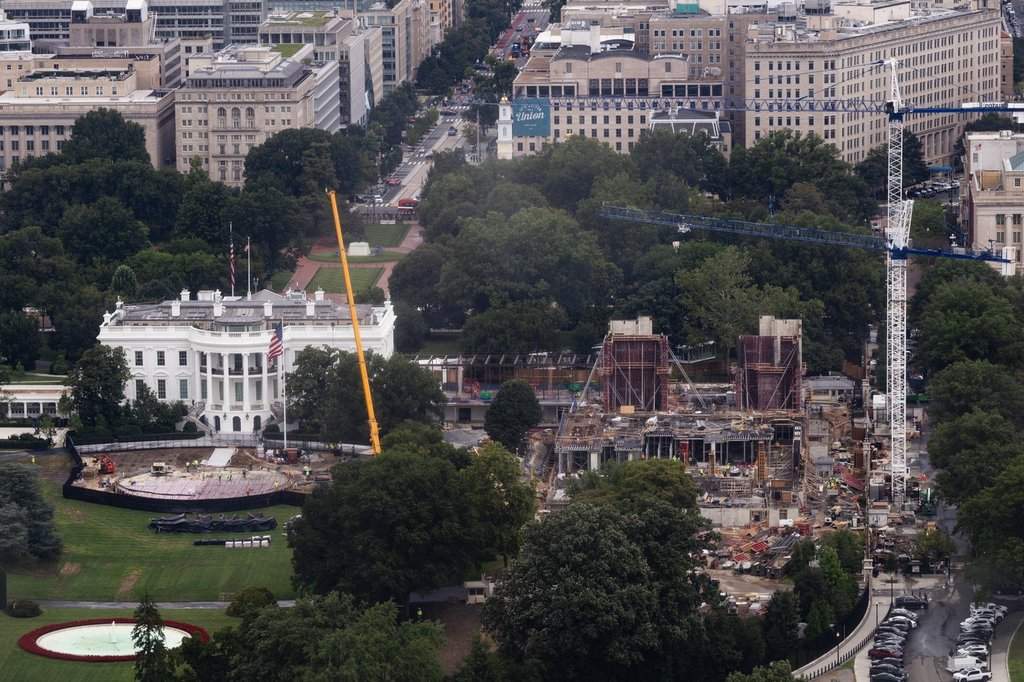
The legal establishment loves a good procedural parlor trick. Watch the headlines spin the latest appellate court ruling on the White House ballroom construction as a monumental triumph for the rule of law, structural preservation, and executive restraint. It makes for clean theater. It gives preservationists a reason to pop cheap champagne and congratulate each other on protecting the sacred aesthetic geometry of Pennsylvania Avenue.
It is also an absolute waste of time, money, and institutional capital.
Strip away the legalistic hand-wringing and the breathless media framing about historic preservation acts, and you are left with a simple, brutal reality: temporary injunctions and appellate posturing are not going to stop executive infrastructure projects that presidents actually want built. If history teaches us anything about how executive power operates in Washington, it is that federal real estate always bends to the occupant of the Oval Office, regardless of how many circuit judges try to clutch their pearls over zoning aesthetics.
The lazy consensus dominating the current discourse is that this court order represents a permanent speed bump or a viable check on presidential overreach. That is a fantasy cooked up by people who have never spent ten minutes inside the federal procurement machine or watched how executive branch agencies navigate injunctions.
The Anatomy Of A Paper Tiger
Let us look at the mechanics of what is actually happening here. An appellate court issues an order halting construction on a temporary or semi-permanent structural addition intended to host state dinners and large gatherings. The legal briefs fly. Pundits argue over the minutiae of the National Historic Preservation Act and whether an executive mansion constitutes a standard federal office building subject to routine architectural oversight.
This misses the point entirely.
I have watched institutions burn millions of dollars fighting executive actions that possess political momentum. The people pushing to block this ballroom think they are fighting a battle over bricks, mortar, and historical integrity. They are not. They are fighting an immovable political imperative disguised as a construction project.
When a president decides to build a ballroom, the project is never just about square footage. It is about utility, ego, and the functional modernization of a severely outdated 18th-century office and residence. The White House has always been a sprawling, multi-use workspace that doubles as a national stage. Trying to freeze its physical evolution through judicial delays is like trying to stop a freight train by tossing a legal brief on the tracks.
To understand why this lawsuit is ultimately toothless, we have to look at the historical precedent of executive renovations. Every single modern administration has altered, gutted, or modified the White House footprint to suit its operational needs. Harry Truman literally gutted the entire interior of the executive mansion down to its exterior shell in the late 1940s, dropping in a completely new steel-and-concrete frame while preserving the facade. Franklin Roosevelt added the indoor pool and the West Wing press briefing room. Jackie Kennedy spearheaded a historic restoration that turned into a near-total interior overhaul.
Did the courts stop them? No. Because the executive branch wields sweeping statutory and inherent authority over the management of its primary official residence.
The False Promise Of The Preservation Lobby
The legal challenge against the ballroom leans heavily on environmental and historic preservation statutes, arguing that proper impact studies and architectural reviews were bypassed in a rush to break ground.
Here is where the experts get it wrong: they assume the statutory framework governing federal buildings applies to the executive residence in the same way it applies to a regional IRS office in Kansas City. It does not. The constitutional separation of powers grants the executive broad latitude over the maintenance and operation of the White House. While advisory councils like the National Capital Planning Commission or the Commission of Fine Arts hold consultative roles, their veto power is largely symbolic when pitted against a determined executive.
Imagine a scenario where the appellate court ruling stands permanently, forcing the administration to halt all work, pack up the heavy machinery, and submit to a multi-year environmental impact assessment and public comment period. What happens then? The project simply goes into stasis until an administration takes power with zero interest in preserving the status quo ante, at which point the permits are fast-tracked, the bureaucrats are replaced or sidelined, and the steel goes up anyway.
The preservationists winning these temporary courtroom victories are popping champagne over a delay, not a defeat. They are playing checkers while the executive branch is playing three-dimensional chess with emergency authorities and national security justifications.
Furthermore, let us talk about the hypocrisy inherent in the opposition. For decades, critics have slammed the White House for being functionally inadequate for modern diplomatic events. State dinners routinely require massive, expensive, temporary tents erected on the South Lawn, churning up the turf, costing hundreds of thousands of dollars per event in setup and breakdown, and creating massive logistical and security nightmares for the Secret Service.
Building a permanent, climate-controlled, secure ballroom on the grounds is not an act of wanton architectural vandalism; it is a long-overdue infrastructure upgrade. Yet the legal resistance treats the lawn like a pristine archaeological dig site that must remain untouched, ignoring the reality that the White House is a living, breathing command center that must adapt to the 21st century.
Why The Litigation Is A Distraction
By focusing on the courtroom battle, critics of the administration are falling into a classic political trap. They are spending their finite resources and public goodwill on a lawsuit that offers zero strategic upside, even if they win every motion.
Winning a preliminary injunction against a construction project does not shift public opinion. It does not alter the underlying political dynamics. It merely delays the inevitable while feeding the outrage industrial complex on cable news and social media.
If you want to check executive power, fighting over floor plans and crown molding is the absolute worst way to do it. It trivializes real institutional oversight. When watchdog groups and appellate courts spend their time litigating whether a president can build an extension for hosting foreign dignitaries, they look petty. They look like obstructionists who care more about brick-and-mortar nostalgia than the functional capacity of the federal government.
Real accountability means challenging the expansion of actual emergency powers, scrutinizing secret spending, and pushing back against unconstitutional regulatory overreach. It does not mean filing emergency motions because you do not like the architectural style of a new reception hall.
The Real Cost Of Stalling
Every month this litigation drags on, taxpayer money is funneled into legal fees, contracts are put into limbo, and the cost of eventual construction scales upward due to inflation and supply chain friction. The courts are being used as a proxy war for political grievances that belong in the ballot box, not the district court docket.
The plaintiffs in this case want you to believe they are the last line of defense for American heritage. They are not. They are actors in a well-choreographed kabuki play designed to generate donations, secure press coverage, and project an illusion of control where none exists.
Stop treating this appellate ruling as a watershed moment. Stop pretending that a circuit court panel has suddenly discovered a constitutional mechanism to halt presidential real estate projects. The blueprints are drawn, the political will is absolute, and the concrete will eventually cure.
Let the lawyers bill their hours and the preservationists write their indignant op-eds. When the dust settles, the ballroom will stand, and the legal briefs will be quietly recycled into pulp.