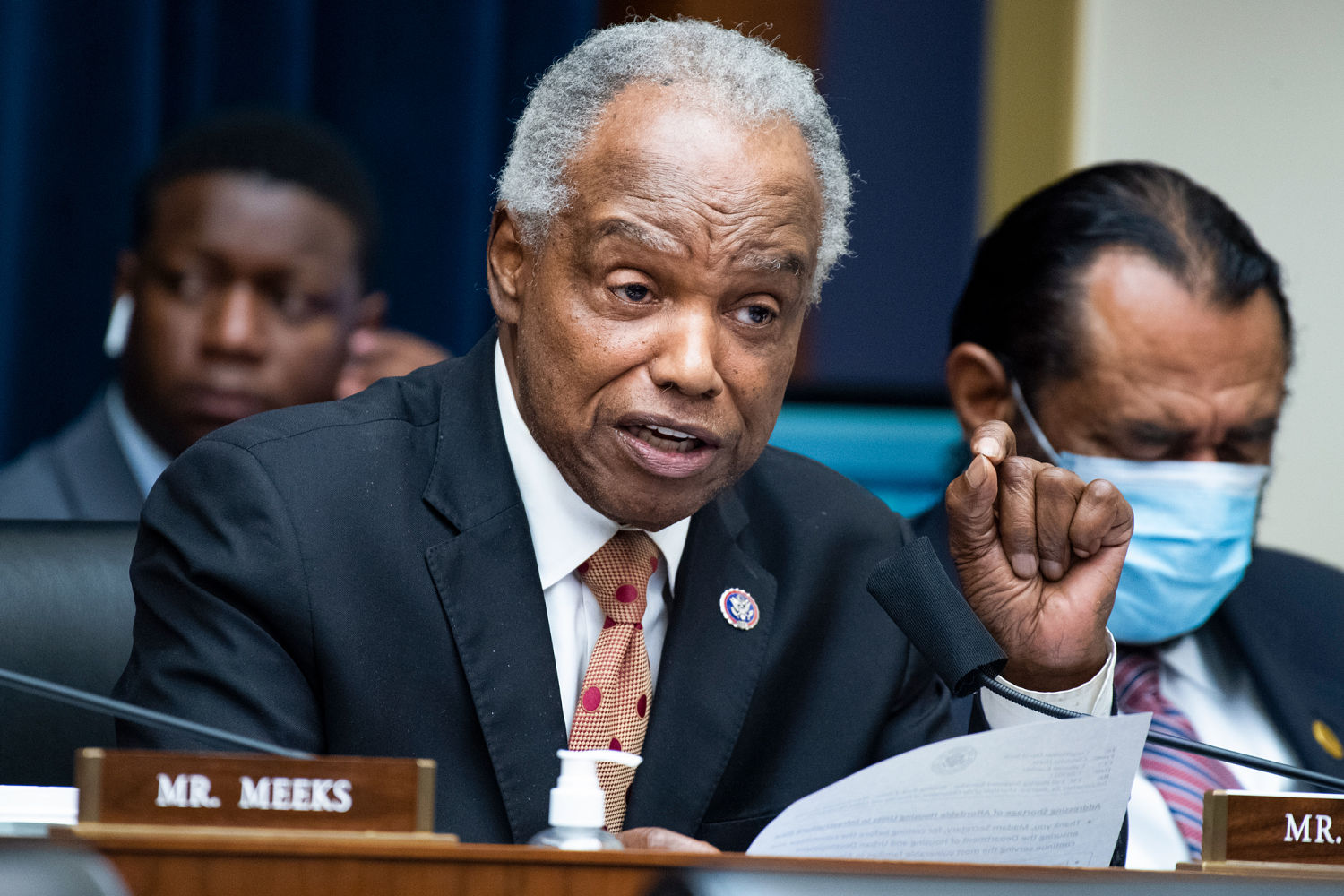
Representative David Scott, the towering Georgia Democrat and first Black chairman of the House Agriculture Committee, died Wednesday at the age of 80. His passing marks the end of a 50-year career that spanned from the segregated South to the highest echelons of federal power. While the immediate headlines focus on the loss of a legislative giant, the underlying reality is more turbulent. Scott died while actively campaigning for a 13th term, stubbornly defying calls for retirement despite years of visible physical decline and a primary field that had already begun to move on without him.
The vacancy leaves the Democratic Party in a scramble. Georgia’s 13th District, a safely blue stronghold encompassing parts of Clayton, Henry, and Douglas counties, is no longer just a seat to be held; it is a prize in an ideological tug-of-war. Scott’s death doesn't just subtract a vote from the Democratic caucus; it removes a cornerstone of the old-guard "Blue Dog" moderate wing at a time when the Atlanta suburbs are hungry for a more aggressive brand of progressivism.
The Architect of the New South
David Scott was not a product of modern viral politics. He was a creature of the retail politics era, a man who understood that power in Georgia was built through church pews and community centers. Born in South Carolina and educated at FAMU and Wharton, Scott brought a businessman’s precision to the messy work of governance. He founded a successful advertising firm before jumping into the Georgia House of Representatives in 1974. His motivation was personal and visceral. The murder of Alberta Williams King, mother of Dr. Martin Luther King Jr., at Ebenezer Baptist Church that same year convinced Scott that Black leadership was a matter of survival, not just service.
He spent nearly three decades in the Georgia legislature before moving to Washington in 2003. In the U.S. House, he carved out a niche that frequently frustrated the left wing of his party. He was a Democrat who voted for the 2008 bank bailouts (after securing $14 billion for homeowners) and initially opposed the Iran nuclear deal. This independence made him a formidable figure. He wasn't interested in being a rubber stamp; he was interested in being a power broker.
Breaking the Agriculture Ceiling
In 2021, Scott achieved what many thought impossible for a representative from a suburban-urban district. He became the first Black chairman of the House Agriculture Committee. This was not a symbolic appointment. The committee controls the Farm Bill, a massive piece of legislation that dictates everything from crop subsidies to the Supplemental Nutrition Assistance Program (SNAP).
For Scott, the Agriculture Committee was a tool for civil rights. He used his gavel to push for funding for 1890 Land-Grant Universities—historically Black colleges that had been systematically underfunded for a century. He saw the link between the rural farmer and the urban food stamp recipient, a bridge he walked with a MBA's logic and a preacher's cadence. Even as his gait slowed and his voice grew raspy, his grip on this specific lever of power never loosened.
The Quiet Crisis of Incumbency
The "why" behind Scott’s decision to run again in 2026, despite his obvious frailty, is the part of the story most obituaries will skip. In late 2024, the tension reached a breaking point when Scott was filmed in a wheelchair at the Capitol. He reacted with flashes of the old fire, reportedly yelling at a reporter for documenting the moment. To Scott, the wheelchair was a sign of a body failing, not a mind. To his critics, it was a symbol of a district being left behind.
The 13th District has changed since 2003. It has become younger, more diverse, and more impatient. Candidates like Everton Blair Jr. and Jasmine Clark had already raised significant sums to challenge Scott in the May 19 primary. They didn't frame their campaigns as attacks on his legacy, but as critiques of his absence. The data supported their claims. Scott’s missed votes and limited campaign trail appearances in 2025 and early 2026 created a vacuum that local leaders were eager to fill.
The tragedy of Scott’s final months was the collision between his legendary work ethic and the biological reality of aging. He died as a "member-elect" in spirit, still trying to prove he could outwork men and women half his age. His refusal to step aside means the 13th District now faces a special election cycle that will be expensive, loud, and deeply divisive.
A Power Vacuum in the Midterms
Scott’s death has immediate ramifications for the House of Representatives. In a chamber where the Republican majority is razor-thin, every empty seat is a mathematical crisis for leadership. While the 13th District will almost certainly stay in Democratic hands, the timing is brutal. We are in the thick of a midterm year.
The Contenders
- Jasmine Clark: A state representative with a PhD in microbiology. She represents the "science-forward" and younger wing of the party, focusing on healthcare and reproductive rights.
- Everton Blair Jr.: The first person of color elected to the Gwinnett County Board of Education. He represents the suburban shift and has been vocal about Scott's "absence" from the district.
- Emanuel Jones: A veteran state senator who shares much of Scott’s moderate, business-friendly DNA.
The coming weeks will see these candidates shift from respectful mourning to a scorched-earth battle for the seat. There is no heir apparent. Scott did not designate a successor, perhaps because he truly believed he would never need one.
The Legacy of the 13th
We must view David Scott's career as a bridge. He connected the Civil Rights Movement's ground-game tactics to the modern administrative state. He proved that a Black man from the South could dictate terms to the multi-billion dollar agriculture industry.
However, his final act serves as a cautionary tale about the nature of political power. It is rarely given up; it is usually taken. By holding on until the very end, Scott ensured his legacy would be tied not just to his legislative wins, but to the chaotic transition he left in his wake.
The 13th District is now the front line for the future of the Democratic Party in the South. The voters there are no longer looking for a pioneer. They are looking for a representative who can keep pace with a Georgia that is moving faster than David Scott’s body finally allowed. The gavel has dropped. The race to pick it up starts today.