The air inside a luxury tour bus is a specific kind of micro-climate. It smells of recycled air conditioning, expensive peppermint, and the faint, dusty scent of high-altitude travel. On a Tuesday afternoon in the heart of Switzerland, that climate was one of quiet contentment. Eleven people sat behind reinforced glass, watching the jagged, postcard-perfect peaks of the Alps slide by. They were moving through a landscape defined by its precision—by watches that never lose a second and tunnels carved through granite with mathematical certainty.
Then, the precision vanished.
Safety is an illusion we buy with a ticket. We trust the steel frame, the fire-retardant upholstery, and the professional at the wheel. But mechanics are subject to the laws of entropy. Somewhere between the soaring vistas and the dark mouth of a mountain pass, a spark met a leak. What followed was not a gradual breakdown, but a violent transformation of a sanctuary into a furnace.
The Geography of a Nightmare
The Swiss authorities, usually stoic and brief, described a scene of absolute devastation. The bus was traveling near a stretch of road where the grandeur of the mountains often masks the technical difficulty of the terrain. When the fire began, it didn't smolder. It roared.
Imagine, for a moment, the sensory shift. One second, you are adjusted to the hum of the engine and the muffled conversation of your seatmate. The next, the cabin is filled with the acrid, choking reality of burning polymer. It is a thick, black smoke that doesn't just block your vision; it steals your breath. In the tight confines of a vehicle designed for comfort, space becomes the enemy. The very glass that offered the beautiful views becomes a transparent wall between life and the thin mountain air outside.
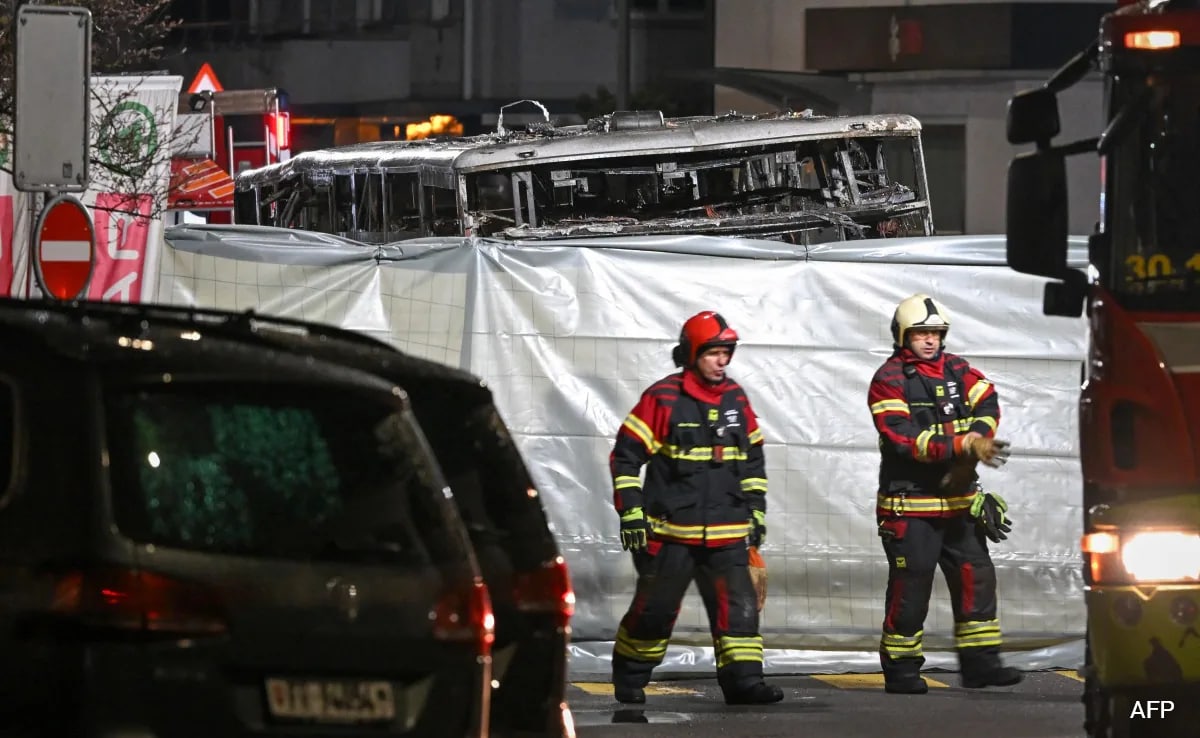
The toll was exact and heartbreaking: six lives claimed by the flames, five others fighting for theirs in local infirmaries.
The Invisible Stakes of the Road
When we read a headline about a transit disaster, we often process it as a statistic—a data point in the ledger of "accidents happen." But every seat on that bus represented a life's worth of momentum.
Consider a hypothetical passenger—let's call her Elena. She isn't real, but she represents the reality of those who were there. Elena spent months planning this trip. She bought a new camera. She told her neighbors to water the plants. She was mid-sentence, perhaps talking about where they would stop for dinner, when the world turned orange. For the survivors, the trauma isn't just the fire; it's the shattering of the "it won't happen to me" contract we all sign when we leave the house.
The Swiss police and rescue teams arrived to find a skeleton of charred metal. The speed with which a modern vehicle can be consumed is a terrifying testament to the energy stored in fuel and synthetic materials. Even in a country world-renowned for its emergency response times and alpine rescue expertise, some windows of opportunity are too small to climb through.
The Anatomy of an Alpine Response
Switzerland treats its roads like veins. When a blockage occurs—especially one involving fire—the response is a synchronized surge of helicopters, thermal imaging, and forensic specialists.
The investigation is currently focused on the mechanical heart of the bus. Was it a ruptured fuel line? An electrical short in the climate control system? These questions matter to the engineers, but for the families of the six who didn't make it, the "why" is a cold comfort. The reality is a vacant chair at a dinner table and a suitcase that will never be unpacked.
Road travel in the Alps is unique because of the isolation. You are often miles from the nearest village, suspended on a ribbon of asphalt between a rock face and a sheer drop. When a vehicle catches fire in this environment, the geography that makes the trip beautiful also makes it a trap.
The Fragility of the Journey
We live in an era where we believe we have conquered the elements. We have bored through the mountains and built bridges over the clouds. We feel invincible in our climate-controlled bubbles. Yet, this tragedy serves as a brutal reminder that we are always, at every moment, at the mercy of the machines we build and the physics they inhabit.
There is no "Conclusion" to a story like this. There is only the aftermath. There is the heavy silence of the Swiss valleys after the sirens have faded. There is the sight of investigators sifting through ash, looking for watches that stopped at the exact moment the heat became too much.
The five survivors will carry the scent of that smoke for the rest of their lives. They will look at buses, those ubiquitous staples of global tourism, and see something different than the rest of us. They will see the thin line between a holiday and a catastrophe.
Tonight, the mountain pass is clear again. The charred wreckage has been hauled away. The soot has been washed from the pavement. The Alps remain, indifferent and towering, while somewhere, six families are beginning the long, silent process of grieving for a journey that ended much too soon.
The mountains do not remember the fire, but the world should remember the names of those who were just trying to see the view.