Nuclear power has a branding problem that facts can't seem to fix. We want clean energy, but we panic about the leftovers. For decades, the global strategy for highly radioactive spent fuel was basically procrastination. Governments kicked the can down the road, storing lethal materials in temporary cooling pools and dry casks above ground. It's a temporary fix for a permanent problem.
Finland changed that game.
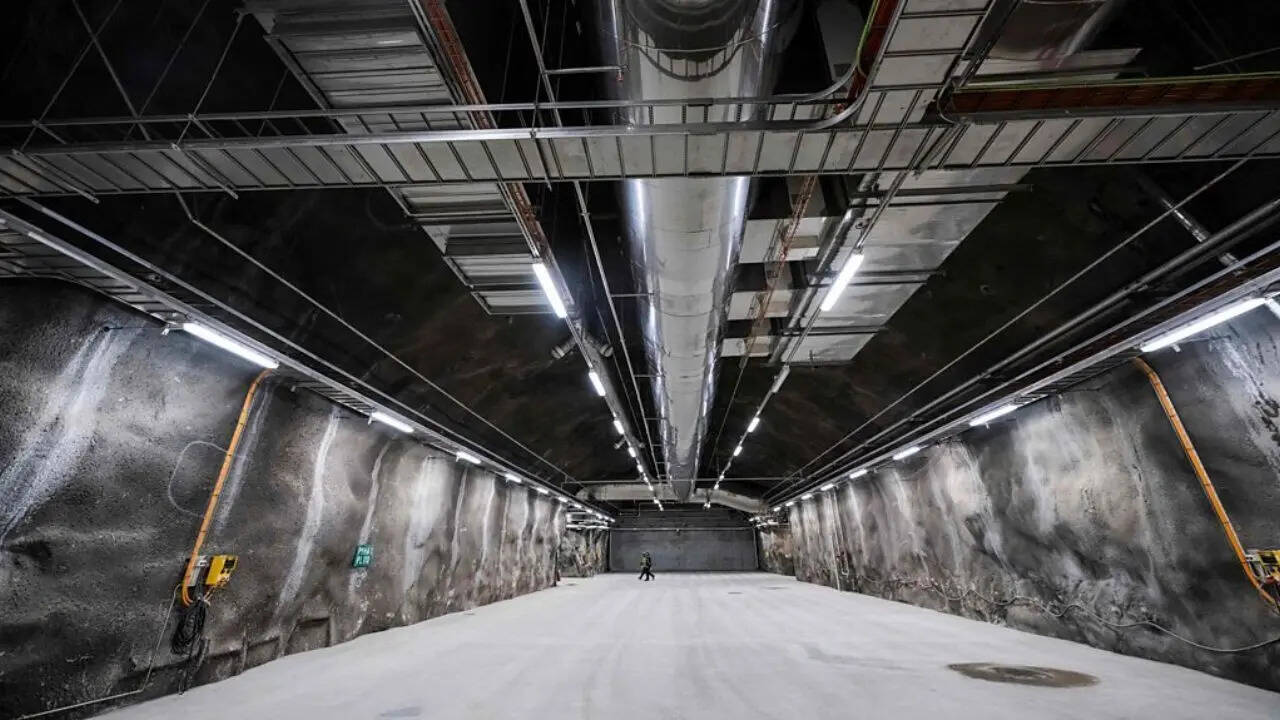
Deep beneath the forests of Olkiluoto Island, the Finns built Onkalo. It translates to "the cavity" or "the pit." It's the first operational deep geological repository for high-level nuclear waste on Earth. While other nations get bogged down in political gridlock and NIMBY protests, Posiva—the company behind the project—actually finished the job. They didn't just build a facility. They engineered a solution meant to outlast human civilization.
We're talking about isolating radioactive material for 100,000 years. To put that in perspective, 100,000 years ago Homo sapiens were sharing the planet with Neanderthals. Ice ages will come and go before this stuff is safe. The sheer scale of the engineering is mind-boggling, but the real triumph here isn't just the geology. It's the trust.
The Three Barriers Keeping the World Safe
You can't just dig a deep hole and dump uranium rods into it. The Onkalo repository relies on what engineers call the KBS-3 concept, a multi-barrier system developed alongside Sweden. It assumes everything will eventually fail, so it layers defenses.
First, the spent fuel goes into massive copper canisters. These aren't your typical pipes. They have a thick inner cast-iron structure for strength and a seamless five-centimeter copper outer shell to resist corrosion. Copper is incredibly stable in oxygen-free environments.
Second, these canisters are lowered into vertical disposal holes drilled into the tunnel floors, roughly 450 meters underground. Workers then pack the space around the canisters with bentonite clay. When this clay hits any trace of moisture, it swells. It seals the canister tight, keeping water out and locking the canister in place. It also acts as a shock absorber against tectonic shifts.
Third is the rock itself. The Olkiluoto bedrock is migmatite-gneiss, a type of crystalline rock that has been stable for nearly two billion years. It's dry, solid, and predictable.
Think of it as a nesting doll of security. If the rock cracks, the clay blocks the water. If the clay fails, the copper resists the corrosion. If the copper breaches, the fuel matrix itself dissolves incredibly slowly.
Why Finland Succeeded Where the US Blew Billions
The contrast between Finland and the United States is stark. The US picked Yucca Mountain in Nevada back in 1987. After spending over $15 billion studying and drilling, the project stalled out completely due to political warfare and local opposition. It's dead in the water.
Finland did the opposite. They didn't force Onkalo on anyone.
The Finnish government established a transparent selection process in the 1990s. They offered local communities a veto right. Eurajoki, the municipality hosting Olkiluoto, actually lobbied to have the repository built there.
Why? Because they already hosted two nuclear reactors. The locals understood the industry. They trusted the regulators. Posiva built open relationships with the community, answered tough questions, and provided economic stability. It turns out that treating citizens like partners instead of obstacles actually works.
Most countries treat nuclear waste like a political hot potato. Finland treated it like a straightforward infrastructure project.
The 100000 Year Language Problem
How do you warn a society that won't exist for millennia? Languages morph rapidly. English as we know it is barely a thousand years old. In 50,000 years, our current alphabets will look like meaningless scratches.
Some experts suggested creating an "atomic priesthood"—a mythos passed down through generations to keep people away. Others proposed building massive concrete thorns or carving screaming faces into the landscape to project dread.
Finland rejected all of that. They believe monuments invite curiosity. If you build a giant structure indicating a hidden secret, humans will dig it up.
Instead, Onkalo will use a strategy of total erasure. Once the repository fills up around the end of the 21st century, the tunnels will be packed with bentonite clay and sealed with massive concrete plugs. The access tunnels will be backfilled. The above-ground facilities will be dismantled. The land will be reforested.
The goal is to make Onkalo disappear completely. The safest place for lethal waste is a place nobody remembers.
The Real Cost of Doing Nothing
Opponents of nuclear power often point to Onkalo as proof that the technology is too dangerous. They argue that creating waste requiring 100,000 years of monitoring is inherently unethical.
But here's the uncomfortable truth. The waste already exists.
Right now, roughly 250,000 tons of highly radioactive spent fuel sit in temporary storage facilities worldwide. Leaving that material on the surface, exposed to weather, political instability, terrorism, and societal collapse, is the real ethical failure. Onkalo isn't an excuse to make more waste; it's a necessary cleanup operation for the choices we've already made.
Other nations are finally taking notes. Sweden approved its own repository using the same technology. France is progressing with its Cigéo project. Even the UK and Canada are looking for willing host communities.
Actionable Takeaways for the Energy Transition
If you're tracking the future of clean energy, look past the solar panels and wind turbines for a second. The success of Onkalo offers vital lessons for the broader grid transition.
- Prioritize Community Consent: Force doesn't work in democratic societies. If you need to build unpopular infrastructure—whether it's a nuclear vault, a lithium mine, or high-voltage transmission lines—you must give local communities real power and tangible benefits.
- Redundancy Wins: Never rely on a single point of failure. The multi-barrier approach of Onkalo should be the blueprint for any long-term environmental containment project.
- Stop Waiting for Perfect: Perfectionism breeds paralysis. Finland used existing materials like copper, iron, and clay to solve a generational problem instead of waiting for sci-fi tech that might never arrive.
The Onkalo repository proves that humanity can think, plan, and build beyond its own lifespan. It's an engineering marvel, but more importantly, it's a blueprint for political courage.