The headlines out of Washington and Tehran feel like a cool breeze after a long, stifling summer. A ceasefire. Diplomacy. The jagged edges of a decade-long confrontation finally beginning to smooth. For the global markets, it is a moment to exhale. The threat of a closed Strait of Hormuz—the world’s most vital jugular for oil—recedes, and the price of crude begins its predictable slide downward.
But three thousand miles away, in the industrial heartlands of India, the air remains thick. It tastes of sulfur and grit.
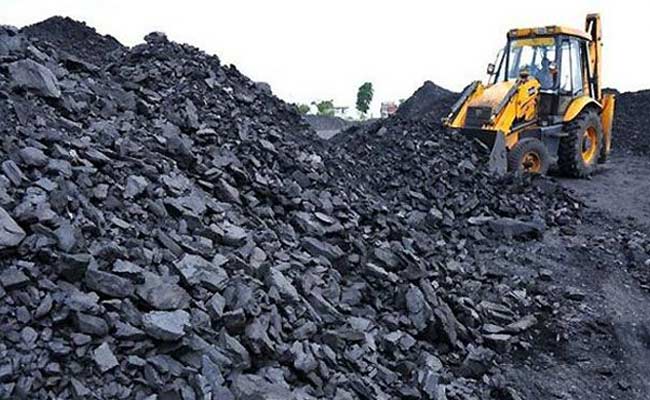
While the world watches the high-stakes chess match of international nuclear deals, a different kind of reality is unfolding in places like Mundra and Dhanbad. For these regions, the cooling of geopolitical tensions in the Middle East is a welcome relief, but it does not fix the fundamental machinery of the subcontinent. India is a titan with an insatiable hunger for energy, and right now, that hunger is fed by the oldest, darkest fuel in the world.
The heat of coal lingers long after the threat of war fades.
The Butcher’s Bill for Growth
Consider Rajesh. He is a hypothetical composite of the millions of small-scale factory owners in the outskirts of Ahmedabad. His business produces automotive components—gears, valves, the tiny steel ligaments of the global supply chain. When global oil prices spike because of a drone strike in the Gulf, Rajesh feels the pinch in his logistics costs. Shipping gets expensive. The plastic resins he buys become dear.
When the ceasefire was announced, Rajesh likely smiled over his morning chai. Lower oil prices mean cheaper transport. It means the inflation that has been gnawing at his margins might finally settle.
But Rajesh has a bigger problem that a diplomatic handshake cannot solve. His factory, like the grid that powers it, runs on electricity generated by thermal power plants. These plants don't care about the price of Brent Crude as much as they care about the stockpiles of black rock sitting in their yards.
India’s reliance on coal is not a choice made out of spite for the environment; it is a choice made out of survival. The country’s economy is expanding at a rate that defies gravity, and that expansion requires a base load of power that renewables—for all their rapid growth—cannot yet carry alone. Solar panels don't work at midnight when the factories are hummimg to meet export deadlines.
The ceasefire in the Middle East lowers the "risk premium" on oil, which is great for the Indian government's fiscal deficit. It keeps the rupee stable. But the structural reality of India's energy mix remains stubbornly carbon-heavy.
The Invisible Tether
We often talk about energy as a commodity, a line item on a spreadsheet. In reality, energy is the tether between a developing nation and its future.
When India imports oil, it pays in US dollars. This makes the country incredibly sensitive to the whims of the Federal Reserve and the stability of the Persian Gulf. A ceasefire is a reprieve for the national treasury. It allows the government to spend less on fuel subsidies and more on infrastructure.
However, the "heat" of coal refers to more than just thermal energy. It refers to the political and economic friction of moving away from it. India has set ambitious targets for net-zero emissions, but the path there is blocked by a massive, existing infrastructure of coal mines and rail networks.
The ceasefire provides a momentary lull, a chance to pivot. But pivoting a nation of 1.4 billion people is like trying to turn an aircraft carrier in a bathtub.
There is a tension here that most analysts miss. Low oil prices can actually make the transition to green energy harder. When fossil fuels are cheap, the financial incentive to invest in expensive battery storage or green hydrogen infrastructure softens. The "relief" brought by the US-Iran deal might, paradoxically, keep India tied to the furnace for a little longer.
The Human Cost of the Glow
The people living in the shadow of India’s coal belt—the "Black Diamond" regions—don't experience global diplomacy in the same way a trader in London does. For them, the ceasefire is a distant abstraction. Their reality is the sound of heavy trucks and the perpetual orange glow of the furnace.
For these communities, coal is the economy. It is the school lunch, the paved road, and the hospital wing. When international pressure mounts for India to "decarbonize," these are the people who stand to lose their livelihoods first. The ceasefire in the Middle East doesn't provide them with new jobs in wind turbine maintenance. It doesn't scrub the particulate matter from the air their children breathe.
We must understand that for India, energy security is national security. If the lights go out in Delhi or Mumbai, the political consequences are far more immediate than a diplomatic spat in a far-off land. This is why, even as the world celebrates a reduction in Middle Eastern tensions, India continues to auction off new coal blocks.
It is a hedge against a world that remains fundamentally unpredictable.
The Shadow of the Strait
The Strait of Hormuz is a narrow stretch of water that carries 20% of the world's liquid energy. India is its biggest customer.
During the height of the US-Iran tensions, the threat of a blockade was the "Sword of Damocles" hanging over the Indian economy. The ceasefire removes that sword. It is a genuine victory for global stability.
But look closer.
The heat of coal lingers because it is internal. It is domestic. It is the one fuel India has in abundance within its own borders. Every ton of coal burned is a ton of oil that didn't have to be imported through a volatile choke point.
From a purely cold-blooded strategic perspective, coal is India’s ultimate insurance policy.
The Friction of the Future
Imagine a high-speed train. It is sleek, electric, and silent. It represents the India of 2047—the centenary of independence. This train is powered by a mix of offshore wind, massive solar parks in the Rajasthan desert, and perhaps a new generation of modular nuclear reactors.
Now, look at the tracks. The tracks are laid on a bed of old, soot-stained gravel. That gravel is the current coal economy.
The ceasefire provides the funding—the saved "oil dollars"—to build the train. But you cannot lay the new tracks until you deal with the heat of the old ones. The heat of coal isn't just physical; it's the social and economic momentum of a century of industrialization.
The geopolitical relief is a window. It is a brief period where the pressure is off, and the "energy trilemma"—balancing security, equity, and sustainability—becomes slightly less agonizing.
But windows close.
In the tea stalls of Jharkhand and the boardrooms of Mumbai, the conversation isn't just about what happened in Washington or Tehran. It’s about the next summer. It’s about the heatwaves that are becoming more frequent and more intense. It’s about the fact that as the climate warms, the demand for air conditioning spikes, which requires more power, which—for now—means burning more coal.
It is a vicious, sweltering cycle.
The Long Walk to the Light
There is no "game-changer" here. There is only the slow, grinding work of transformation.
The US-Iran ceasefire is a stroke of luck for India. It is a gift of time and capital. But the black dust doesn't wash off easily. The infrastructure of an empire is built into the earth itself.
As the sun sets over the Arabian Sea, the tankers will continue to move through the Strait of Hormuz, unmolested for now. The prices at the pump in Bangalore might drop a few rupees. The "relief" is real, palpable, and necessary.
Yet, as night falls, the chimneys of the great thermal plants in the north will continue to belch their thick, grey plumes into the starlight. The furnaces will remain stoked. The men in the mines will continue their descent into the dark.
The world is changing, but the foundations of power are stubborn. The ceasefire has cooled the global temperature, but in the heart of the subcontinent, the fire still burns. It will take more than a treaty to put it out.
The smoke is still rising.


