The cancellation of the Royal Navy’s Type 83 destroyer program marks a fundamental realignment of maritime defense economics. By abandoning a traditional, centralized platform-successor model in favor of at least six Common Combat Vessels (CCVs), the UK Ministry of Defence (MoD) is attempting to break a decades-long cycle of geometric cost growth and shrinking hull counts.
This pivot to a "hybrid Navy" shifts the primary unit of naval power from the legacy capital ship—a monolithic hull cramming sensors, command systems, and weapons into a single, high-value asset—to a distributed network architecture. The CCV serves as a crewed operational node designed to orchestrate autonomous air, surface, and subsurface platforms. Navigating this transition requires managing distinct strategic trade-offs across capital allocation, workforce constraints, and structural survivability.
The Tri-Domain Attrition Function
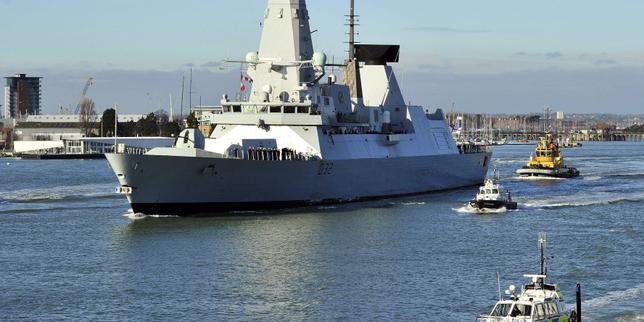
Traditional naval procurement is plagued by the "monolithic vulnerability curve," where capital concentration creates an existential risk profile. A multi-billion-pound destroyer like the conceptual Type 83 offers immense localized capability but presents a single point of failure against modern asymmetric threats, such as massed anti-ship ballistic missiles or autonomous underwater vehicles (AUVs).
The hybrid Navy model splits this problem into two variables: the crewed command hub (the CCV) and modular, expendable effectors. The operational efficiency of this system is governed by a tri-domain architecture that distributes capabilities across the air, surface, and subsurface environments:
- Subsurface Domain Integration: The CCV acts as a localized data-aggregation node for the Type 93 Extra-Large Uncrewed Underwater Vehicle (XLUUV) and Type 92 underwater sensing platforms. This architecture addresses the acute structural bottleneck highlighted by increased Russian submarine activity near critical undersea infrastructure in the North Atlantic. Instead of a single destroyer hunting a submarine via its own hull-mounted or towed arrays, a distributed swarm of Type 92 sensors expands the detection envelope exponentially while keeping the crewed vessel outside the weapon engagement zone.
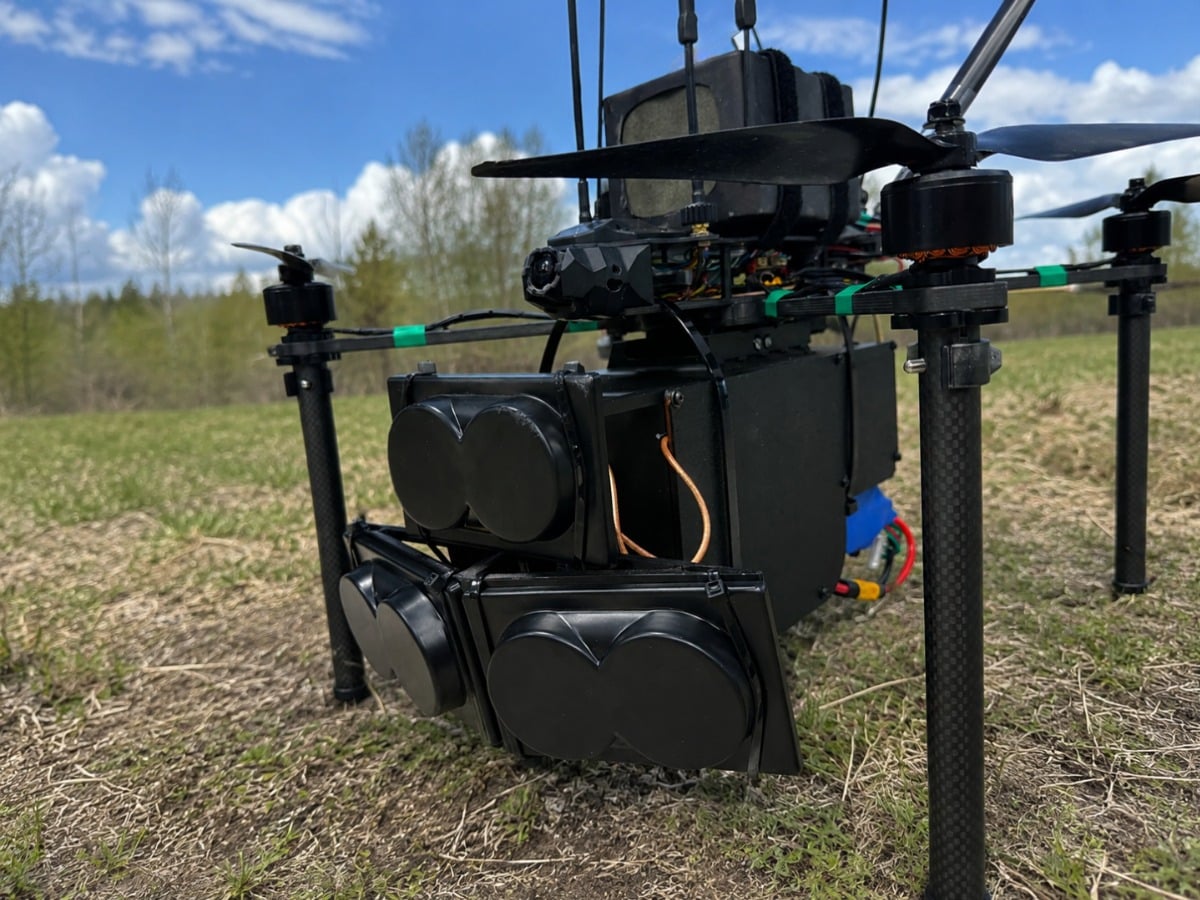
- Surface and Air Effector Dispersal: Firepower and sensor range are decoupled from the CCV's physical hull. Air defense and strike missions are handed off to Type 91 uncrewed missile platforms and Type 94 uncrewed sensor platforms. This configuration changes the defense calculus: the radar signature and physical target presented to an adversary are heavily weighted toward easily replaceable autonomous units.
       [ Adversary Threat Vector ]
                   │
         ┌─────────┴─────────┐
         ▼                   ▼
┌─────────────────┐ ┌─────────────────┐
│ Legacy Paradigm │ │ Hybrid Paradigm │
│ (Type 83 Hull)  │ │   (CCV Hub)     │
└────────┬────────┘ └────────┬────────┘
         │                   │ ┌───► Type 91 (Missile Effector)
         ▼                   ├─┼───► Type 92 (Underwater Sensor)
   Single Point              ├─┼───► Type 93 (XLUUV Subsurface)
    of Failure               │ └───► Type 94 (Air/Surface Sensor)
                             ▼
                    Distributed Network
                     (Risk Dispersed)
Human Capital and the Manning Bottleneck
The transition away from legacy destroyers is driven by demographic and operational realities as much as financial constraints. The Royal Navy has faced persistent personnel shortages, rendering the high crew requirements of traditional surface combatants unsustainable.
A traditional guided-missile destroyer typically requires a crew complement of 180 to 200 sailors to maintain round-the-clock operations, damage control, and system maintenance. By shifting to automated command hubs, the MoD aims to flatten the crewing curve.
Automation, algorithmic data processing, and localized artificial intelligence allow the CCV to operate with a lean-crewed structure without a corresponding drop in situational awareness. The personnel footprint is decoupled from the fleet's total missile cell count and sensor coverage area.
Crew members shift from hands-on system operators to network managers who oversee autonomous systems that execute routine tracking, processing, and intercept protocols. This framework mitigates recruitment pressures, but it introduces a secondary vulnerability: an acute reliance on highly specialized technicians capable of troubleshooting software and network layers at sea.
Capital Allocation and the Defense Investment Plan Conflict
The strategic pivot to the CCV is explicitly linked to the realities of the UK's macroeconomic constraints and the internal friction surrounding the newly revised Defence Investment Plan (DIP). The program's financial structure illustrates the challenge of modern force projection:
[Required Capital: £28 Billion] ──┐
                                  ├─► [Funding Deficit: £13.5 Billion]
[Allocated Capital: £14.5 Billion] ┘
The additional £14.5 billion secured under Defence Secretary Dan Jarvis represents an upgrade from previous allocations but remains well below the £28 billion that defense officials previously calculated was necessary to fully modernize the armed forces under a legacy procurement framework.
Developing the Type 83 from a blank-sheet design within the Future Air Dominance System would have consumed a massive share of this capital. Prior filings reveal that while the Type 83 program remained thinly funded—with only £1 million spent on platform-specific design over three financial years out of £6.9 million spent broadly on the wider air dominance framework—the projected lifecycle costs of building a fleet of large, bespoke air-defense hulls would have cannibalized other critical programs.
By standardizing on a common hull architecture or utilizing established modular designs (such as derivatives of the Type 26 or Type 31 frigate production lines, or commercial-spec uncrewed motherships), the CCV approach maximizes capital efficiency. Savings in hull construction are redirected toward containerized payloads, modular handling systems (such as those being explored by Babcock at Rosyth), and mass-manufactured autonomous platforms.
Strategic Vulnerabilities of the Decentralized Fleet
While the distributed fleet model solves the problem of platform-level attrition, it introduces distinct technical and operational vulnerabilities that must be actively managed.
Network and Electronic Warfare Saturation
The primary vulnerability of a hybrid navy is its reliance on data links. The CCV must maintain high-bandwidth, low-latency communication lines with its Type 91, 92, 93, and 94 uncrewed assets to fuse sensor data and issue fire-control commands. In a high-intensity electromagnetic environment, peer adversaries will deploy advanced electronic warfare systems to jam, spoof, or intercept these data streams. If the communication link between the CCV and an uncrewed missile platform is severed, the distributed effector becomes a multi-million-pound float, blinding the command hub and leaving the fleet vulnerable.
The Mass-Manufacture Supply Chain Chokepoint
The hybrid model exchanges the complex, decades-long construction timeline of a destroyer hull for the rapid, continuous production of autonomous drones and software updates. This model assumes an industrial base capable of sustaining high-throughput manufacturing of advanced sensors, lithium-ion battery arrays for XLUUVs, and autonomous guidance software. The UK defense industrial base must pivot from low-volume artisan shipbuilding to high-volume precision assembly, a transition that faces structural vulnerabilities in raw material access and domestic semiconductor manufacturing.
Forward Operational Playbook
To validate the shift from the Type 83 to the CCV framework, the National Armaments Director Group and naval planners must execute three distinct operational steps:
- Enforce Hull Component Commonality: The CCV design must not feature a bespoke hull form. Planners should mandate the use of an existing, mature hull variant—such as a modified Type 26 or Type 31 platform—optimized internally for command-and-control infrastructure and drone hangar space. This approach protects global supply chains and holds down initial manufacturing costs.
- Standardize Payload Interfaces: The integration of the Type 91 through Type 94 uncrewed systems must rely on strict physical and digital standardization, using interchangeable containerized modules. Software architectures must use open-source APIs to allow the rapid deployment of updated electronic counter-countermeasure (ECCM) protocols without requiring drydock refits.
- Establish Geometric Defensive Zones: Deploy the fleet in layered, concentric rings where uncrewed sensor platforms (Type 94) form the outermost perimeter, uncrewed effectors (Type 91) occupy the mid-tier transit zones, and the crewed CCV remains tightly screened by organic Type 26 anti-submarine frigates. This positioning ensures that any initial electronic warfare or kinetic strike hits expendable nodes first, allowing the crewed command hub sufficient reaction time to adapt or withdraw.