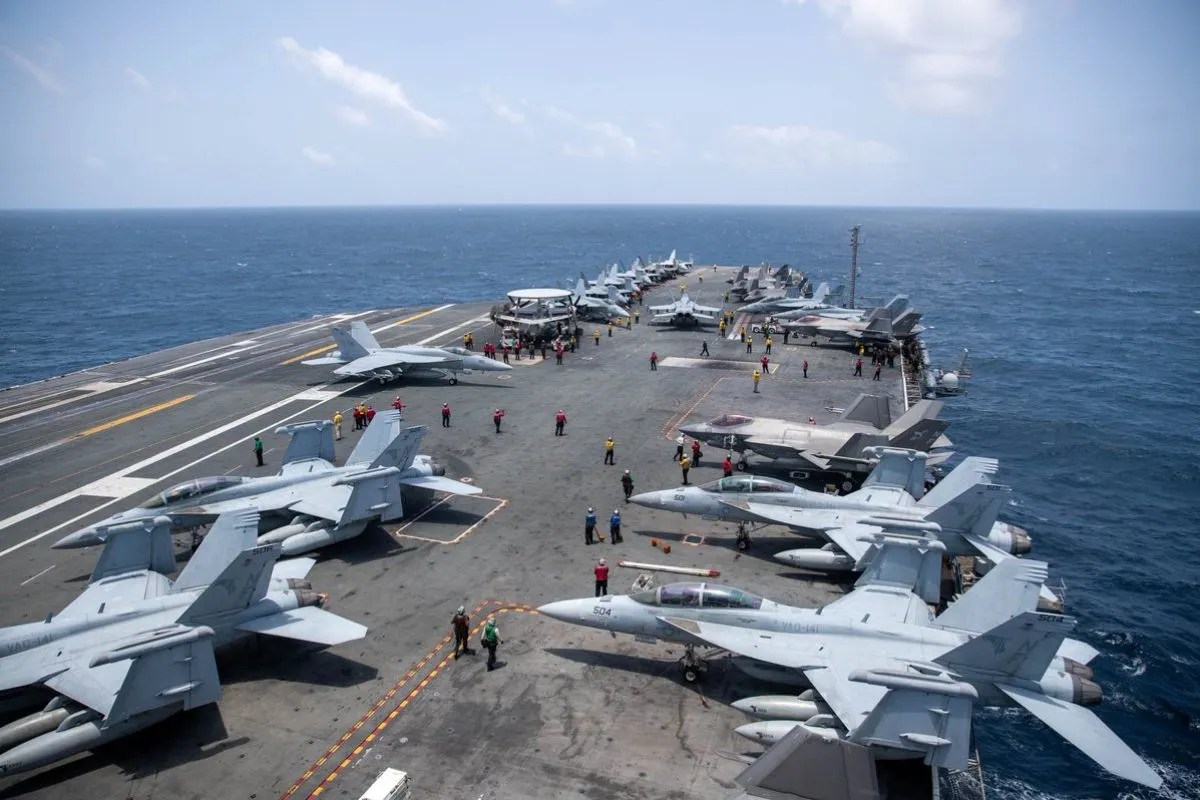
The lazy consensus in defense journalism loves a simple narrative. Columnists look at the chessboard, see aircraft carriers moving toward regional flashpoints, and automatically parrot the retired admirals who warn of heavy bills, stretched supply lines, and impending doom. They cry about the sheer cost of steel and fuel, wringing their hands over whether the Pentagon is biting off more than it can chew.
They have completely missed the point.
The real disaster isn't that deploying multi-carrier strike groups to the Middle East carries a heavy price tag. The disaster is that keeping these lumbering, hyper-expensive floating fortresses anywhere within range of modern anti-ship ballistic missiles represents an obsolete military theology. We are fighting twenty-first-century proxy wars with twentieth-century relics, and everyone is too polite to mention that the emperor has no flight deck.
The Myth of Regional Deterrence Through Massive Steel
Let us dispense with the institutional mythology right now. Defense bureaucrats love to market supercarriers as ultimate instruments of deterrence. The logic goes that parking a hundred thousand tons of nuclear-powered diplomacy off a hostile coast makes regional actors think twice.
I have watched defense budgets hemorrhage billions into these programs while actual operational utility plummets. A Nimitz or Ford-class carrier group requires a protective cocoon of destroyers, cruisers, and submarines just to keep it from becoming an easy target. When you shove these groups into narrow regional waters, you are not projecting power; you are creating a fixed, high-value bullseye.
Imagine a scenario where a localized conflict escalates in minutes rather than weeks, and a swarm of low-cost hypersonic or ballistic anti-ship missiles forces those carriers back. The math is brutal. A multi-billion-dollar asset defended by interceptors that cost millions per pop creates an unsustainable economic asymmetry. Adversaries do not need to sink a carrier to win; they just need to force it out of position, bleeding the Pentagon dry through sheer defensive attrition.
The Operational Reality Nobody Wants to Admit
Retired naval officers love to jump on television and warn about crew fatigue, extended deployments, and maintenance backlogs. They point to sailors spending months on end trapped on aging hulls under punishing operational tempos. They are right about the symptoms, but completely wrong about the disease.
The problem is not that the deployment is too long. The problem is that the entire strategic architecture relies on concentration instead of distribution.
Concentrating naval aviation into massive, centralized hubs makes about as much sense as running a modern tech enterprise out of a single mainframe computer. Decentralization is the rule of survival in every other domain, yet naval strategy remains stubbornly wedded to the floating mega-city. When mechanical failures, mental fatigue among crews, and escalating repair bills force continuous rotations—like swapping one battered carrier for another—it signals institutional rigidity.
If you want to understand why defense procurement is broken, look at how the establishment reacts to technological shifts. Instead of pivoting toward distributed lethality—smaller, unmanned, or low-signature vessels—the apparatus doubles down on legacy platforms, then acts shocked when regional adversaries exploit the exact vulnerabilities critics have flagged for decades.
Rewriting the Playbook
We need to stop evaluating power projection by the sheer tonnage of the ships we send into enclosed seas. The metric of success is no longer how many aircraft a single hull can launch, but how resilient and adaptable a fighting force is when communications jam and supply lines fracture.
The prescription is straightforward, even if the Pentagon lacks the appetite for it:
- Ditch the mega-carrier monopoly: Shift capital away from vulnerable supercarriers and pour it into modular, smaller surface combatants and autonomous drone swarms.
- Embrace asymmetric cost-efficiency: Stop matching cheap regional threats with hyper-expensive interceptors and multi-billion-dollar hulls.
- Prioritize littoral mobility: Move away from stationary dominance and toward unpredictable, decentralized striking units that leave adversaries guessing.
Until military leadership stops treating floating steel as a substitute for actual strategic thinking, every new deployment into regional waters will just be another expensive exercise in vulnerability.
The bill is already coming due. It is time to stop paying for the past.