Dirt clings to your boots. It always does, no matter how carefully you walk, no matter how paved the world pretends to be. We spend our lives trying to outrun our own transience, stacking brick upon stone, carving names into granite, buying things designed to last longer than our grand-nieces and grand-nephews will remember to care about. Yet, entropy wins. Always.
Except sometimes, beneath eighteen centuries of accumulated dust and forgotten history, the ground remembers what we loved. For a deeper dive into similar topics, we suggest: this related article.
Picture a Roman villa eighteen hundred years ago. The Mediterranean sun beats down on clay tile roofs, baking the air until the afternoon stillness settles like a heavy blanket over the courtyard. Inside, away from the dust of the road, a craftsman kneels on a bed of fresh lime mortar. He is not carving an emperor. He is not immortalizing a god of war with chiseled abs and a thunderbolt.
Instead, with tweezers and bruised fingertips, he pushes a tiny cube of dark stone into the wet white paste. Then another. And another. For broader context on this development, in-depth reporting can be read at Glamour.
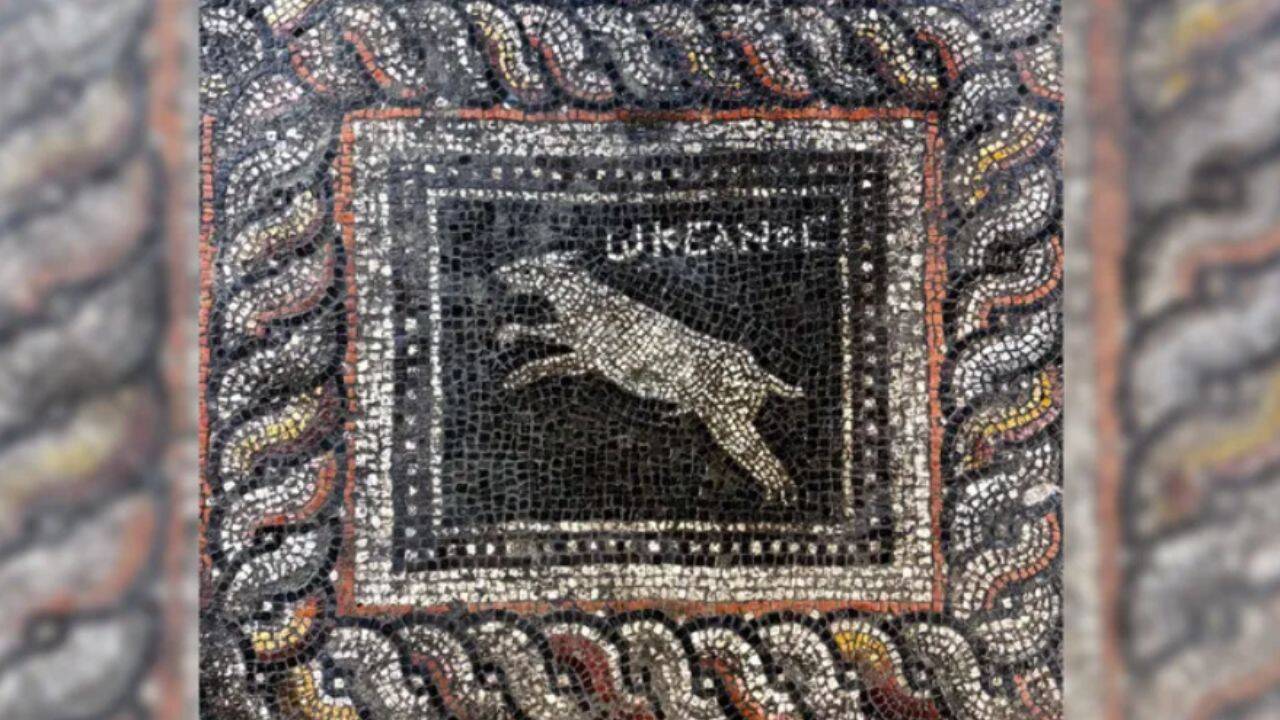
He is building a dog. Not just any dog—a hunting hound mid-stride, lean-muscled, alert, forever chasing an invisible hare across the stone floor of a dining room where powerful men once reclined, debated politics, spilled cheap wine, and argued over grain prices. Right beside the hound, a startled cat arches its back, frozen in eternal, bristling suspense.
When the archaeologists uncovered this mosaic recently, the scientific reports naturally focused on the technical triumphs. They cataloged the tesserae, measured the room dimensions, and published papers about the stylistic evolution of provincial Roman interior design. They gave us dates, geographic coordinates, and material analysis.
They gave us everything except the pulse.
To understand why this floor matters, we have to strip away the dry language of antiquity and look at the sheer, desperate humanity of it. Imagine the homeowner standing in that room for the very first time. Let us call him Lucius, though his actual name dissolved into the soil centuries ago. Lucius was likely a landowner trying to project stability in an empire that was quietly beginning to fracture at its borders. He had debts. He had worries about his harvest, his slaves, his health, and the shifting winds of imperial politics in Rome.
Yet, when he looked down at his floor, he didn't commission a grand battle scene to intimidate his dinner guests. He chose a dog and a cat.
Why? Because even eighteen centuries ago, home was where we sought refuge from the terrifying vastness of a chaotic world.
There is an intimate vulnerability in that choice. Think about your own living room right now. What objects occupy your walls or your coffee table? Chances are, they are not grand monuments to global economics. They are small, personal anchors. A framed photograph of a chaotic family vacation. A ceramic mug bought on a rainy Tuesday in a town you will never visit again. Or perhaps, like millions of modern households, your phone gallery is stuffed with high-resolution portraits of a snoring golden retriever or a cat staring blankly at a wall.
We think we are so different from the ancients. We look at our smartphones, our fiber-optic internet, and our orbital satellites, and we pat ourselves on the back for outgrowing the past. But walk into a modern kitchen on a Sunday morning. Someone is tripping over a cat winding its way around ankles while a rescue dog begs for dropped bacon. The soundtrack of domestic life hasn't changed in two thousand years. It is a symphony of claws clicking on hard floors, sleepy yawns, and the quiet comfort of breathing bodies sharing a roof.
Lucius wanted that feeling anchored in stone. Mortar degrades. Wood rots. Flesh turns to ash. But stone? Stone stays.
When the mosaic was laid, the Roman Empire was entering a period historians call the Crisis of the Third Century. It was a harrowing era of economic collapse, civil wars, rampant inflation, and plague. If you lived through it, the ground beneath your feet felt genuinely unstable. Governments crumbled in months. Emperors were assassinated by their own guards. In the middle of that systemic dread, Lucius hired an artisan to make sure that whatever else happened to the world, his floor would feature his loyal hunting dog and his wary cat.
It is an act of quiet defiance against oblivion.
Consider what happens next in the story of that room. Generations pass. The villa changes hands. Sons grow up, inherit the debt, sell the land, or die in skirmishes on distant frontiers. Eventually, the roof collapses. The wooden beams rot and crash down, pulling the tilework with them. Rain pours in unchecked for decades. Silt washes over the ruins. Seeds blow in on the wind, sprouting thorny brush, then saplings, then dense forest. The local population forgets a villa ever stood there. Cows graze above the dining room.
Eighteen hundred years crawl by in absolute silence.
And then, a trowel hits stone.
When modern archaeologists brush away the damp earth to reveal the hound's bright eye and the cat's bristling tail, they are not just unearthing artifacts. They are completing a message sent across an impossible gulf of time. It is a message that says: We were here. We loved the things that lived with us. We worried about the future, just like you.
We spend an enormous amount of energy trying to master our environment. We build smarter algorithms, construct taller towers, and draft complex strategies to secure our legacies. We want our achievements to echo through eternity.
Yet, when the history books are written and the empires turn to dust, what remains isn't the grand rhetoric of politicians or the balance sheets of ancient corporations. What remains is the cat and the dog. The small, domestic details of daily existence that proved more enduring than the legions that protected them.
The next time you walk across your own floor, listen to the sound of your footsteps. Look down at the corner where your pet's bed sits, worn flat by years of faithful weight. You are participating in an unbroken human tradition stretching back into the ancient mud of the Mediterranean.
We are all just building temporary shelters against the dark. And the best parts of us are always the ones we share with the creatures who walk beside us.