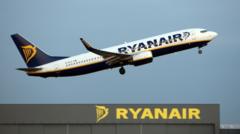
When a window cracked mid-flight on a Ryanair Boeing 737, social media immediately did what it does best. Panic spread fast. Headlines blamed pressurization flaws, cabin failure, and structural fatigue. Then Ryanair boss Michael O'Leary stepped up with a far simpler explanation.
A foreign object likely hit the glass.
It sounds almost too simple. How does a stray piece of debris strike an aircraft window miles up in the air or during high-speed taxiing? People naturally assume that airplanes operate in a pristine sky, isolated from everyday hazards. The reality is much messier. Aviation safety inspectors and mechanics deal with foreign object damage (FOD) constantly. It remains one of the costliest, most persistent headaches in commercial aviation.
Understanding how an outer window panel cracks from loose debris helps explain why cabin safety protocols exist, why pilots react the way they do, and why passengers rarely need to panic when these incidents hit the news.
How Plane Windows Are Built to Survive Debris
Airplane cabin windows aren't single panes of glass like the ones in your living room. They're multi-layered engineering feats designed to withstand extreme pressure differentials and sudden impacts.
Commercial jet windows typically consist of three distinct layers:
- The Outer Pane: Made from heavy-duty stretched acrylic, this panel bears the full force of external atmospheric pressure and high-altitude elements.
- The Middle Pane: A backup structural barrier featuring a tiny air hole (the bleed hole) that balances pressure and prevents fogging.
- The Inner Scratch Pane: A thin plastic shield inside the cabin that protects the structural panes from passengers bumping, poking, or scratching them.
When an object hits a window in flight or during takeoff, it almost always impacts only the outer pane. That's exactly what happened during the Ryanair incident. Even if the outer layer cracks or shatters, the inner structural pane holds the pressure inside the cabin. Airplanes are built with massive redundancy. One damaged layer doesn't mean the plane is falling apart.
The Reality of Airborne and Runway Hazards
People often ask where a foreign object comes from at 30,000 feet. The air isn't completely empty.
Most debris strikes occur during takeoff, landing, or low-altitude climbs. Loose asphalt from unmaintained taxiways, small stones thrown up by ground support vehicles, or detached hardware from engine cowlings can easily bounce off the tarmac and strike a fuselage. At speeds exceeding 150 miles per hour, even a tiny pebble can shatter outer acrylic.
Higher in the atmosphere, hail, atmospheric ice crystals, and bird strikes represent the main physical threats. While bird strikes usually affect engines and nose cones, high-speed collisions with dense hail clouds can pit windshields and crack side windows instantly.
Airports worldwide spend millions of dollars annually scanning runways with radar, sweeping tarmac with specialized vehicles, and running manual inspections to clear away debris. Yet, completely eliminating small loose particles across miles of concrete remains practically impossible.
Why Pressurization Stays Intact
When news breaks about a cracked window, passengers immediately picture violent explosive decompression. Movie tropes have conditioned us to believe that a small crack instantly sucks seats, luggage, and people into the void.
Real-world physics work quite differently.
Because the middle pane acts as a fully capable pressure boundary, a crack in the outer pane doesn't cause a loss of cabin pressure. Pilots monitor cockpit instruments that measure cabin altitude and differential pressure continuously. If a window pane cracks, the flight crew follows a strict checklist:
- They descend to a lower altitude (usually below 10,000 feet) where oxygen masks aren't required, purely as a precaution.
- They notify air traffic control to secure a priority landing slot at the nearest suitable airport.
- They assess whether structural integrity is compromised before making any sudden maneuvers.
In almost every recorded case of outer pane cracking, the aircraft lands safely without any drop in cabin pressure. The situation feels dramatic for passengers watching the spiderweb pattern form on the glass, but the engineering functions precisely as designed.
What Aviation Teams Do Next
When a window crack occurs due to suspected foreign object damage, maintenance crews don't just swap the window and clear the plane for flight.
Engineers perform a thorough inspection of the surrounding airframe. They check for impact marks along the aluminum skin, evaluate engine intake blades for ingested particles, and log the precise altitude and GPS coordinates of the strike. If the incident happened near an airport, ground crews immediately sweep that runway to check for loose hardware or pavement breakdown.
Airlines track these events meticulously. Analyzing strike patterns allows carriers and airframe manufacturers to refine window acrylic coatings, improve runway cleanup routines, and update pilot response guidelines.
Next time you see a headline about a cracked plane window, look past the initial shock value. Recognise that a cracked outer pane means the window did its job. It absorbed the impact, protected the pressure seal, and kept everyone inside safe until the wheels touched the ground.


