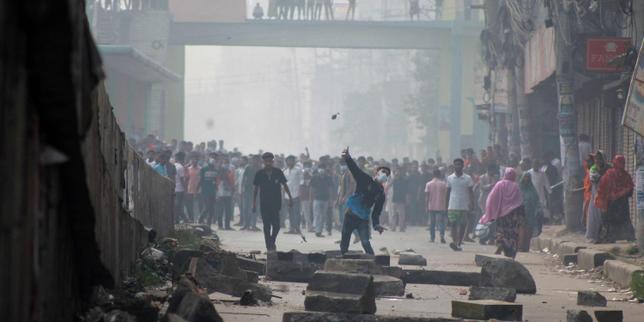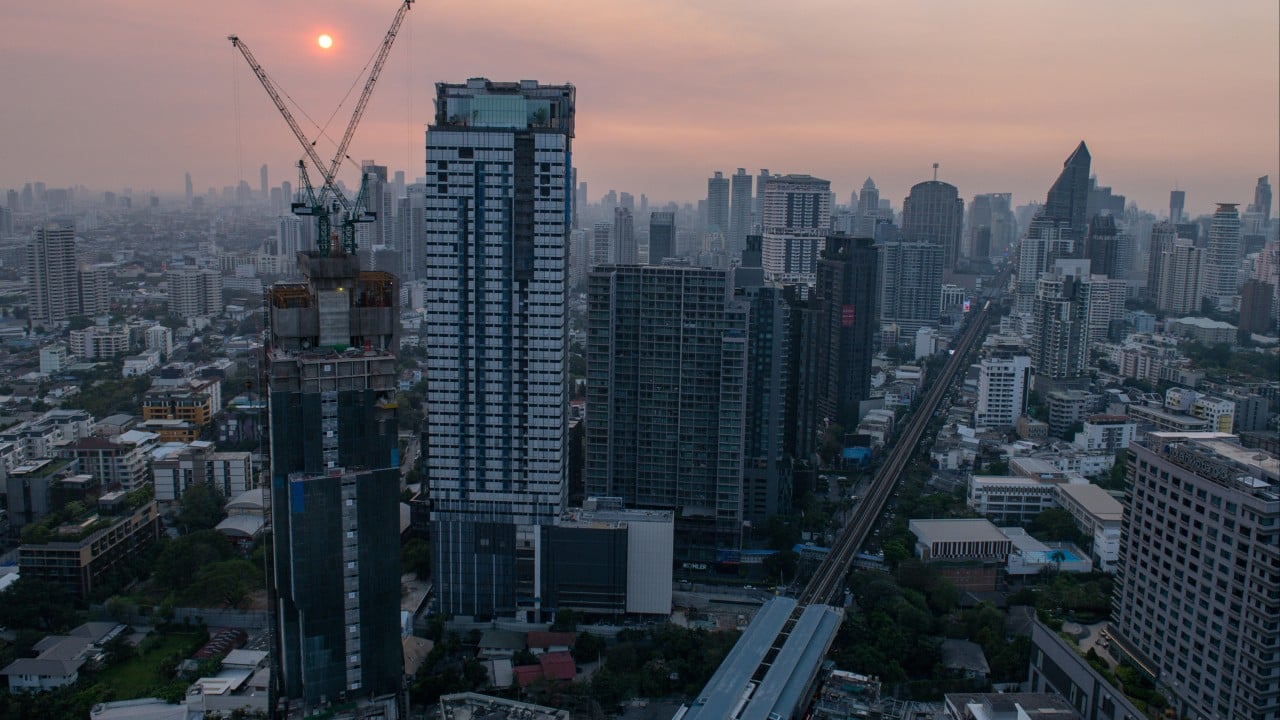
Mainstream financial media loves a cheap headline. They bundle seven unrelated regional bullet points into a "week in review" digest, slap a panic-inducing hook about expats losing property in Thailand next to a blurb about Malaysian state politics, and call it analysis.
It is lazy. Worse, it is actively harmful if you actually deploy capital across Southeast Asia.
When headlines scream that "foreigners lose homes in Thailand," retail investors and digital nomads assume the Thai government is suddenly seizing legally purchased condos or tearing up valid leases. When those same digests highlight Malaysia’s Melaka state elections as a major regional barometer, pundits treat a localized state assembly vote like a national referendum that will rewrite foreign direct investment rules overnight.
Both narratives miss the real mechanics on the ground. Nobody is arbitrarily confiscating legal foreign property in Thailand, and Melaka’s political theater is a predictable stress test of coalition math rather than a structural shift in Malaysian governance. If you want to protect your money—or your roof—in Asia, stop reading surface-level roundups and start looking at the legal and political plumbing underneath them.
The Thailand Property Myth Nobody Wants to Admit
Let us dismantle the Thai real estate panic first. Foreigners are not "losing" homes they legally owned. They are losing homes they never legally owned in the first place.
Under Thailand’s Land Code Act, non-citizens are explicitly prohibited from owning freehold land. There are narrow exceptions—such as investing 40 million baht under strict Board of Investment criteria—but for 99% of retail buyers, land ownership is off-limits. You can buy a condominium unit outright, provided total foreign ownership in that specific juristic building does not exceed 49% of the sellable floor area. You can also register a 30-year lease on land or a villa, or hold a usufruct.
That is the law. It has been the law for decades.
So why do headlines periodically erupt about foreigners getting evicted from luxury villas in Phuket, Koh Samui, or Chiang Mai? Because for years, unscrupulous developers and cut-rate local lawyers sold foreign buyers a dangerous shortcut: the Thai nominee company.
Here is how the scam works. A foreigner wants a walled villa with a pool, not a high-rise condo. Instead of taking a transparent 30-year lease, they form a Thai Limited Company to buy the land. Because Thai law requires at least 51% of the shares to be held by Thai nationals, the lawyer recruits random local clerks, drivers, or shell entities to hold the majority shares on paper, while the foreigner holds preference shares with super-voting rights.
Every single person involved knows this is a sham structure designed to circumvent the Land Code Act.
I have watched buyers pour $800,000 into Koh Samui hillside villas using nominee shells, convinced that a slick English-language pitch deck from a resort developer outranks the Thai Supreme Court. When the Department of Special Investigation (DSI) or the Land Department audits those companies—often triggered by a bitter divorce, a dispute with a developer, or a periodic anti-money-laundering sweep—the courts do not hesitate. Under Thai law, an illegal juristic act is void ab initio—invalid from the very beginning. The company is ordered to dispose of the land, or the title is revoked.
What People Actually Get Wrong About Thai Real Estate
If you ask most expat forums whether you can safely buy property in Thailand, you will get two equally useless answers: "Everything is a scam, never buy" or "Everyone uses a company, you will be fine." Both ignore how statutory property rights actually function.
- The "30+30+30" Lease Fallacy: Developers love promising a 90-year lease structured as three consecutive 30-year terms. Under the Thai Civil and Commercial Code, the maximum enforceable lease term for residential property is strictly 30 years. Any renewal clause beyond the initial 30-year registration is merely a personal contractual promise between the original parties—not a real property right attached to the land title deed (Chanote). If the landowner dies, sells the land, or goes bankrupt in year 28, your two subsequent 30-year renewals evaporate in court.
- The Superficies Alternative: Most buyers never hear about the right of superficies. Registered directly on the back of the Chanote at the Land Office, a superficies separates ownership of the physical structure from ownership of the land beneath it. You lease the land for 30 years, register a superficies, and legally own the house itself in your own name. Even if the land lease expires, the landowner cannot simply seize your building without compensating you or allowing removal.
- Freehold Condominium Reality: Foreigners who stick to the 49% foreign freehold quota—and properly obtain their Foreign Exchange Transaction (FET) form proving the funds entered Thailand in foreign currency—enjoy rock-solid title security. Courts do not strip foreign freehold condo owners of their deeds.
The downside to playing strictly by the rules? You give up the fantasy of owning a sprawling tropical estate in perpetuity, and you accept that a 30-year lease is a depreciating asset whose resale value drops every year after year fifteen. That is a tough pill to swallow, which is why people keep falling for nominee structures—and why financial news digests keep mistaking law enforcement for expropriation.
Melaka Elections Are Political Theater, Not a Market Signal
Now look at the second half of that typical Asia news roundup: Malaysia’s Melaka state elections.
Whenever a Malaysian state goes to the polls outside the general election cycle, regional commentators immediately frame it as a seismic indicator of national stability, ethnic voting shifts, and future economic policy. It is a classic case of mistaking tactical maneuvering for strategic transformation.
Melaka is a small coastal state with an economy anchored by heritage tourism, mid-tier manufacturing, and port logistics. Its state assembly controls local land zoning, municipal permits, water supply management, and local business licensing. It does not set corporate tax rates. It does not control Bank Negara Malaysia’s monetary policy. It does not negotiate bilateral trade agreements or regulate Bursa Malaysia.
Why State Polls Get Overhyped
In Malaysian politics, off-cycle state elections—like Melaka in 2021 or subsequent state-level contests—happen because of fragile elite defections, not grassroots ideological revolutions. A handful of assemblymen withdraw support from the sitting Chief Minister, the state legislature dissolves, and parties spend three weeks testing their ground machinery.
Here is why treating Melaka as a proxy for Malaysia’s investment climate is a mistake:
- Low Turnout Distorts the Signal: Off-cycle state elections routinely suffer from depressed voter turnout compared to federal general elections, especially among out-of-state working-class voters living in Kuala Lumpur or Singapore. A result driven by 60% turnout measures party mobilization efficiency, not broad national sentiment.
- Three-Cornered Fights Muddy the Math: When rival coalitions split the vote in multi-cornered contests, a party can win a supermajority of state seats with barely 38% of the popular vote. Headlines scream about a "landslide mandate," when the underlying electorate remains deeply fragmented.
- Federal Overhang Dominates Capital Flows: Foreign institutional investors looking at Malaysia care about semiconductor supply chains in Penang, data center power and water approvals in Johor, and federal subsidy rationalization in Putrajaya. A change in Melaka’s state executive council does not alter Intel’s or Infineon’s capital expenditure plans.
The one legitimate nuance analysts miss is how state elections act as a coalition stress test. In Malaysia’s post-2018 multiparty era, where no single coalition commands an automatic parliamentary majority, state polls show whether uneasy federal partners can actually transfer votes to one another at the ballot box. If Party A’s supporters refuse to vote for Party B’s candidate despite a top-down pact in Kuala Lumpur, that friction will eventually surface in federal budget negotiations. Watch Melaka for coalition discipline—not for economic policy shifts.
The Trap of the "7 Asia Highlights" News Diet
Bundling Thailand’s land enforcement with Malaysia’s state politics reveals a bigger structural flaw in how Western and regional media cover Asia: the illusion of a single Asian narrative.
Asia is not a monolith, and compressing seven unrelated developments across 4.7 billion people into a three-minute read forces writers to rely on sensational shorthand. Nuance gets murdered for word count.
Imagine a scenario where you are an American or European founder looking to relocate your family to Southeast Asia while allocating $500,000 into regional equities and real estate. If you build your strategy off aggregated news digests, you will make two predictable blunders:
- You will panic-sell Malaysian exposure every time a state assembly dissolves, missing out on multi-year industrial tailwinds like the Johor-Singapore Special Economic Zone or Penang’s back-end semiconductor packaging boom.
- You will simultaneously wire money to a Thai property agent who assures you that "everyone uses a nominee company," completely blind to the statutory enforcement that actually makes headlines six months later.
How to Read Asian Market News Like an Insider
Stop consuming bullet-point summaries that treat regulatory enforcement and routine elections as breaking crises. Filter every regional headline through three ruthless questions:
- Is this a change in the statute, or enforcement of an existing statute? When Thailand cracks down on nominee land ownership, the law did not change—enforcement caught up with tax and title evasion. When China fines a tech platform under existing anti-monopoly provisions, the statute was already on the books. True risk comes from statutory rewrites, not predictable crackdowns on gray-market workarounds.
- Does the governing body control the cash flow? Separate municipal and state politics from federal fiscal and monetary authority. In decentralized systems like Indonesia (where regional Bupati hold massive mining and land permit power), local elections directly impact resource extraction. In centralized fiscal systems like Malaysia, state elections rarely alter sovereign credit risk or macro currency stability.
- Who is the marginal buyer or voter? Price action in real estate and votes in off-cycle elections are driven by marginal participants, not the average citizen. In Phuket, the marginal buyer is a cash-heavy foreign national bypassing banking controls. In Melaka, the marginal voter is a local civil servant or small business owner reacting to municipal cost-of-living pressures. Neither represents the broader regional economy.
What You Should Actually Do Right Now
If you hold assets, run a business, or plan to live in Southeast Asia, ignore the noise and audit your exposure against legal reality:
- Audit your Thai property structure immediately. If you hold land through a Thai company where local shareholders did not inject verifiable personal capital for their 51% stake, you are sitting on a ticking legal time bomb. Consult an independent litigation lawyer—not the firm that set up the company—to evaluate converting your position into a registered 30-year lease paired with a superficies, or exit into clean foreign-freehold condominium title.
- Separate political theater from federal policy in Malaysia. Do not trade Malaysian equities or ringgit exposure based on state assembly by-elections. Track federal subsidy reforms, Bank Negara’s overnight policy rate, and industrial power grid capacity—those are the variables that move institutional capital.
- Kill the roundup habit. Unsubscribe from "7 Things You Need to Know in Asia Today" newsletters. Read primary sources instead: Royal Gazette announcements in Thailand, Bank Negara monetary policy statements in Malaysia, and statutory court rulings.
Stop letting lazy headlines dictate where you put your money. Read the actual law, follow the real cash flows, and leave the panic to the tourists.