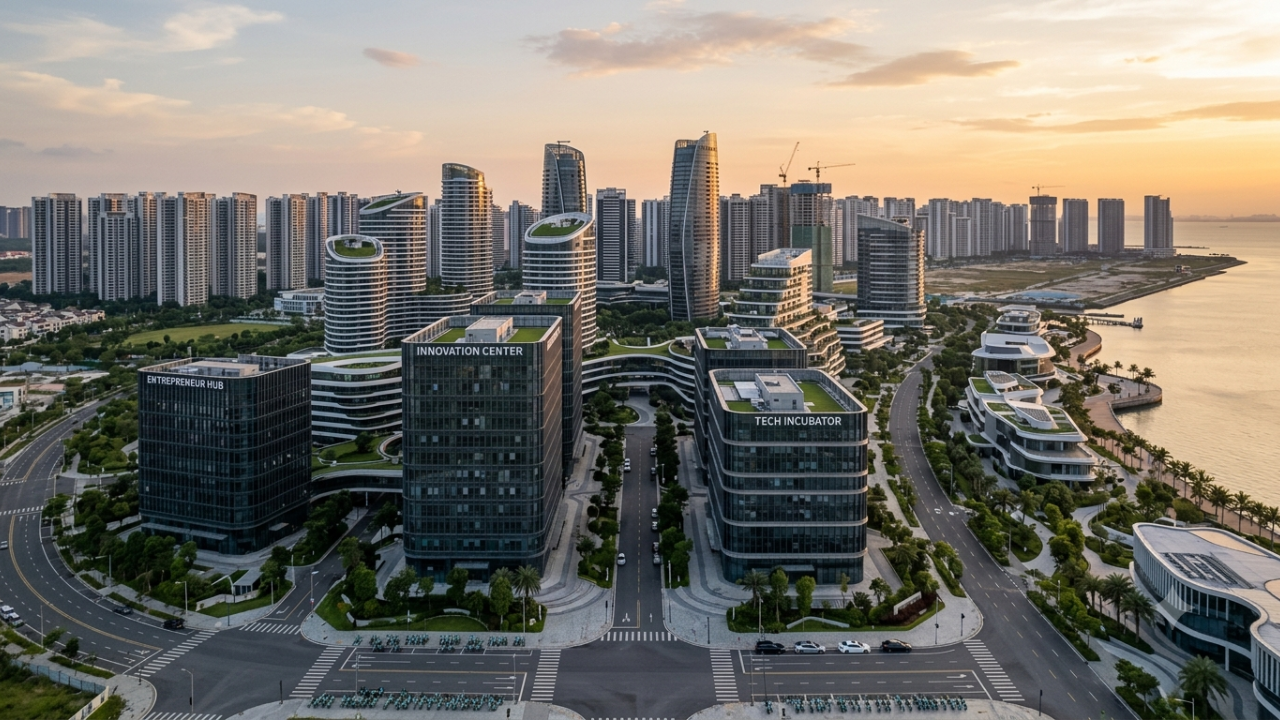
Building a one-hundred-billion-dollar metropolis from scratch sounds like a bold vision for the future. In reality, it turned into an expensive exercise in wishful thinking. Forest City, a massive land reclamation and urban development project off the coast of Johor, Malaysia, was designed to house seven hundred thousand people. Backed by Country Garden, one of China's largest property developers, the project promised a futuristic island paradise complete with high-rise luxury towers, smart city technology, and a tax-free zone.
Instead, it ran into a brick wall of shifting geopolitical winds, economic reality, and capital flight in less than two years.
If you look past the glossy renderings and marketing brochures, the collapse of this mega-development reveals a harsh truth about modern real estate. You can pour billions of dollars into concrete and glass, but you cannot manufacture organic community, economic demand, or regulatory stability. People don't move into architectural marvels just because they exist. They move where jobs are, where the legal system makes sense, and where they feel welcome.
The Grand Vision Meets Hard Economics
Forest City was supposed to be a triumph of modern engineering. The plan involved dredging millions of cubic meters of sand to construct four artificial islands in the Straits of Johor, situated right next to Singapore. The pitch was simple. Singapore is expensive, crowded, and tightly regulated. Malaysia is affordable, spacious, and geographically adjacent. Why not capture the spillover wealth of Southeast Asia's financial powerhouse by building a luxury haven right across the border?
The developers targeted wealthy international buyers, particularly from mainland China. They marketed the condos as premier investment properties and second homes. But they miscalculated everything that mattered.
Construction started around 2016. By 2018, the cracks were already showing. China implemented strict capital controls, making it nearly impossible for its citizens to move large sums of money abroad to buy overseas real estate. Suddenly, the primary buyer pool evaporated overnight. At the same time, local Malaysian politics shifted. Prime Minister Mahathir Mohamad openly criticized the project, stating that foreigners wouldn't be given visas to live in Forest City. That single political statement shattered buyer confidence.
The Ghost Town Reality
Walk through the development today, and the atmosphere is eerie. Towering residential blocks stand mostly empty. Streets designed to handle massive traffic flows remain quiet, save for the occasional security guard or curious tourist. Commercial spaces sit vacant with dusty floors and unrented storefronts.
This isn't just a Malaysian problem. It's part of a broader pattern of speculative real estate bubbles. When developers build for investors rather than actual residents, cities die before they live. Real cities grow organically around commerce, culture, and employment. When you skip those steps and just build skyscrapers on reclaimed land, you get an expensive ghost town.
The financial toll has been staggering. Country Garden faced massive liquidity crises as property sales plummeted globally. The heavy debt burden tied to projects like Forest City contributed significantly to the developer's financial struggles. The hundreds of thousands of residents expected to populate the islands turned into a few thousand actual occupants.
What Investors and Planners Keep Getting Wrong
The biggest mistake behind Forest City was assuming that demand is portable. Developers often think they can drop a luxury lifestyle anywhere on a map and wealthy buyers will show up. That approach ignores local context, infrastructure limits, and long-term economic viability.
Look at what actually drives urban success.
- Employment opportunities: People move for jobs, not views.
- Regulatory clarity: Investors need to know that property laws won't change overnight based on a new election cycle.
- Cultural integration: Gated luxury enclaves isolated from the surrounding economy rarely succeed in the long run.
Forest City tried to bypass these fundamentals with sheer scale and marketing hype. It relied on the assumption that endless credit and fast construction could substitute for organic economic growth. When the credit dried up, the illusion vanished.
Moving Beyond Speculative Megaprojects
The era of building massive, isolated smart cities purely for investment speculation is coming to a hard end. Governments and developers are starting to realize that urban planning requires patience, community integration, and economic diversity. You cannot shortcut the messy process of city building with artificial islands and tax incentives.
If you are evaluating real estate investments or studying urban development trends, look for projects rooted in real local demand. Check where the jobs are growing, how infrastructure connects populations, and whether the local regulatory environment supports stable, long-term habitation. Ignore the glossy brochures and futuristic renderings. Sustainable value always comes from utility, not speculation.