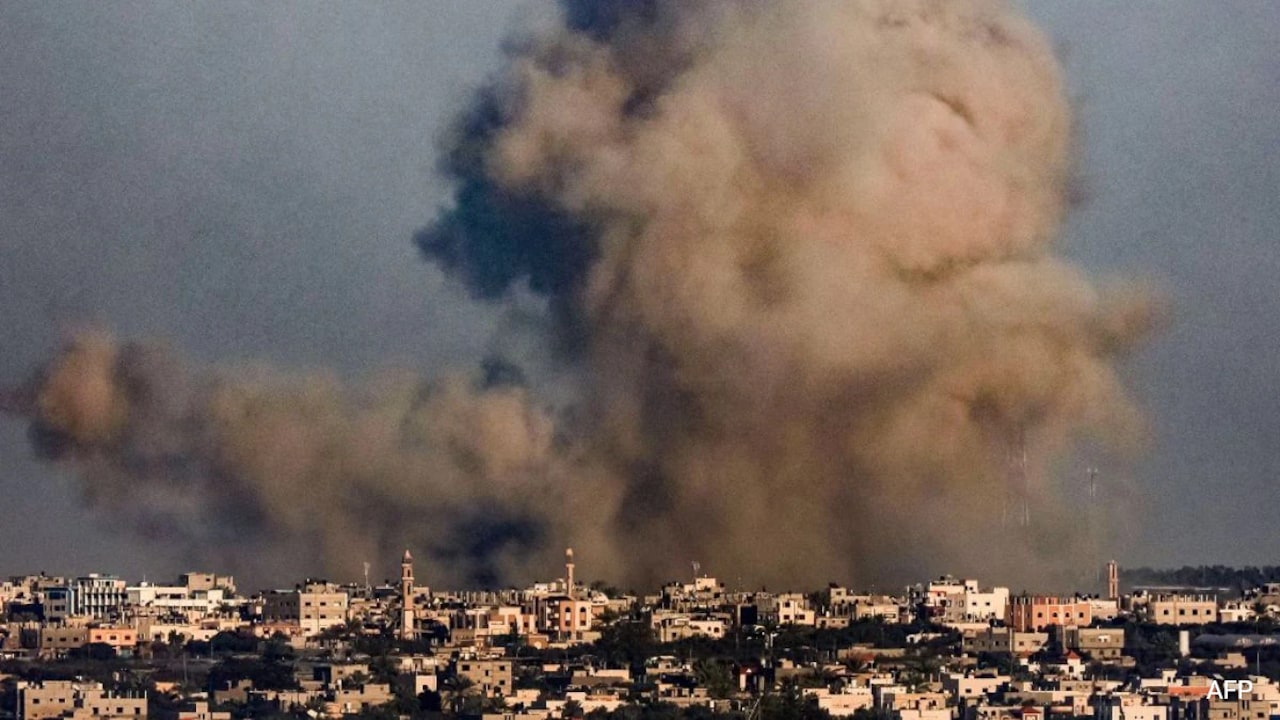
At least four Palestinians are dead and several others wounded following a wave of Israeli airstrikes across the Gaza Strip, an escalation that exposes the fragile mechanics of deterrence and the widening gap between tactical military strikes and long-term regional stability. Standard wire reports treat these numbers as routine tallies in a decades-old conflict. They are not. Every localized strike carries immediate human devastation alongside calculated strategic signaling that ripples from Cairo to Washington, shaping ceasefire negotiations, domestic Israeli coalition politics, and the daily survival of over two million people trapped in a besieged coastal enclave.
Surface-level coverage rarely explains what triggers an operation that leaves four people dead in a densely populated territory. The headlines tell you what happened. They rarely tell you why it happened at that exact hour, what intelligence thresholds were crossed to authorize munitions over civilian neighborhoods, or why international mediation repeatedly fails to prevent these deadly flare-ups.
The Anatomy of a Modern Airstrike in Gaza
To understand how an airstrike results in four fatalities and multiple injuries, you have to look at the operational doctrine of the Israel Defense Forces (IDF) and the geography of Gaza itself. Gaza is one of the most densely populated strips of land on earth, measuring roughly 25 miles long and between 3.7 and 7.5 miles wide. There is no strategic depth. There are no isolated military bases separated from residential streets by miles of open desert.
When Israeli intelligence identifies a target—whether a suspected militant operative, a rocket launch site, or an underground tunnel shaft—that target almost always sits beneath, beside, or inside civilian infrastructure. Military planners rely on a combination of real-time drone surveillance, signals intelligence, and human informants to build a target package. Once a strike is authorized, the Israeli Air Force typically deploys precision-guided munitions, such as Joint Direct Attack Munitions (JDAMs) or smaller, low-yield missiles fired from unmanned aerial vehicles.
The precision of the weapon does not eliminate collateral damage. A 500-pound bomb hitting a concrete structure in a crowded neighborhood creates a lethal blast radius, sends shrapnel flying through thin walls, and collapses adjacent buildings onto sleeping families. Even smaller drone-fired munitions, designed to strike a single vehicle or a specific room in an apartment block, routinely kill bystanders standing within dozens of yards of the impact zone.
In the immediate aftermath of these strikes, local medical teams from the Gaza Ministry of Health and the Palestinian Red Crescent face a chaotic triage environment. Ambulance crews often navigate cratered roads while drones remain audible overhead, creating a persistent fear of secondary strikes. The wounded—frequently suffering from blast trauma, severe burns, and crush injuries—are transported to hospitals already operating with chronic shortages of surgical supplies, anesthesia, and reliable electricity.
Why Deterrence Theory Keeps Failing on the Ground
Israeli military strategy in Gaza has long been built on a concept known internally as "mowing the grass"—periodic, calibrated applications of military force intended to degrade militant capabilities and restore deterrence without committing to a full-scale, permanent reoccupation. The logic assumes that if the cost of firing rockets, launching incendiary balloons, or rebuilding tunnel networks is made high enough, Hamas and smaller factions like Palestinian Islamic Jihad will choose quiet over escalation.
Decades of empirical evidence show this assumption is flawed.
Deterrence relies on rational actors weighing predictable costs against benefits. Yet in Gaza, the baseline conditions are already catastrophic. Unemployment hovers near 50 percent, clean tap water is virtually nonexistent, and movement in and out of the territory is strictly controlled by Israel and Egypt. When a population and its governing militants view the status quo as a slow suffocation, the threat of periodic airstrikes loses its coercive power.
Instead of producing lasting quiet, limited strikes that kill four or five people tend to lock both sides into an escalation ladder:
- Domestic pressure on militants: Armed factions in Gaza face intense internal pressure from their own rank-and-file and rival groups not to appear weak after casualties are sustained. Leaving an Israeli strike unanswered risks losing political legitimacy on the street.
- Political survival in Jerusalem: Israeli leaders operate under relentless scrutiny from right-wing coalition partners and opposition figures who frame any restraint as capitulation. Ordering immediate air retaliation satisfies domestic demands for visible strength.
- The illusion of surgical control: Military officials often believe they can calibrate the exact number of casualties to send a message without triggering an all-out war. A single miscalculation—a bomb hitting a crowded market or a family home—instantly shatters that calibration and forces a wider confrontation.
Consider a hypothetical scenario that mirrors dozens of real incidents over the past fifteen years. A minor militant faction fires two unguided projectiles into an open field in southern Israel, causing zero injuries and minimal property damage. Israeli intelligence traces the launch team to a residential neighborhood in Khan Younis and authorizes a retaliatory strike on a suspected command post. The strike kills four people, two of whom turn out to be uninvolved neighbors. Within six hours, Hamas—which may not have ordered the initial rocket fire—feels compelled to launch a barrage of thirty rockets toward Ashkelon to re-establish its own deterrence equation.
Neither side necessarily wanted a multi-day battle. Both sides walked straight into one because their respective definitions of deterrence required the last word.
The Intelligence Blind Spots Behind Civilian Casualties
Western military analysts frequently praise the technological sophistication of Israeli targeting systems, pointing to the use of artificial intelligence algorithms, automated target generation, and warning protocols like "roof knocking"—dropping a non-explosive or low-yield device on a building's roof minutes before a main strike to urge residents to flee.
In practice, these safeguards frequently break down under the pressure of rapid-response operations.
First, warning protocols are routinely waived when the target is classified as a "ticking time bomb" or a high-value human target who would escape if given ten minutes' notice. When a strike targets a moving vehicle or an active launch crew, there is no warning at all.
Second, human intelligence inside Gaza has degraded significantly over the years as Hamas's internal security apparatus systematically hunted down informants. Relying heavily on technical surveillance—cell phone metadata, drone feeds, and automated pattern-of-life analysis—creates dangerous blind spots. Algorithms can track a phone, a vehicle, or heat signatures entering a building, but they cannot always see whether a militant has returned home to a building filled with extended family members, or whether a structure flagged as a weapons depot is currently sheltering displaced civilians.
Third, the speed of modern warfare compresses the legal review process. While IDF military lawyers review pre-planned target banks for compliance with international humanitarian law—specifically the principles of distinction and proportionality—dynamic targets identified during active flare-ups are vetted in minutes. Under those conditions, the threshold for acceptable civilian harm often shifts quietly upward.
What Wire Reports Miss About the Diplomatic Backchannels
When four people die in Gaza, international coverage usually pivots to predictable statements from the United Nations, the U.S. State Department, and European foreign ministries calling for "restraint on both sides." These public pronouncements are largely theater. The real work happens in quiet, frantic phone calls routed through Egyptian General Intelligence, Qatari envoys, and UN special coordinators.
Egypt holds the most direct leverage because it controls the Rafah border crossing and maintains working intelligence channels with both Tel Aviv and Gaza's leadership. Qatar holds financial leverage, having funneled hundreds of millions of dollars into Gaza over the years—with explicit Israeli approval—to pay civil servant salaries, purchase fuel for Gaza's sole power plant, and distribute cash stipends to impoverished families.
Every time airstrikes kill Palestinians, these mediators face an immediate crisis. Qatari funds cannot enter Gaza while bombs are falling. Egyptian-brokered discussions on prisoner swaps, fishing zone expansions, and work permits for Gazan laborers inside Israel freeze instantly.
The tragedy of this diplomatic cycle is that mediation focuses almost exclusively on restoring the "calm" that existed the day before the airstrikes. Nobody at the negotiating table is addressing the underlying blockade, the absence of a political horizon, or the division between the Palestinian Authority in the West Bank and Hamas in Gaza. Mediators act as firefighters dousing small blazes while leaving the dry brush piled high around the house.
The Long-Term Cost to Both Societies
Counting the dead in single digits obscures the cumulative psychological and structural toll on the people living under these strikes. For children in Gaza, an airstrike that kills four people a mile away is not a distant news event. The acoustic shockwave shatters windows, cracks plaster, and reinforces a state of chronic hyper-vigilance. Mental health researchers working in the territory have documented rates of post-traumatic stress disorder among Gazan youth that exceed those found in many active conventional war zones, precisely because there is no safe rear area to evacuate to.
Across the border in southern Israeli communities like Sderot and the surrounding kibbutzim, the prospect of retaliatory rocket fire imposes its own quiet siege. Residents live with fifteen seconds of warning between a Red Alert siren and impact. Businesses struggle to retain staff, local economies rely on state subsidies, and an entire generation has grown up knowing the exact location of every concrete bomb shelter within running distance.
Politicians in Israel often argue that targeted airstrikes protect these southern communities by keeping militants off balance. Residents of the Gaza envelope frequently voice a different view: kinetic strikes without a diplomatic settlement merely reset the clock until the next barrage.
The Legal and Ethical Gray Zone of Asymmetric Warfare
Evaluating airstrikes in Gaza requires confronting an uncomfortable reality that partisans on both sides prefer to ignore. International humanitarian law was drafted primarily with conventional armies fighting on identifiable battlefields in mind. It struggles to regulate asymmetric warfare where non-state armed groups embed military assets within dense urban populations, and where a technologically superior state military responds with heavy aerial firepower.
Critics of Israel rightly point out that the disparity in casualties and destructive power is overwhelming, and that striking urban areas with high-explosive munitions inevitably inflicts disproportionate suffering on civilians who have no control over Hamas's decisions. Defenders of Israeli operations rightly point out that no sovereign nation would tolerate rocket attacks or cross-border threats against its citizens without using military force to neutralize the launch capability, and that embedding weapons in civilian neighborhoods is itself a violation of the laws of war.
Both statements can be true simultaneously. Acknowledging that complexity does not excuse unlawful strikes or indiscriminate rocket fire; it simply explains why legal arguments alone never stop the bombing.
Until external powers—principally the United States, which provides Israel with billions in annual military aid and diplomatic cover, alongside regional actors funding or sheltering Palestinian factions—tie their support to a viable political framework, the mechanics of this conflict will remain unchanged. Intelligence officers will continue building target folders. Pilots and drone operators will continue executing strikes. Mediators will continue brokering temporary truces that last until the next spark. And the headlines will keep updating the casualty count, four lives at a time.