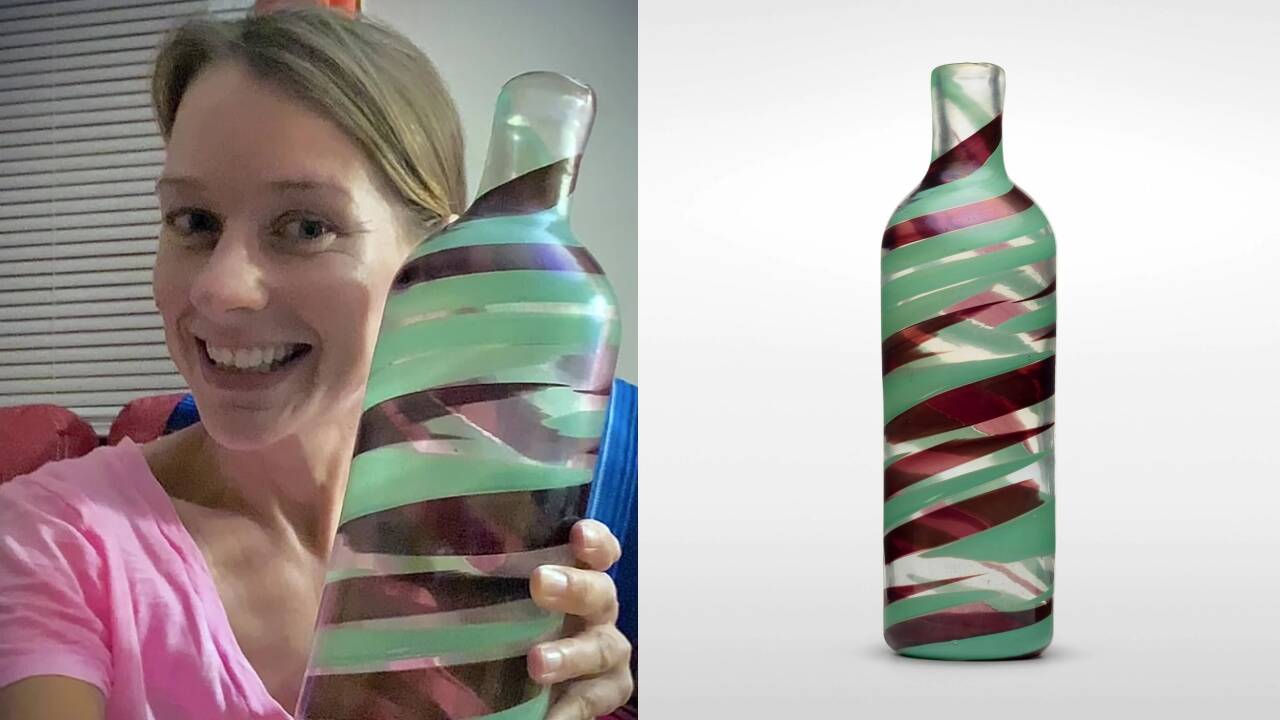
A customer walked into a Goodwill outlet in Clinton, Connecticut, spotted a heavy glass vessel collecting dust among chipped mugs and plastic bins, and handed over $3.99 at the register. Less than a year later, that exact object hammered down at an auction house for $107,100.
The story hit front pages as a classic thrift store lottery win. A lucky buyer, an obscure piece of glass, and a life-changing payday. But underneath the viral headlines lies a much more uncomfortable truth about the contemporary art market, the breakdown of traditional appraisal systems, and the chaotic gold rush happening inside suburban charity shops. Also making waves lately: Inside Temasek's High Stakes Pivot to the Gulf.
Every weekend, thousands of amateur speculators scour thrift store aisles with smartphone camera lenses primed for reverse-image searches, hoping to catch institutional blind spots. The Clinton vase was not merely a lucky break. It was a symptom of an asset market driven by algorithmic transparency, desperate arbitrage, and a collapsing barrier between junk and high art.
To understand how a $3.99 piece of glass reaches six figures, you have to look at the creator who made it. The vessel was an authentic creation of Carlo Scarpa, the celebrated Venetian architect and designer who worked for Venini in the mid-twentieth century. Scarpa is revered for his mastery of glass chemistry, texture, and light, producing experimental pieces that institutional collectors chase relentlessly. Additional insights regarding the matter are detailed by Harvard Business Review.
Yet, for decades, Italian art glass from the mid-century period suffered from a severe documentation problem. Thousands of prototypes, limited runs, and artist proofs left the furnace without signatures or serial numbers. They relied entirely on visual hallmarks—a specific shade of murrine, an acid-etched texture, or a weight signature that only a specialist with decades of catalog experience could identify.
When items lack a signature, they enter a wild west of attribution. Auction houses receive thousands of submissions every month from hopeful owners convinced their garage-sale find is a lost masterpiece. Most of the time, it is mass-produced department store glass from the 1970s. The appraisers reject them, the owners get frustrated, and the items cycle back into the donation stream.
This is where the thrift store acts as a chaotic filtering mechanism.
Charity sorting centers process mountains of household liquidations following estate clearances. Employees sorting donations operate under intense volume pressure. They lack the time, training, or market awareness to differentiate between a 1950s modernist masterwork and a decorative vase imported from a big-box retailer thirty years ago. If it looks shiny and holds water, it goes on the shelf with a low, uniform price tag designed for quick inventory turnover.
For years, this inefficiency created a quiet cottage industry for professional pickers. These individuals understood maker's marks, pottery glazes, and furniture stamps better than the people pricing them. They built livelihoods outrunning the information gap.
Then came the smartphone.
Visual search tools and digital auction archives democratized institutional knowledge overnight. Suddenly, anyone standing in a damp church basement could take a photo of an obscure bottom stamp and instantly cross-reference auction results from Paris, London, and New York. The informational monopoly held by high-end antique dealers fractured.
This transparency transformed thrift store shopping from a quiet hobby into a competitive sport. Armed with real-time data access, modern treasure hunters descend on donation centers the moment doors open. They treat the sales floor like an open outcry commodities exchange.
When the Clinton vase appeared online ahead of its auction debut, the digital collector community swarmed. Specialist forums dissected the vessel's weight, color saturation, and production era. By the time the lot went live, the bidders knew precisely what they were chasing. The auction house did not need to drum up mystery; the market had already authenticated the asset through viral social media amplification before the catalog went to print.
The six-figure payout reflects a broader distortion in how we value physical objects. We are living through an era of extreme capital concentration where ultra-wealthy buyers look for tangible hard assets outside traditional equities and real estate. Rare decorative arts have become micro-asset classes. When a verified Scarpa piece hits the market, institutional buyers and private collectors compete aggressively, driving prices far beyond historical norms.
The $3.99 thrift store find is intoxicating because it promises that anyone can beat the system. It suggests that hidden value is scattered everywhere, waiting for the right pair of eyes to notice it.
Yet, the math tells a sobering story. For every person who buys a six-figure Venetian masterwork for the price of a cheap lunch, millions of dollars are spent on worthless glass, faux porcelain, and mass-produced brass. The survivors of the thrift store grind rarely talk about the storage lockers full of unsellable inventory or the hours spent scrolling through blurry auction listings.
The market loves an anomaly. It feeds on the myth of the brilliant outsider who outsmarts the experts. But the system is adapting. Thrift organizations are increasingly partnering with online liquidation platforms, scanning high-potential items before they ever hit the floor, and routing valuable donations directly to regional digital auctions where they can capture the maximum margin.
The golden age of finding masterpieces buried under piles of mismatched dinnerware is narrowing. As algorithmic curation creeps further into the donation economy, the gaps in the system are closing. Until then, the hunters will keep lining up outside charity shop doors every morning, scanning the shelves, and hoping to find the next miracle in glass.