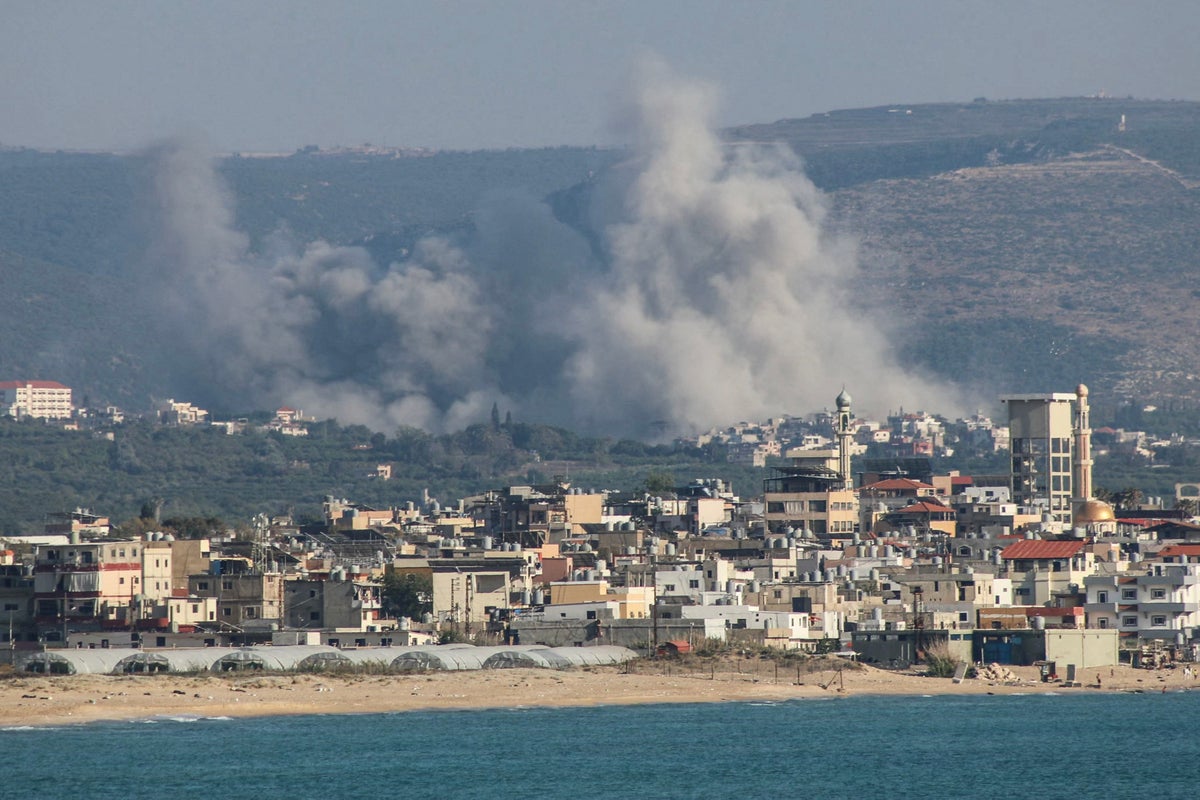
Silence has a texture. In the city, it is not the absence of noise; it is the presence of waiting. You hear the wind whistle through jagged rebar. You hear the scuff of a sneaker on cracked concrete. You hear the frantic, rhythmic drumming of your own heart because silence, in a place where iron has been raining from the sky for months, is a predator.
The announcement comes over a radio, crackling with static. A ceasefire. It is a word that carries weight, a heavy, velvet promise of safety. You look at your children. You look at the dusty floorboards where you have slept for sixty nights. And for a second—just a single, dangerous second—you exhale. You let the air leave your lungs, and you allow yourself to imagine tomorrow.
But the real problem lies not in the agreement itself, but in the distance between the ink on the paper and the earth beneath your feet.
We often talk about war as if it were a game of chess played by distant kings. We analyze the maneuvers, the supply lines, the diplomatic pressures. We create models. We crunch numbers. But when you are the one living in the basement, listening for the change in the air pressure that signals a falling shell, the model breaks.
Consider the history of modern conflict in the Middle East. It is a long, disjointed narrative of "pauses" that function more like breaths taken before a punch. When leaders gather in gilded halls to negotiate, they are operating on a calendar of politics and optics. The people on the ground are operating on a calendar of survival. These two timelines never meet. They run parallel, forever doomed to miss each other.
The ceasefire is sold as a humanitarian necessity. It is the moment when aid enters, when the wounded are evacuated, when the world can look away for a moment and say, "At least they are safe for now."
But watch what happens next.
Look at the soldiers on the front lines. To them, a ceasefire is not a peace offering. It is a logistical anomaly. It is a gap in the firing solution. It is time to move the artillery. It is time to patch the fuel lines. It is time to resupply the magazines. While the world celebrates the silence, the machinery of war is simply shifting gears. The pause is not a stop; it is a recalibration.
This is the invisible stake of the conflict. It is not just about territory or ideology. It is about the psychology of despair. When a ceasefire fails—and history tells us they almost always do—it breaks something deeper than the buildings. It breaks the capacity to believe.
Let’s take the perspective of a fictional resident, Elias, living in a neighborhood where the skyline is a jagged teeth-line of broken masonry. Elias has heard these declarations before. When the radio crackles with news of a truce, he does not cheer. He goes to the market. He walks through the streets, dodging the craters, looking for bread. He moves with a desperate, frantic efficiency because he knows the ticking clock. He knows that the truce is a finite resource.
He does not trust the politicians. He trusts the wind. He watches the birds. If the birds return, maybe the sky is safe. If the birds stay away, the silence is a lie.
This is the lived experience of modern conflict: the acute, agonizing necessity of parsing the truth from the propaganda. Every resident of these conflict zones has become an expert in the mechanics of deception. They know that a ceasefire is often just a tactical pivot. They understand that the war has not changed its nature; it has only changed its tempo.
When we discuss these conflicts from afar, we tend to frame them through the lens of policy. We debate the efficacy of sanctions, the role of international bodies, the strategic positioning of regional powers. These are valid conversations. They are necessary. But they often ignore the human cost of the failure to execute.
Think about the sheer exhaustion of it. Imagine waking up every single day not knowing if the window will shatter. Now, imagine being told that for forty-eight hours, you will be safe. You begin to lower your defenses. You start to hope. You might even laugh with your family. And then, the shelling resumes. The betrayal of that hope is a violence all its own. It is a psychological wound that does not heal with bandages. It is a trauma that lingers long after the smoke clears.
The cycle repeats. The violence spikes. The international community cries out. A ceasefire is negotiated. The silence returns. The silence is broken. And the world watches, bewildered, as if the script were not written in blood years ago.
Why does it keep happening?
Part of it is the nature of the incentives. In many of these theaters, the combatants operate on an assumption of zero-sum dynamics. If they stop, the other side will advance. If they show mercy, the other side will show strength. It is a tragedy of the commons, where the common good is peace, but every individual player is incentivized to defect.
There is no "great peace" waiting around the corner, triggered by a signature on a document. There is only the long, grinding, agonizing work of building trust where none exists. And trust cannot be built in a vacuum. It cannot be built through short-term truces that are violated with impunity.
It requires accountability. It requires enforcement that is not tied to the whims of the combatants themselves. It requires a fundamental shift in how we understand the "peace" we are trying to broker.
We have arrived at a point where the very language of conflict resolution has lost its meaning. We use words like "humanitarian corridor" and "temporary truce" until they become hollow shells. We strip them of their urgency. We treat them as bureaucratic items on an agenda.
Meanwhile, the people on the ground are living the reality. They are not waiting for a press release. They are listening. They are measuring the distance between the explosions. They are calculating the cost of movement. They are existing in a state of suspended animation, perpetually bracing for the next impact.
There is a terrifying audacity in the way these conflicts are managed. It implies that there is a level of violence that is "acceptable," as long as it stays within the lines of a defined conflict. It implies that as long as there is a pause, we have done our job.
But look at the reality. Look at the children who have never seen a school building that wasn't a shelter. Look at the parents who have forgotten how to dream of anything other than the next meal. Look at the families who have moved three, four, five times, clutching their lives in plastic bags, only to find that the new "safe zone" is just as vulnerable as the last.
This is not a failure of diplomacy. It is a failure of empathy. It is the failure to recognize that when we talk about ceasefires, we are talking about the basic, fundamental right to breathe without fear.
The world needs to stop viewing these conflicts as problems to be managed and start viewing them as crises to be resolved. This means accepting that a ceasefire is not the finish line. It is the starting block. It is the moment where the real work begins—the work of demilitarization, of security guarantees, of rebuilding, of restoring the broken trust between communities that have been driven to hate one another by years of relentless, grinding violence.
But that is a difficult, unglamorous, and expensive path. It is much easier to call for a ceasefire, get the headlines, and then look away when the guns start firing again. It is much easier to treat the symptom than to cure the disease.
The next time you hear that a ceasefire has been signed, do not exhale. Look closer. Look for the conditions. Look for the enforcement. Look for the commitment to long-term stability. And keep your eyes on the people in the rubble, not the ones in the suits.
They are the ones who know the truth. They are the ones who understand that the silence is just the prelude to the next, inevitable storm.
The cycle will continue until the cost of the status quo becomes higher than the cost of peace. As long as the players believe that they can win, or at least avoid losing, they will continue the game. They will continue to treat the lives of civilians as pieces on a board. They will continue to offer temporary reprieves that are nothing more than tactical maneuvers, cynical ploys designed to buy time for the next engagement.
There is no clean exit from this. There is only the messy, arduous process of building something new from the wreckage. It requires a level of courage that we rarely see in modern politics. It requires the ability to look past the immediate tactical advantage and see the long-term human cost.
And until that happens, the silence will remain a predator. The radio will keep crackling with false promises. And the people in the cities, in the camps, in the basements, will keep waiting. They will keep listening to the wind, wondering if today is the day it finally stops, or if it is just another day of holding their breath, waiting for the ceiling to collapse.
The sun begins to set. A faint, distant rumble rolls across the horizon—a reminder that the earth still shakes, and the air still holds the scent of fire. You tighten your grip on your child’s hand. You wait for the morning. You wait for the truth. You wait for a silence that doesn't lie.